• Advertise
  • Contact Us
  • Supplier Directory
  • SCB YouTube
  • About Us
  • Login
  • Subscribe
  • Logout
  • My Profile
  • LOGISTICS
    • Air Cargo
    • All Logistics
    • Facility Location Planning
    • Freight Forwarding/Customs Brokerage
    • Global Gateways
    • Global Logistics
    • Last Mile Delivery
    • Logistics Outsourcing
    • LTL/Truckload Services
    • Ocean Transportation
    • Parcel & Express
    • Rail & Intermodal
    • Reverse Logistics
    • Service Parts Management
    • Transportation & Distribution
  • TECHNOLOGY
    • All Technology
    • Artificial Intelligence
    • Cloud & On-Demand Systems
    • Data Management (Big Data/IoT/Blockchain)
    • ERP & Enterprise Systems
    • Forecasting & Demand Planning
    • Global Trade Management
    • Inventory Planning/ Optimization
    • Product Lifecycle Management
    • Robotics
    • Sales & Operations Planning
    • SC Finance & Revenue Management
    • SC Planning & Optimization
    • Supply Chain Visibility
    • Transportation Management
  • GENERAL SCM
    • Business Strategy Alignment
    • Customer Relationship Management
    • Education & Professional Development
    • Global Supply Chain Management
    • Global Trade & Economics
    • Green Energy
    • HR & Labor Management
    • Quality & Metrics
    • Regulation & Compliance
    • Sourcing/Procurement/SRM
    • SC Security & Risk Mgmt
    • Supply Chains in Crisis
    • Sustainability & Corporate Social Responsibility
  • WAREHOUSING
    • All Warehouse Services
    • Conveyors & Sortation
    • Lift Trucks & AGVs
    • Order Management & Fulfillment
    • Packaging
    • RFID, Barcode, Mobility & Voice
    • Warehouse Automation
    • Warehouse Management Systems
  • INDUSTRIES
    • Aerospace & Defense
    • Apparel
    • Automotive
    • Chemicals & Energy
    • Consumer Packaged Goods
    • E-Commerce/Omni-Channel
    • Food & Beverage
    • Healthcare
    • High-Tech/Electronics
    • Industrial Manufacturing
    • Pharmaceutical/Biotech
    • Retail
  • THINK TANK
  • WEBINARS
    • On-Demand Webinars
    • Upcoming Webinars
    • Webinar Library
  • PODCASTS
  • WHITEPAPERS
  • VIDEOS
Home » Shippers Saw a Need for Bigger Vessels, But They Built Them Too Big
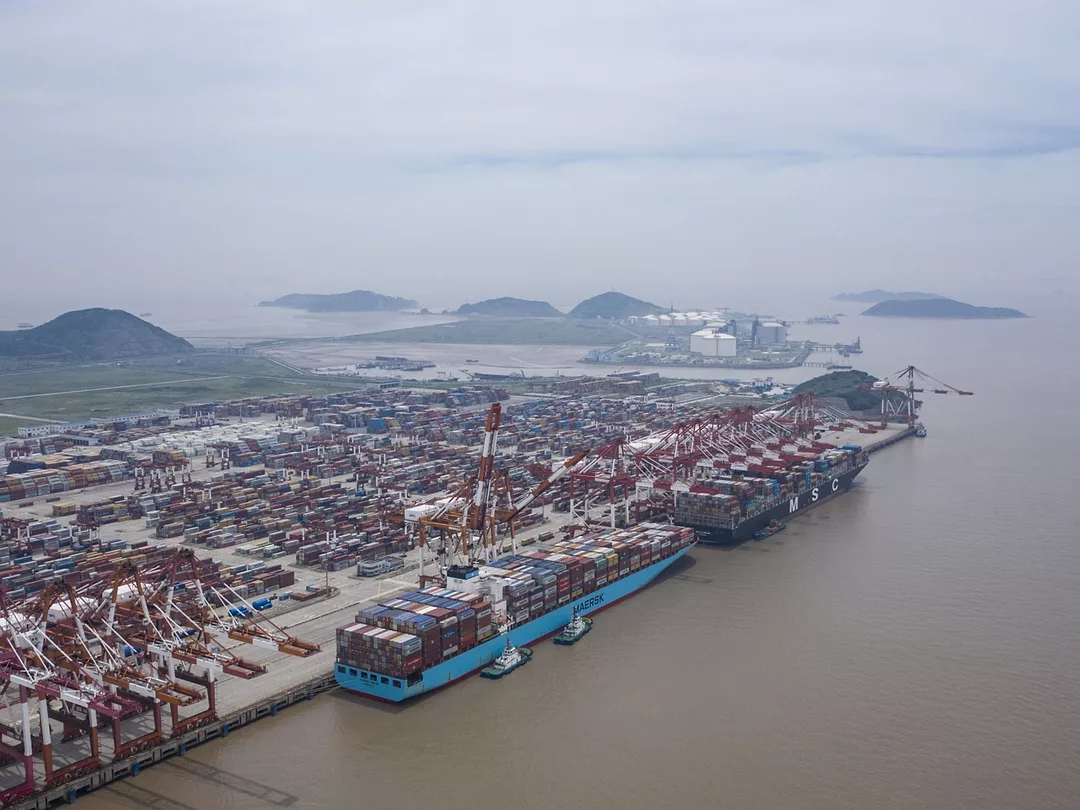
Shippers Saw a Need for Bigger Vessels, But They Built Them Too Big

Shippers
Photo: Bloomberg
January 24, 2021
Bloomberg

Unless you’re involved with international commerce in some way, you might not have heard that the cost of shipping goods out of China is absolutely soaring right now.

Six months ago, the Shanghai Containerized Freight Index of spot shipping rates was at 1,022. Last week, it was close to 3,000. Bloomberg spoke with economist and historian Marc Levinson — author of “The Box,” a book on the container-shipping revolution — about what’s behind the skyrocketing prices. A key dynamic at play is, even though the U.S. is importing a ton of goods from China, there’s very little flow happening in the opposite direction.

Here are a few key comments from the discussion:

I wouldn’t say necessarily that it’s bad for the overall global economy, but it’s really bad for the ship lines for sure. These mega ships have generally fouled up the transportation system. You actually have fewer ships calling at most ports today than you used to have. They’re much bigger. And so think of what this does to the operation of the port. You don’t have a smooth flow of cargo going through the port. Now you’ve got nothing happening in the port. It’s dead today. And then tomorrow, a ship shows up and it wants to unload 3,000 containers in your port. What do you do with this? How do you get it unloaded? Where do you put the containers? 

One thing that’s happened is that ships spend more time in port, which is very wasteful because it just takes more time to get so many containers on and off. The trucks are lined up at the gate because there’s so many containers to bring in, send out on these ships or so many containers to deliver. The railroads can’t handle this sudden flood of containers. So you have the cargo sitting around longer before it gets removed from the port. All of these things have tended to make transit times longer and have made it harder for shippers to get their freight where it’s supposed to be on deadline. And that’s bad for everybody.

Meanwhile, the industry is much more consolidated and tightly controlled by a few key players versus where it was over a decade ago, at the height of global trade:

The big players have formed what are called alliances. So these alliances have kind of squeezed most of the smaller players out of the business. One alliance involves Maersk, the Danish company, and Mediterranean Shipping, which is based in Switzerland, and between them, those two companies have a little bit over a third of all of the container shipping in the world. There’s another alliance that has Cosco, the China ocean shipping company, the French company CMA CGM, and Evergreen — a Taiwanese company. And it has about 30% of the world’s shipping. And then there’s another alliance that has the German company Hapag-Lloyd, and the Japanese lines and Korean line. And it has about 20%. So if you put those three alliances together, their market share in container shipping is close to 85%. Will those alliances stay together? At the moment, the system looks pretty stable. You can imagine that at some point, the government will step in and say, you guys can no longer have this alliance. It’s anticompetitive, but so far that hasn’t happened.

Even before things started to deteriorate globally and before the pandemic, the largest shipping-companies made what has turned out to be a strategic misstep — switching to giant tankers, which haven’t proved to be as efficient as expected:

The slump in the growth of trade wasn’t really the only factor here. Ship lines, like companies in many other industries, have relentlessly pursued economies of scale, bigger was better. And it was true when you could build a ship that could carry 3,000 containers instead of 2,000 containers, the costs per container dropped a lot. And when you could build a ship that could carry 10, rather than five, the cost per container was much lower. 

What they didn’t count on was that at some point, the vessels would get so big that diseconomies of scale would set in. And that’s when you started to have this confusion in the ports. That’s when you start to have these delays in shipping, that’s when you start to have the entire industry become less reliable. And the diminished reliability is one of the things that is leading manufacturers and retailers to have a new sourcing pattern, to make their products in different places and to have redundant value chains. Size is never everything. And many of the ship lines mistakenly thought that it was.

    RELATED CONTENT

    RELATED VIDEOS

    Logistics Global Logistics Ocean Transportation Transportation & Distribution Global Trade & Economics
    • Related Articles

      A Need for Speed: Trends in E-Commerce Fulfillment

      Trucking Industry's Tale of Woe: Too Many Big Rigs

      Pot Sellers Expand to More States, But They Can't Bring Pot

    • Related Directories

      ProcureAbility

    Bloomberg

    Sleep Number Files Bankruptcy to Sell Itself, Blames Tariffs

    More from this author

    Subscribe to our Daily Newsletter!

    Timely, incisive articles delivered directly to your inbox.

    Featured Product

    Popular Stories

    • Businessman using AI agent system on laptop computer.

      AI in Supply Chain Can’t Succeed Without Foundational Systems

      Artificial Intelligence
    • A LARGE CYLINDRICAL OBJECT SHRINK-WRAPPED IN WHITE PLASTIC IS LOWERED BY CRANE ONTO A FLAT BED TRUCK ON A DOCK

      AI Boom Has European Buyers Paying Extra to Secure Gas Turbines

      Technology
    • Close-up hands of unrecognizable man holding and using smartphone standing on city street.

      Five Supply Chain Security Risks Hiding Inside Your Mobile Apps

      Supply Chain Visibility
    • 016_ai_and_data_transformation_in_distribution_v1-(540p).png

      Watch: AI and Data Transformation in Distribution

      Artificial Intelligence
    • DARKENED RACKS IN A WAREHOUSE CLUSTER AROUND A GLOWING ORB

      How to Know If Your Facility Is Ready to Automate

      Supply Chain Finance & Revenue Management

    Digital Edition

    2026 esg cover main scb q2 2026 cover

    SupplyChainBrain 2026 ESG Guide: ESG — The Supply Chain’s Biggest Secret

    VIEW THE LATEST ISSUE

    Case Studies

    • Recycled Tagging Fasteners: Small Changes Make a Big Impact

    • A GRAPHIC SHOWING MULTIPLE FORMS OF SHIPPING, WITH A HUMAN STANDING AT THE CENTER, TOUCHING A SYMBOLIC MAP OF THE WORLD

      Enhancing High-Value Electronics Shipment Security with Tive's Real-Time Tracking

    • A GRAPHIC OF INTERLACING HONEYCOMBED ELEMENTS REPRESENTING GLOBAL BUSINESS TRANSACTIONS

      Moving Robots Site-to-Site

    • JLL Finds Perfect Warehouse Location, Leading to $15M Grant for Startup

    • Robots Speed Fulfillment to Help Apparel Company Scale for Growth

    Visit Our Sponsors

    4flow Arkieva Blue Yonder
    Carton Cloud CoEnterprise Dassault
    Duravant E2Open General Logistics Systems
    Hy-Tek iGPS Korber
    Lyngsoe Procurability Quinyx
    SAP Sikick Systech
    S&P Global Mobility TADA TransImpact
    US Bank Werner Enterprises WSI
    • More From SCB
      • Featured Content
      • Video Library
      • Think Tank Blog
      • SupplyChainBrain Podcast
      • Whitepapers
      • On-Demand Webinars
      • Upcoming Webinars
    • Digital Offerings
      • Digital Issue
      • Subscribe
      • Manage Email Preferences
      • Newsletters
    • Resources
      • Events Calendar
      • 2026 Event Coverage
      • SCB's Great Supply Chain Partners
      • Supplier Directory
      • Case Study Showcase
      • Supply Chain Innovation Awards
      • 100 Great Partners Form
    • SCB Corporate
      • Advertise on SCB.COM
      • About Us
      • Privacy Policy
      • Contact Us
      • Data Sharing Opt-Out

    All content copyright ©2026 Keller International Publishing Corp All rights reserved. No reproduction, transmission or display is permitted without the written permissions of Keller International Publishing Corp

    Design, CMS, Hosting & Web Development :: ePublishing