.webp?height=100&t=1784835632&width=150 "LSG26_LTAgentEdgeImage_DB-1313-1 (1).png")
U.S. Sees Chip Supply Gains, Relief Soon for Carmakers
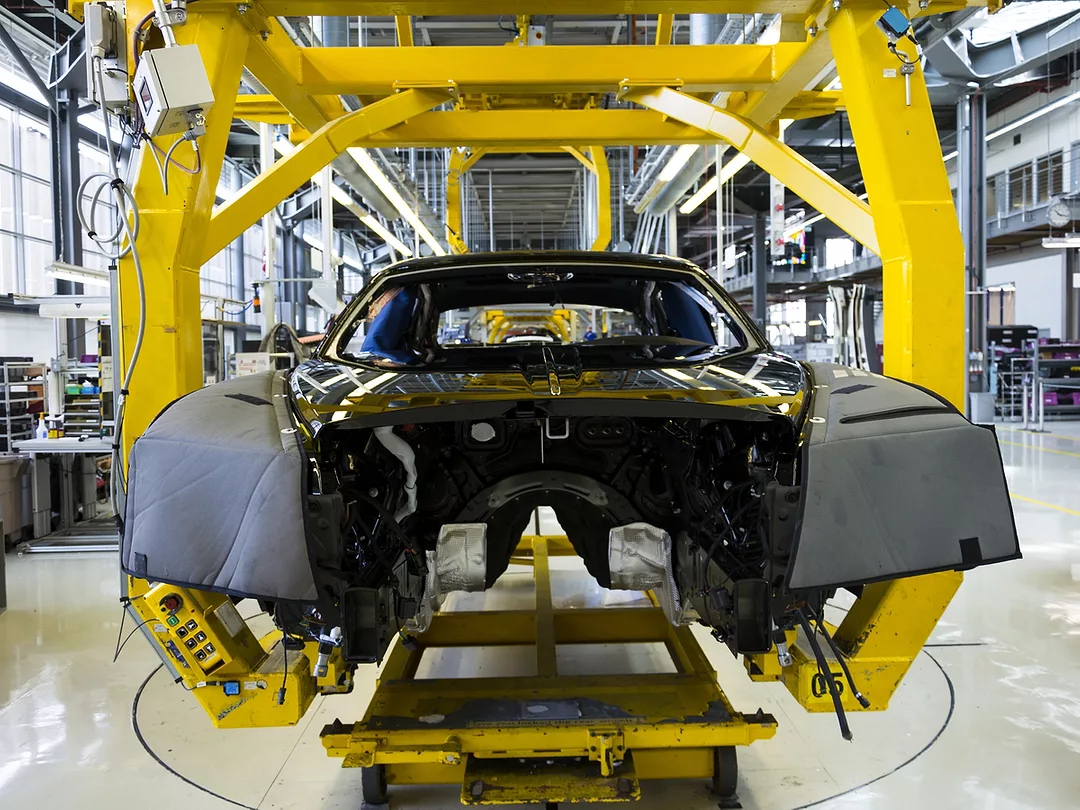
Biden administration officials say they’re starting to see signs of relief for the global semiconductor supply shortage, including commitments from manufacturers to make more automotive-grade chips for car companies that have had to idle production.
U.S. Commerce Secretary Gina Raimondo, who has led President Joe Biden’s efforts on chip supply, has brokered a series of meetings between semiconductor manufacturers, their suppliers, and their customers including automakers. Senior administration officials said the meetings helped ease mistrust between the sides related to the chipmakers’ production and allocation and automakers’ orders.
The result has been more transparency about the manufacturers’ production and shipments and a gradual increase in supply for automakers, Raimondo said in an interview. The administration has also recently pressed governments in Malaysia and Vietnam to ensure semiconductor plants would be deemed “critical” businesses and maintain some production following COVID-19 outbreaks, officials said.
“You’re starting to see some improvements,” Raimondo said, adding that in recent weeks, Ford Motor Co. chief executive Jim Farley and General Motors Co. chief executive Mary Barra have told her that “they’re starting to get a little bit more of what they need” and the situation is “a little bit better.”
A Goldman Sachs analysis published last month said that the peak impact of the chip shortage was in the second quarter and auto production “should jump in July.” But U.S. automakers continue to struggle with the shortage, which is estimated to be taking a $110 billion toll on the industry.
Ford is closing or curtailing production at eight factories this month, including the plant manufacturing its new version of the iconic Bronco sport-utility vehicle. Five of GM’s North American plants will experience “downtime” due to “semiconductor production adjustments” this month and in August, according to GM spokesman David Barnas.
And tens of thousands of new cars remain sitting in lots outside U.S. factories, waiting for the chips that power their onboard computers.
A Ford spokeswoman declined to comment. Barnas confirmed the Barra conversation with Raimondo and provided a statement the company issued July 15.
GM’s “global purchasing and supply chain, engineering and manufacturing teams continue to find creative solutions and make strides working with the supply base to maximize production of our highest-demand and capacity-constrained vehicles, including full-size trucks and SUVs for our customers,” the statement said.
The semiconductor shortage predated the Biden administration but emerged as a crisis for the new president earlier this year, when U.S. automakers were forced to begin curtailing production for lack of chips. Manufacturing of semiconductors is concentrated with a pair of Asian companies, Taiwan Semiconductor Manufacturing Co. and Samsung Electronics Co. Ltd.
TSMC, a key partner to many of the world’s biggest carmakers, said last week the company will ramp up production of microcontrollers by close to 60% this year, a move expected to greatly boost supplies for its automobile clients starting this quarter.
Semiconductor manufacturers and auto companies generally don’t see eye-to-eye on the causes of the shortage and the solutions. Auto companies have complained about a lack of transparency in how many chips are produced and where they’re being sold, while the chips industry says the problem started when the auto industry, due to the pandemic, pulled back on orders before subsequently demanding that chips suppliers fulfill them.
Adding to Biden’s urgency to ease the strain, economists are pointing to the chip shortage as a source of inflation, which reached its highest level in 12 years in the U.S. last month, fueling Republican attacks on the president’s spending plans. A dearth of new cars that rely on the chips pushed many Americans into the second-hand car market, where the soaring prices accounted for more than one-third of last month’s increase in the cost of living.
Legislative Push
Raimondo is now trying to persuade Congress to pass $52 billion in funding to boost chip production and bolster semiconductor research and development on U.S. soil — a longer term strategy to reduce U.S. reliance on other nations in the global supply chain. The Senate in June passed its version of the bill, but the House is still debating the scope of the measure and details remain fluid.
Biden’s team and Raimondo are engaging daily with members of Congress about the bill, people familiar with the matter said.
Biden has brought up the bill directly in conversations with House Speaker Nancy Pelosi and has made clear he wants to sign it into law as soon as possible, according to one of the people. The White House defers to Pelosi on the exact mechanism and timing for getting the legislation passed, the people said, while noting that she’s aware of the stakes.
“I have a long-standing very productive relationship with Speaker Pelosi and I would fully expect that she would want to put her chamber’s stamp on the bill and that there may be adjustments,” Raimondo said.
Still, the administration is treating the issue with urgency. Even if the funding is approved, industry representatives expect implementation — including hiring more personnel at Commerce — to take up to six months.
“What I say is we need to get this done this summer,” Raimondo said of the timeline for passing the bill. “They can’t recess this August without having gotten this done.”
The U.S. isn’t alone in trying to increase domestic production: the European Union intends to double its chip manufacturing to at least 20% of world supply by 2030, and Chinese President Xi Jinping has appointed his economic czar Liu He to oversee the country’s efforts to reduce reliance on foreign chip companies.
The Biden administration is also collaborating with other governments that produce the chips — including Vietnam and Malaysia — especially to ensure that plants can continue operating safely amid the pandemic.
In early July, the White House became aware of shutdowns at semiconductor manufacturing plants in Malaysia due to Covid outbreaks. After a few days of negotiation with the country’s ambassador and officials on the ground, Kuala Lumpur deemed semiconductors as a “critical” industry and allowed the factories to reopen, even if not at full capacity, senior administration officials said. The German and Japanese governments — each with large automobile sectors — also took part in the talks.
The U.S. has similarly engaged with Vietnam’s government to ensure plants continue operating safely even as the country battles Covid outbreaks, the officials said.
Popular Stories


.webp?height=100&t=1784491177&width=150 "030_ai_in_the_warehouse-_real_use_cases_v1-(540p).png")

SupplyChainBrain 2026 ESG Guide: ESG — The Supply Chain’s Biggest Secret
VIEW THE LATEST ISSUECase Studies


Visit Our Sponsors |