.webp?height=100&t=1782792122&width=150 "005_veteran_winemaker_gallo_embarks_on_an_ai_journey_v2-(540p).jpg")
SCB FEATURE
Will Anti-Greenwashing Laws Lead to More Responsible Business Practices — or ‘Greenhushing’?
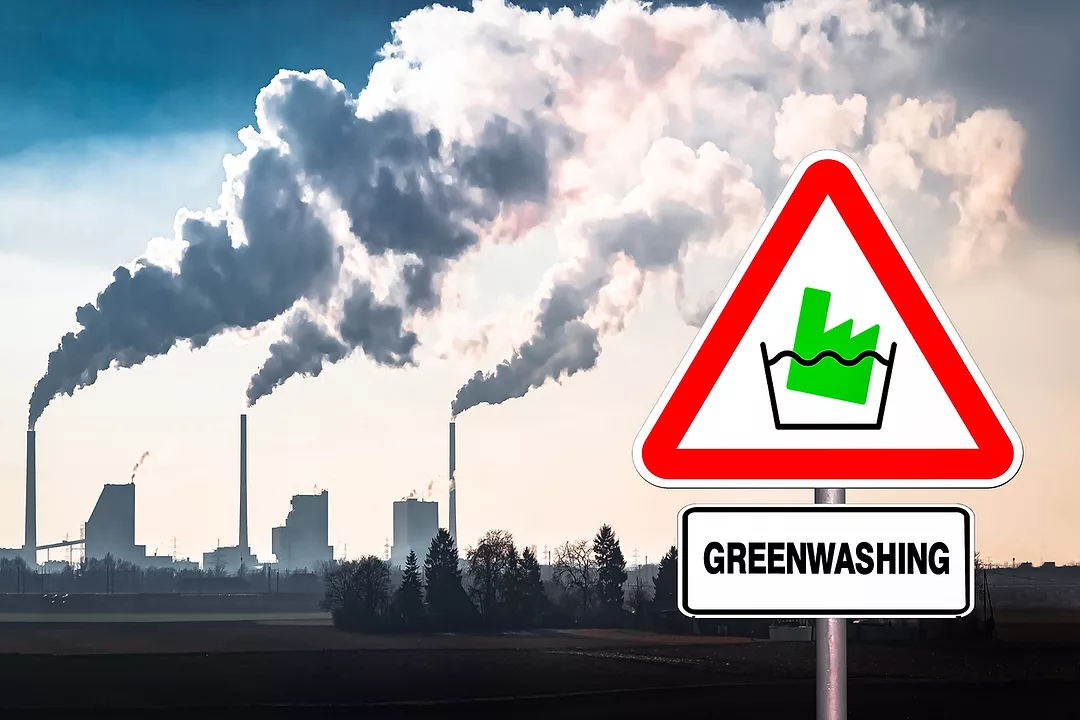
Image: iStock/JM_Image_Factory
A new Canadian law aims to stop businesses from making false or empty statements about their supposed commitment to environmental responsibility — the practice known as greenwashing.
Effective as of June 20, the revision to Canada’s Competition Act penalizes companies that make environmental claims in their marketing materials and sustainability reports that can’t be substantiated by “adequate and proper tests” or “internationally recognized methodology.” Precise what it means by “methodology” remains unclear at this point.
Under the law, individuals making unsupported statements about their “green” corporate commitments could be fined up to C$750,000 (just over US$541,000), or three times the financial benefit they gained from greenwashing, whichever is greater.
Companies could be subject to fines of up to C$10 million (US$7.2 million), or three times the amount of financial benefit gained. (If that figure can’t be ascertained, the penalty could be up to 3% of a company’s worldwide revenues.)
Perhaps the provision of the law with the greatest long-term impact is one that allows private parties to bring actions before Canada’s Competition Bureau for deceptive greenwashing. All it takes to get the bureau to commence an inquiry is six Canadian citizens over the age of 18 demanding it. The ramifications are substantial, including the possibility of a wave of class actions. “You’re going to see regulation and litigation increase drastically over the next few years,” says Mark Burstein, senior vice president of sales with Inspectorio, a vendor of supply chain management software.
What, then, can companies in Canada safely say about their environmental commitment? “Anything they want — as long as they have the data to back it up,” Burstein says. He views the law as a response to the practice by many companies of making claims “without thoroughly researching them and verifying that the data’s correct.”
The move by government to crack down on greenwashing began in the European Union, which adopted new rules earlier this year to ban “generic” environmental claims and other types of misleading product information. The EU further sought to ban corporate claims that a given product “has a neutral, reduced or positive impact on the environment because the producer is offsetting emissions,” as well as sustainability labels “that are not based on approved certification schemes or established by public authorities,” according to the European Parliament.
The threat of action by private citizens was already playing out in Canada, even before formal passage of the new law. Prompted by a complaint brought by the Canadian environmental activist group Stand.earth, the Competition Bureau launched a greenwashing investigation into the marketing practices of athletic apparel seller Lululemon. The six complainants required under the law allege that the company had engaged in “direct, unqualified environmental claims that are false or misleading,” as part of its Be Planet marketing campaign. (A spokesperson for Lululemon was reported in Climate Home News as stating that “We are taking direct action and are committed to collaborating with industry partners to help address supply chain impacts on climate change. We welcome dialogue and remain focused on driving progress.”) Additional claims of deceptive environmentally themed marketing have been filed against the Canadian Gas Association, Enbridge, FortisBC, Pathways Alliance, Shell and the Sustainable Forestry Initiative.
The consequences of severe penalties and damage to brand reputation under the new Canadian law are serious enough to cause some companies to back off from making any public assertions of environmental responsibility at all. Hence the tendency within some businesses to engage in “greenhushing.”
Shortly after passage of the Canadian bill, according to Inspectorio, “major oil and gas businesses pulled nearly every marketing claim from their websites and other digital channels.” Even in light of the law’s vagueness about how such claims can be verified, many companies don’t want to take a chance on running afoul of its provisions — at least until they better understand what constitutes acceptable proof of their actions.
Violations of environmental law are easier to quantify in cases where precise measurement is possible. California’s Proposition 65, for example, officially known as the Safe Drinking and Toxic Enforcement Act of 1986, set maximum acceptable lead content in consumer products at 100 parts per million. There, too, citizens have the power to file litigation against violators, receiving one-third of settlements that are frequently agreed to by manufacturers and retailers in order to avoid a more costly lawsuit. Spotting a violation is easy: All the complainant has to do is walk into a store and point a handheld XRF spectrometer at a given product to identify excessive lead content. “If it shows up, they buy the item, submit a lawsuit and there’s going to be a settlement because they can prove [the producer] doesn’t comply,” Burstein says.
Backing up the claims of a corporate environmental statement across the larger supply chain is much tougher, he says. Many companies are struggling with obtaining accurate data on Scope 3 carbon emissions — those generated by their supply chain partners over whom they have no direct control. Burstein says it’s essential that companies collect data at every stage of a product’s journey.
The new laws are intended to incentivize businesses to improve their environmental performance, he says. But until aspects of the Canadian law and similar regulations are clarified, the response of companies might not be a renewed effort to get greener. Instead, they might just shut up about it.
Popular Stories




SupplyChainBrain 2026 ESG Guide: ESG — The Supply Chain’s Biggest Secret
VIEW THE LATEST ISSUECase Studies


Visit Our Sponsors |
|
|
|
|
|
|
|
|
|
|
|
|
|
|
|
|
|
|
|
|
|
|
|
|
|
|
|
|
|
|
|
|
|
|
|
|
|
|