.webp?height=100&t=1783959879&width=150 "014_how_ai_is_transforming_the_transportation_back_office_v1-(540p).jpg")
THINK TANK
Value Chain Traceability: A Major Challenge for the Sustainable Fashion Industry
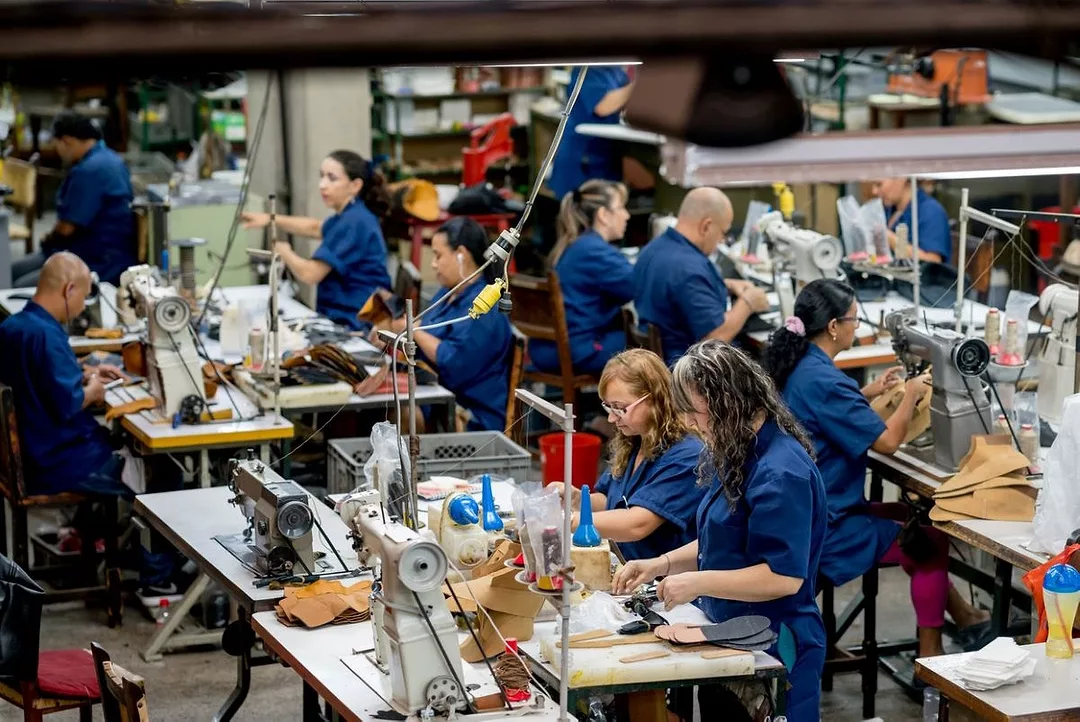
Photo: iStock.com/andresr
Traceability has become an imperative for fashion brands, particularly in the light of fast evolving environmental regulations. According to the State of Fashion 2024 report, 87% of fashion executives believe that these regulations will have an impact on their business this year.
Sustainable development regulations are multiplying and tightening around the world, particularly in terms of traceability. In Europe, for example, laws on due diligence in the supply chain are already in force in several countries, and the Digital Product Passport (DDP), awaiting validation, should soon come into force.
Consumers are also demanding greater transparency in the level of information shared by brands. The label is at the top of the list of information channels preferred by customers, just ahead of the point of sale, and far ahead of the brand's website, the media and social networks.
For sustainable fashion brands that want to comply with new environmental requirements as quickly as possible, and to win the trust of consumers, supply chain traceability poses a number of challenges.
Ensuring Traceability of Materials Throughout the Value Chain
Today, only 19% of companies in the fashion industry have visibility over their value chain, and this visibility is often partial. Many brands, especially those with ambitious sustainability goals, face a real challenge in terms of supply chain transparency. Mapping the entire value chain of a garment, and ensuring traceability of its origin is extremely complex. For a product as simple as a cotton tee-shirt, there can be as many as 10 organizations involved, from cotton cultivation to retail, including traders.
To be able to prove the sustainability of their products, brands need to be able to trace the entire value chain of certified materials. Traditionally, however, the origin of products is established “backwards” on a declarative basis, by following the supply chain product-backwards from Tier-1 suppliers to upstream actors such as fabric mill or yarn producers. It’s a quick way to map supply chain, but often fraught with the risk of “double or triple” counting of materials and, at times, misrepresentation of the supply chain.
By deploying blockchain, it is possible to ensure product traceability in a different way, from the fiber-origin through the various processing stages to the finished garment i.e. the “fiber-forwards” approach to traceability. Unique, non-interchangeable digital certificates of authenticity (“digital tokens” where one kilogram of fiber represents a distinct digital-token) validate and record the properties and provenance of sustainable fibers across all transformation stages. This data is stored securely in the cloud, where it cannot be altered. The platform detects and records new information at each new stage in the supply chain, tracking the production phases of yarns and fabrics, dyeing and finishing processes, and finally garment production, incorporating the wastage and yield loss at each stage.
In this way, sustainable fashion brands can assure both regulatory authorities and consumers that only genuine, sustainable fibers are used.
Master the Entire Supply Chain, Including Leather
Leather and footwear value chains are as fragmented and opaque as those for textiles. The number of individual components required to manufacture a single pair of shoes can range from 10 to more than 50 separate components. For brands, the challenge is to control their entire supply chains, including upstream from the tanneries.
Given the sheer number of components, and therefore the amount of information to be processed, having global visibility of the raw materials’ value chain means not having to use multiple tools. In order to monitor the quality of their materials, brands need to be able to access information on the supply chain for all the items in their collections, from clothing to footwear and leather goods, on a single platform.
The more a platform becomes the point of convergence for all the information reported by all the players involved, the more it guarantees brands that all supply chain interactions are correctly identified, and that compliance with the various standards is perfectly verified. To achieve this, platforms must be able to forge extensive partnerships with the various stakeholders in the textile ecosystem, as well as those in the leather and footwear ecosystems.
Verification of all this data is also a key issue. In addition to offering complete visibility, platforms must be able to ensure data reliability and guarantee that the information is true.
Ensure compliance with current and future regulations
When it comes to sustainable development in the fashion industry, we can already identify around thirty regulations in place or in the pipeline, applicable in particular in Australia, Canada, the U.S. and Europe, of which around twenty will play a decisive role. Regulations affecting the textile industry are not only numerous, but also increasingly targeted and strict, particularly in terms of traceability. In Europe, the implementation of the DPP should require the fashion industry players to share their product data and facilitate access to it for authorities, partners and consumers.
In the face of multiple new regulations, fashion brands need to quickly harness advanced technologies and find the right tools to effectively manage their supply chain, and thus benefit from the transparency that is now indispensable.
When it comes to traceability, brands need to be able to rely on a tool that guarantees that every transaction in the system accurately reflects an often highly complex reality, since there can be more than 300 distinct types of transformation in the textile value chain, from fiber origin to retail. And as traceability cannot exist without the intervention of trusted third parties to avoid greenwashing, this tool must also allow the integration of certifications issued by independent certification bodies. The origin of materials (for level 4 and 5 suppliers) must also be verifiable for all material value chains, from recycled polyester to responsible animal fibers, sustainable cotton and man-made cellulose fibers.
Brands can draw on a number of advanced technologies. In particular, artificial intelligence (AI) can play a crucial role in ensuring that every system operation reflects real-world complexities and diverse supply chain scenarios. By creating a robust, integrated verification system for every transaction, AI can automatically alert you to any risks of non-compliance.
Real-time access to all value chain data is also an asset for brands, as are the APIs (Application Programming Interfaces) required for standardized, automated data exchanges between fashion brands, textile suppliers and the traceability platform.
Finally, given the diversity of partners (producers, suppliers, importers, distributors, etc.) worldwide and the complexity of local regulations, fashion brands need support in all countries, with a local presence throughout the value chain.
New Challenges Bring New Roles For Brands
Evolving consumer expectations and behaviors, as well as the increasing number of regulations, are changing the game for fashion players. This is not only a source of challenges, but also of opportunities for brands, who have new roles and responsibilities.
By technically demonstrating greater transparency, brands can inspire greater confidence among their customers, and give concrete expression to their commitments to work towards safer and more dignified working conditions, contribute to the circular economy and act for a healthier planet.
Technology is already playing a key role in enabling fashion brands to make huge strides in tracking their supply chains and positioning themselves at the forefront of sustainable development. As a result, brands can benefit from real advantages in implementing a scalable, secure and robust supply chain traceability solution.
Amit Gautam is CEO of TextileGenesis, a Lectra company.
Popular Stories



.webp?height=100&t=1784001702&width=150 "013_what's_really_needed_for_'lights-out'_capability_v1-(540p).png")

SupplyChainBrain 2026 ESG Guide: ESG — The Supply Chain’s Biggest Secret
VIEW THE LATEST ISSUECase Studies


Visit Our Sponsors |