
SCB FEATURE
A Call for Reinvigorating the U.S. as the World’s ‘Manufacturing Superpower’
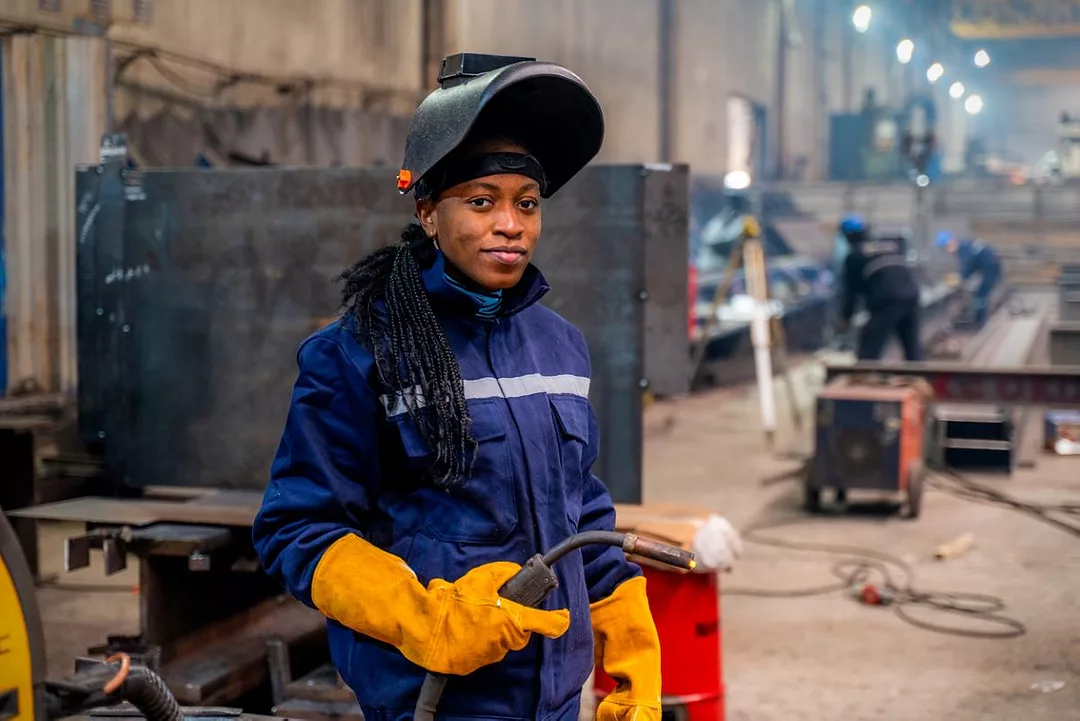
Photo: iStock/Phynart Studio
John Gardner owns a company based in Laguna Beach, California that makes a patented cutting tool for, among other buyers, the U.S. military. But he’s also a vocal proponent of reinvigorating the nation's entire domestic manufacturing base.
Gardner is the author of Manufacture Local: How to Make America the Manufacturing Superpower of the World. The book stresses the importance of maintaining a strong manufacturing economy, and laments the policies of past decades that he argues have undermined that prowess.
Easy hindsight? Perhaps. In years past, few manufacturers had the means or will to go against the stampede of companies that were seeking cheap labor in China and other countries in Asia. More recently, though, the trend has begun to reverse, thanks to rising labor rates in China, and the growing realization that siting production thousands of miles from end markets threatens to undermine supply chain resilience and even national security.
America didn’t have to core out its domestic manufacturing capability, Gardner believes. He blames politicians and academics for waving the flag of “unilateral free trade,” whereby U.S. trading partners are offered liberal access to American markets without reciprocation. He particularly calls out the influential economist Milton Friedman, who laid out the case for unfettered capitalism, even if that meant relying on raw materials and production from well beyond U.S. borders.
Gardner refutes Friedman’s argument in the latter’s book Free to Choose that a shuttered U.S. factory can be easily restarted in time of national need. But human capital and knowhow aren’t so easily recovered. “When you close down a plant, everybody working at Starbucks for 20 years just walks back in, and you turn on the lights?” he scoffs. “We should never have allowed the main core of an industry like steel mills to offshore.”
Gardner benefits directly from his status as a domestic supplier to the U.S. military. In fact, he claims that the Department of Defense has barred him from “unqualifying” himself as a military contractor because his machine tool is considered to be essential to production. Nevertheless, he’s no fan of DOD’s current efforts at boosting domestic manufacturing. He cites a Government Accountability Office finding that DOD “does not have a consolidated and comprehensive strategy to mitigate risks to the industry base.”
“Let me put it another way,” Gardner writes in his book. “No knows what is going on, other than the fact that the most well-funded military in the history of the world can’t manufacture what it needs to defend our nation, let alone send arms to our allies.”
Gardner sets out a number of recommendations in his book for solving the problem. For starters, he calls for creation of a Defense Industrial Base Agency (DIBA) that would coordinate policy and provide aid to smaller American manufacturers that lack access to capital and favorable tax treatment. “If you’re a [small] manufacturer, you should get direct lending at fantastic rates so that you cannot go out of business,” he says.
In theory, that supportive role should fall to the U.S. Small Business Administration, but Gardner charges that SBA today is more concerned with encouraging race and gender diversity than in aiding American manufacturers.
He believes it’s equally important to solve what he sees as a critical shortage of skilled American manufacturing labor. Among his proposals: “Take manufacturing back to high school,” to educate young people about the career opportunities that lie in that sector.
“There ought to be an economic study tracking people on the two different American life paths — the college life path and the manufacturing life path — to see which group comes out financially ahead (and with less debt) after thirty years,” Gardner writes, adding that there’s no longer any guarantee that the college option will lead to higher income and a better life.
U.S. manufacturers have a key role to play in their industry’s revival, Gardner says. They need to encourage professional development within their ranks, by sending employees to training courses in engineering, computer design and machine operation. Government, meanwhile, should offer interest-free training loans directly to those individuals, “so companies don’t have to use their own cash.”
Gardner also enters the contentious debate over tariffs, one of the issues that has dominated this presidential campaign season. Briefly put, he’s for them. “Tariffs are the fee to enter our market,” he argues, claiming that a “modest” tariff of 15% could replace the income tax paid by the lower 90% of American income earners. He questions why, for instance, a California-based business must impose a state sales tax while another company producing in China needn’t add that charge to its purchase order. (Of course, Gardner isn’t accounting for the stiff tariffs on Chinese goods that have been imposed or maintained in recent years by the Trump and Biden administrations.)
Finally, Gardner writes, the Bureau of Industry and Security (BIS), part of the U.S. Commerce Department, should double down with a new mandate to “expand aggressive action and severe consequences for countries and companies that do not follow our trade laws, restricting their access to our market.”
How politically palatable Gardner’s recommendations prove to be, in a contentious election year and beyond, remains to be seen. But he’s clearly riding a trend in which manufacturers are reconsidering their love affair with offshore production, and giving thought both to supply chain resilience and national security.
“We need to take a wartime mentality to our civil manufacturing sector,” he says.
Popular Stories





SupplyChainBrain 2026 ESG Guide: ESG — The Supply Chain’s Biggest Secret
VIEW THE LATEST ISSUECase Studies


Visit Our Sponsors |
|
|
| |
|
|
|
|
|
|
|
|
|
|
|
|
|
|
|
|
|
|
|
|
|
|
|
|
|
|
|
|