
EDITORS' 2025 OUTLOOK
Tariffs and Trade in 2025: Uncertainty Will Create Opportunity for Supply Chains
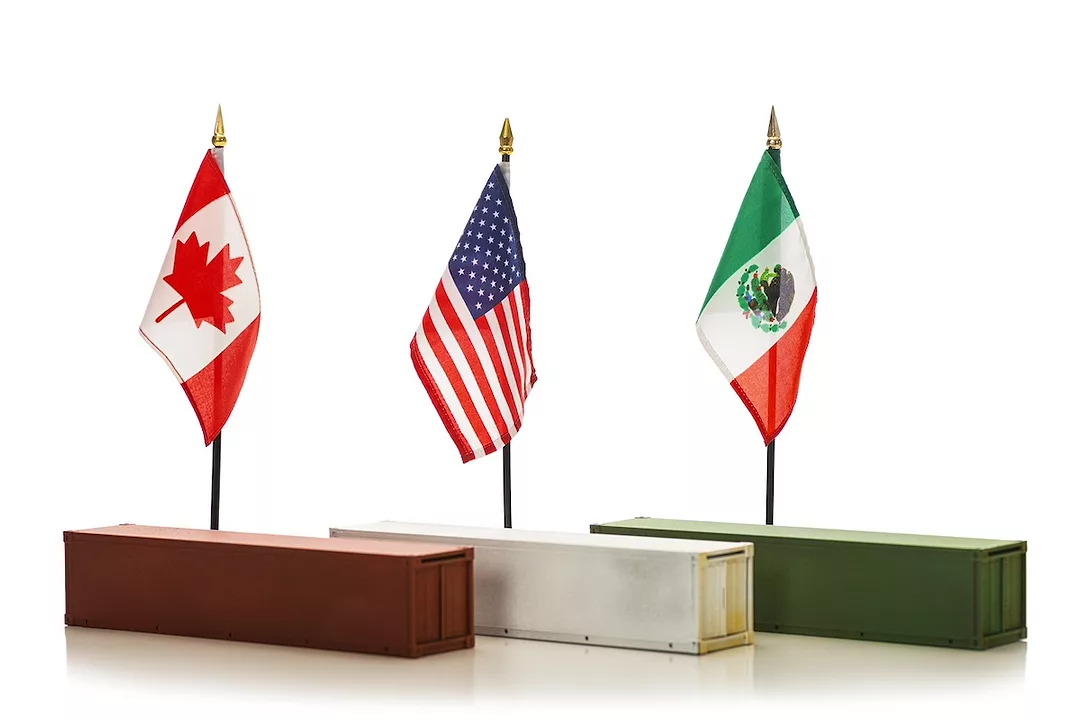
Photo: iStock / cmannphoto
It can be difficult to pin down where exactly President-elect Donald Trump stands on tariffs on a day-to-day basis. On a Monday, he might propose 60% duties on all imports from China. Then on Tuesday, it's another 10% on China, plus 25% for products coming into the U.S. from Mexico and Canada. By Friday, the news cycle could be peppered with headlines about Trump calling for the U.S. to retake control of the Panama Canal, or threats of tariffs against Denmark in a bid to have the U.S. absorb Greenland. It's enough to make one's head spin, but it's also a reminder that in a world of uncertainty for supply chains, businesses will need to be ready for anything in 2025.
"There's no longer just waiting for a 'black swan' event — we now have continual 'gray swan' events, and supply chains have to now understand that this is the way of life," says David Warrick, the executive vice president of enterprise for real-time supply chain visibility and risk-management technology provider Overhaul.
Whatever trade rules under Trump end up looking like, everyone seems to agree that new tariffs will come into effect in 2025, and that costs for a variety of commercial and consumer goods will likely increase in kind. Even so, the actual specifics of those policies have been something of a moving target, which has made it difficult for supply chain leaders to plan accordingly. Given that — as well as the laundry list of other disruptions businesses are already dealing with — Warrick says that it's important to remember that there isn't a one-size-fits all solution that will work for everyone.
Read More: More Tussles Over Trump Tariffs
"I think supply chain practitioners have to be thoughtful and mindful of the situation that they're in, but also know that this is only one of the many different adversaries that we are facing at this time," Warrick says, pointing to the a string of recent labor disruptions, years-long worker shortages in the trucking and warehousing industries, and ongoing disruptions in the Red Sea that have continued to stall shipping through the Suez Canal. Warrick believes that those obstacles make it much more important for supply chains to be agile and adaptable, with a focus on diversifying production sites, and using technology to predict and plan for whatever the next disruption might be.
In the near term, though, the United States still relies heavily on the very countries Trump has been threatening with trade wars. According to data from insurance broker Marsh Risk Advisory, roughly 40% of U.S. supply chains have some sort of exposure to Mexico, Canada and China, leaving companies operating in those countries in a precarious position headed into Trump's second term.
But, that also creates a unique opportunity, says Marsh Risk Advisory managing director James Crask.
"Companies can take a fresh look at the balance they strike between efficiency and resilience," Crask says. "In a more benign risk environment, the temptation is to strip costs down — as we move into a world with more uncertainty, the amount you invest in resilience versus efficiency will change."
When disruption becomes the norm, businesses get a chance to rewire their supply chains. But that doesn't mean allowing yourself to inadvertently stumble into another risk, he cautions. Crask describes how it can be beneficial to shift production out of China to relieve pressure from potential tariffs, but moving too much into a single region could create new issues down the line, from manufacturing hubs such as Vietnam or Bangladesh that are constantly exposed to flooding and storms, to Ukraine, where Russia's invasion has slowed the flow of rare metals and agricultural exports for years now. In the end, it's all about finding the right balance, Crask says, and using data to make informed decisions about how to deal with a short-term concern such as tariffs, while squaring that with the need for longer-term resiliency.
Tariffs against China also aren't all the only concern for supply chain leaders headed into the next presidential administration, with Trump threatening to go back to the drawing board on the U.S.-Mexico-Canada Agreement (USMCA) before it goes under review in 2026. Although Trump himself was the one who pushed for the trade deal in his first term, he made it clear throughout his campaign in 2024 that he intends to force Canada and Mexico back to the table for a new agreement, and that he won't hesitate to use tariffs against either country as a negotiating tactic. That said, threatening to launch a trade war between the U.S. and its northern and southern neighbors is one thing — actually following through is something else entirely.
"When the administration wants to change trade agreements and make it more challenging to go across borders, it adds cost, and it adds complexity," says Vinny Licata, the head of logistics at global manufacturing company Fictiv.
Any pressure the U.S. applies on Canada and Mexico creates problems for all parties involved, Licata adds, and would ultimately put even more pressure on the price of basic goods. According to the Brookings Institute — a Washington, D.C. think tank that specializes in economic policy — around 50% of U.S. trade with Canada and Mexico is driven by supply chains for the automotive, medical equipment, energy and agriculture sectors, with products in each industry crossing borders multiple times throughout the manufacturing process. Because of that, any tariffs imposed against Canada and Mexico would need to be enforced each time products move through those supply chains, leading to a situation that Brookings warns would be "economically unviable."
More than that, Moody's Analytics supply chain industry practice lead Andrei Quinn-Barabanov points out that, if the U.S. is actually serious about reducing its reliance on China, healthy relationships with Mexico and Canada are a necessity.
"The U.S.-Mexico-Canada trade pact is the primary alternative to the United States sourcing from China," he says, with the USCMA including incentives to boost North America's automotive and semiconductor supply chains, and requirements surrounding ethical labor practices and collective bargaining rights, all of which have been areas of concern when it comes to sourcing from China. Mexico in particular has also been an attractive destination for U.S. companies focusing on nearshoring out of China, offering a relatively cheap labor force, lower transportation costs, and all the other logistical advantages that come with sharing a land border.
So, are the threats to the USCMA all bluster and no bite? Quinn-Barabanov believes so, predicting a "status quo," while positing that much of Trump's recent posturing has likely been aimed at scoring concessions from Mexico and Canada on issues like drug trafficking and immigration. He shares a similar opinion regarding Trump's threat to return control of the Panama Canal to the U.S., viewing it more as a case of the incoming president "shaking trees" to see what falls out.
"I don't see any kind of military action, or even serious economic action," he says. "I think this is just a way to ensure that the Panamanian government is paying full attention to the United States."
"We don't really need to get into a dispute about the Panama Canal," Warrick agrees. "It's been working fine, and any sort of disruption to the Panama Canal will have a huge knock-on effect on both inbound and outbound [shipments] from the U.S."
As for tariffs, Warrick hopes that "common sense prevails," and that, by the end of 2025, supply chain leaders use the uncertainty as an opportunity to become more creative, holistic and resilient.
Popular Stories




100 Great Supply Chain Partners 2026: The Secret to Supply Chain Success
VIEW THE LATEST ISSUECase Studies


Visit Our Sponsors |
|
|
|
|
|
|
|
|
|
|
|
|
|
|
|
|
|
|
|
|
|
|
|
|
|
|
|
|
|
|
|
|
|
|
|
|
|
|
|
|
|
|
|
|
|
|
|
|
|
|
|