
SCB FEATURE
Trump’s Tariffs Threaten to Unravel Southeast Asia’s Apparel Industry
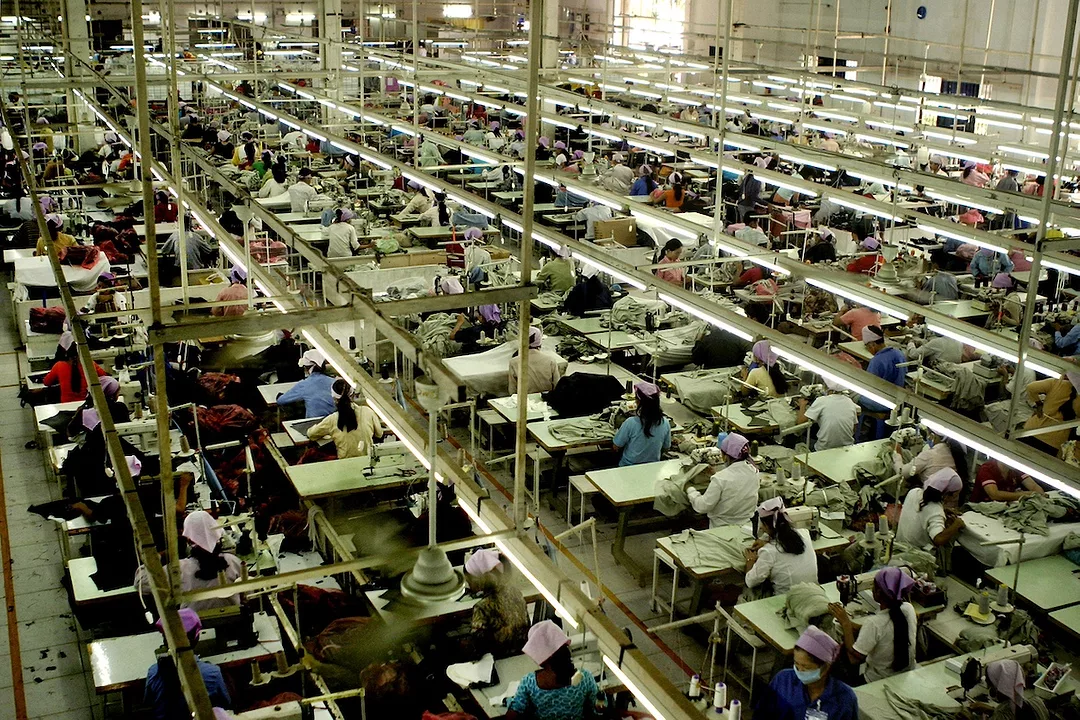
Photo: iStock / Liuser
The Trump administration's threat of tariffs aimed at balancing trade deficits and bringing manufacturing back to the U.S. are already rippling through Southeast Asia’s apparel and garment sector, threatening the delicate economies of countries long relied upon by some of the world's biggest retailers for low-cost, high-volume production.
"Companies that shifted production to Southeast Asia to avoid China tariffs now face the same vulnerability, with no obvious plus-one alternative," says Jeanel Alvarado, the founder and CEO of apparel industry publication and consultancy RETAILBOSS.
According to data from the U.S. International Trade Commission, seven countries accounted for 66% of U.S. apparel imports in 2023: China, Vietnam, Bangladesh, India, Indonesia, Cambodia and Pakistan. China led the way at 21%, but countries like Vietnam (18%), Bangladesh (9%) and India (6%) have become popular destinations for retailers looking for so-called "China plus-one" alternatives for manufacturing, especially given their ready supply of cheap labor and the relatively low cost of moving production there.
At the end of a 90-day pause President Trump implemented on April 9, those countries would be subject to an average tariff rate from the U.S. of 46%. Despite China shouldering the heaviest burden with a 125% rate (and not being included in the pause), the popular China plus-one alternatives won't have it much better if or when the pause expires, with Cambodia looking at the possibility of 49% tariffs, followed by Vietnam at 46%, Bangladesh at 37%, Indonesia at 32%, Pakistan at 29%, and India at 27%. Retailers have spent years trying to diversify their manufacturing across Southeast Asia to guard against the burdens of a trade war between the U.S. and China, and suddenly, they've been left in a world of uncertainty.
Tariffs could also threaten the wider workforce of an industry that's helped lift out of poverty millions of women — who make up a majority of garment workers in Southeast Asia — with Vietnam having maintained a female labor force participation rate of 70% for more than two decades, outpacing many advanced Western economies, according to the International Monetary Fund. The garment industry has fueled a similarly high rate of women in its workforce (74%) in Cambodia, where labor groups have warned that factory owners facing mandates to cut costs in the face of tariffs could look to slash worker benefits and shift full-time employees to part-time status; a strategy they previously employed during the pandemic.
So, why move forward with tariffs in the first place? One of the biggest motivations the Trump administration has highlighted is moving overseas manufacturing to the U.S. And to some extent that may even be viable for a small handful of industries, but that represents a much taller order for the garment sector.
"Moving production back to the U.S. might sound appealing politically, but operationally, it’s a multi-year challenge," says Oliver Nodjoumi, who works as the executive vice-president at ICC Logistics, where he consults with apparel and retail manufacturing clients to navigate tariff exposure and reshoring efforts.
Nodjoumi notes that there isn't an existing labor force capable of filling the demand apparel companies would have if they moved their manufacturing to the U.S. Garment workers in the U.S. would also need to be paid 10-20 times more than workers in Southeast Asia currently make, and for many apparel brands, that simply isn't economically viable. Nodjoumi warns that, on a larger scale, Trump's tariffs could unravel retail supply chains that took decades to build, as factories find themselves squeezed between rising costs and increasingly price-sensitive buyers operating in an industry where margins are already razor thin.
Spinning up that same supply chain and manufacturing infrastructure from the ground up in the U.S. creates myriad challenges, says AJG Fashion Consulting founder Alice James. James points out that domestic manufacturing infrastructure for the apparel industry has largely been dismantled in the U.S. over the last three decades, meaning that the country "no longer has the workforce, machinery or volume capacity to compete with Asia's industrialized garment hubs."
"Production in Asian manufacturing is highly mechanized and much more advanced than U.S. fashion manufacturing," she explains. "What the U.S. could do by hand in an hour could probably be done much faster in China due to their advances in technology and machinery."
Even if manufacturing does get moved to the U.S., raw materials for garments would likely need to be sourced from Asia, meaning that companies would still be forced to pay tariffs unless they completely rework their sourcing strategies, she adds. Because of that, James estimates that a shirt that costs roughly $14 to make in China — after factoring in materials, labor, shipping, and the country's current 125% tariff rate — would cost at least $23 in the U.S., providing little incentive for any company to abandon their current production model.
Without a realistic path to rebuild domestic manufacturing at scale, the result of Trump's tariffs could end up being less a renaissance of American industry, and more a prolonged period of disruption, higher costs for consumers and retailers alike, and deep economic pain across Southeast Asia's apparel sector.
"For now, the dream of large-scale ‘Made in USA,’ apparel reshoring remains just that — a dream," says Alvarado.
Popular Stories





100 Great Supply Chain Partners 2026: The Secret to Supply Chain Success
VIEW THE LATEST ISSUECase Studies


Visit Our Sponsors |
|
|
|
|
|
|
|
|
|
|
|
|
|
|
|
|
|
|
|
|
|
|
|
|
|
|
|
|
|
|
|
|
|
|
|
|
|
|
|
|
|
|
|
|
|
|
|
|
|
|
|