
SPECIAL REPORT
Retail Compliance: It’s Complicated
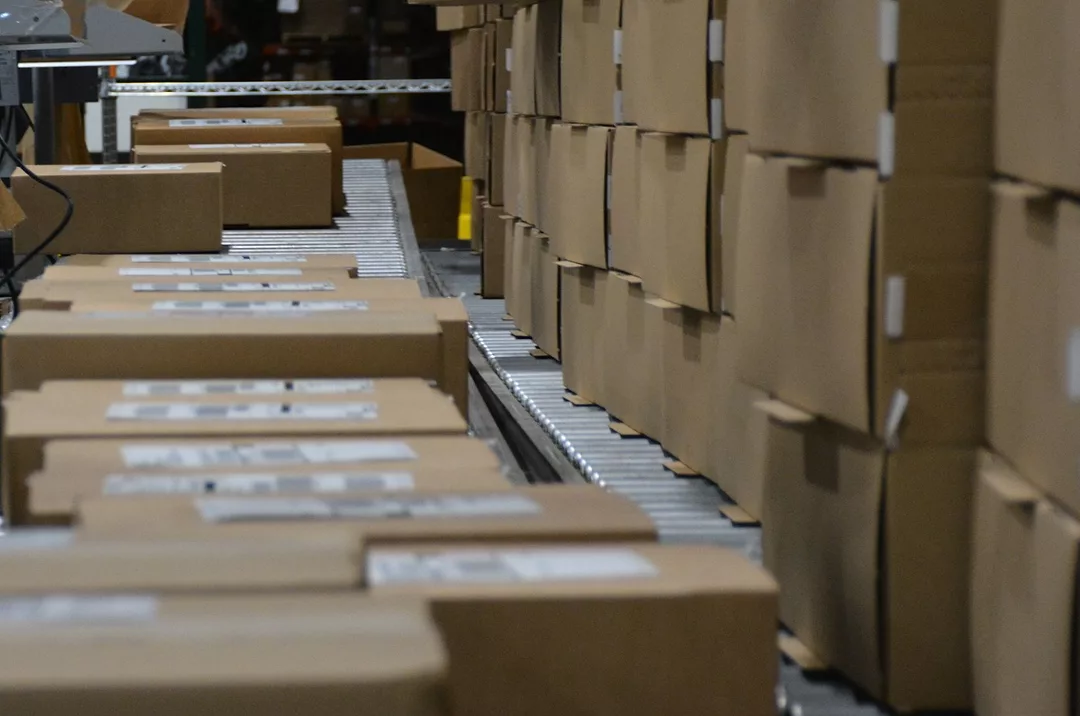
Economic pressures, layered with uncertainty around tariffs and inflation fears, touch most businesses, but they are having a prominent impact on retailers, driven largely by the shift towards e-commerce.
The numbers tell the story: E-commerce reached 18% of U.S. retail sales in 2024 and is growing at about 5% annually against conventional retail’s 2% growth. This growth puts pressure on last-mile fulfillment, which can account for more than half of an order’s total shipping cost.
Competitive advantage is measured in pennies and seconds saved by small performance improvements which add up, notably for major retailers dealing in very high volumes. Smaller retail vendors and suppliers in turn feel the pressure from the larger players to find efficiency enhancements as a condition for winning new bid business.
Efficiencies typically involve picking, packing, loading and sequencing steps that streamline stocking operations and lower labor, energy consumption and materials costs. To ensure these improvements work in sync, retailers of all sizes require supply chain transparency to mitigate risk and maximize profits.
Big Asks from the Big Players
“Automation has proliferated in receiving, and cameras and scanners are now looking at pallets as they come in the door,” explains James Malley, co-founder and CEO of automated cartonization solutions provider Paccurate. “Vendors shipping to Walmart, for example, have to stack their pallets in a very specific way, so that the labels can be read at a certain height or center of mass so as not to disrupt all of the automation and efficiencies.”
Product is expected to be positioned for quick opening and removal and packaged in cartons sized precisely for the goods to fit efficiently on shelves sized to those cartons. Labels must be easily accessible to scanning throughout the move. The objective is to shave time and cost, but also to simplify processes and speed workflow by temporary, less experienced workers.
Walmart’s manual for onboarding new suppliers, as an example, is nearly 200 pages, covering every stage of the order. An added complication for suppliers and vendors: Target, Costco and other retailers all have their own distinct operating specifications tailored to different facilities, equipment and processes.
Regulation is Also on the Rise
In addition, government at all levels is weighing in with new packaging regulations to address public impacts of e-commerce waste such as corrugated packaging and plastic scrap flooding landfills or polluting waterways. The template for this legislation is the European Union’s Packaging and Packaging Waste Regulation (PPWR), adopted last February, which mandates recyclable packaging and sets targets for reduced consumption of lightweight plastic bags; establishes labeling standards for consumer sorting of packaging content; and limits empty space and fill in all packaging to no more than 50% by 2030.
In the U.S., individual states are taking the initiative. New Jersey, for example, banned sale of polystyrene packing filler in 2022, and a bill now before the Legislature would apply the same 50% empty space maximum as the EU for large stores and online retailers.
“The proposed fines for non-compliance are $250-500 per package,” notes Paccurate head of sales, Vance Reeds, head of sales for Paccurate. “So for somebody shipping millions of packages into New Jersey the theoretical risk with that regulation is pretty big.”
Malley adds that the 50% maximum is actually a high bar for the industry currently, given variability of product sizes and shapes typically in inventory relative to the corrugated supply most companies order and maintain based on their best-selling items. “Half full seems like an easy thing to accomplish,” he says, “but we found that it's not. If you’re at 50% full or less, you're probably in the top quartile of shippers.”
When to Automate?
For every retail shipper there comes a tipping point when complexity delivers the message that manual processes and human judgment alone aren’t enough to balance the complex tradeoffs involved.
“Two opposing forces coming at each other are causing this need to automate,” says Greg Walls, vice president of revenue for Paccurate. “There’s the increasing complexity of rules, regulations and standard operating procedures as a general trend, with a static or declining, more temporary workforce with less training and experience. Your decision point to automate moves closer because you’re losing control of processes on the floor; there’s only so much you can write down on paper.”
Challenges have evolved in the warehouse over time, as e-commerce has grown and matured. Initially warehouses felt they could mix B2B and e-commerce freight, but they were quickly overwhelmed by surging volumes and different characteristics requiring different skill sets. Lost productivity and labor overages made it necessary to segregate the operations. Early automation focused on picking, but as mobile robotics solved the workload in this zone, the bottleneck shifted to the pack station — where retail compliance is most critical.
As major retail chains expand their fulfillment requirements, they force a new, more difficult supplier/vendor discussion, Malley argues, around cost to serve certain customers. “It's obviously a coveted position to be able to sell your product through a major retailer, but they'll also charge you a penalty each time,” he says, “and there's a reputational hit that you'll probably take as a vendor for screwing up and not following the requirements. It’s something shippers have to think about in deciding to work with a retail partner.”
The Future is Integrated
Software developers face their own challenges in designing compliance into end-to-end supply chain business rules. Solutions tend to be compartmentalized for, say, upstream sourcing and downstream distribution, or for the truck versus for the warehouse.
Most cloud-based solutions are developed as modules, to be integrated with existing Warehouse Management Systems (WMS), Transportation Management Systems (TMS), or Enterprise Resource Planning (ERP) platforms to address specialized needs. For example, focusing on optimizing and automating cartonization can lower costs and meet sustainability goals.
While the idea of designing a comprehensive compliance module to the Walmart manual may be tempting, retail compliance touches many areas of operations, requiring different expertise for each, making a one-size-fits-all solution difficult.
“Compliance covers pretty much the entire supply chain, from trucks to pallets to 'eaches' to the packaging of the products,” Walls explains, “so is there an algorithm that literally spans everything from manufacturing to the store? Probably not.” A more practical approach, he says, is to address similar functions within the life cycle of an order – putting 'eaches' in cartons, building the pallet, loading the truck, following the rules for each customer’s system.
“The really forward-looking enterprise players are looking at warehouse execution system (WES)-type programs that control the whole thing in harmony, but for now we can at least design an algorithm that theoretically covers our part of the world, from start of pick to store delivery.”
No Turning Back
It’s unlikely that the clock will turn back on either retail compliance or adoption of automation. As evidence, Amazon recently announced Vulcan, a new AI-enabled robotic system that can replicate human touch and pick up individual items — an essential step in automating reverse logistics functions like receiving and putaway.
Malley predicts that conventional scanning technologies will soon give way to AI vision systems that will monitor operations in real time and gather more continuous visual data on handling of orders and SKUs, and on movements of people, equipment and robots.
“In the past, cartonization was a simple WMS feature that wasn't very deep, and that stopped being okay, just because the costs associated with packing poorly got worse. And so now I’d say compliance is kind of one of the inputs into our ecosystem that generates more innovation.”
Resource Link: www.paccurate.io
Popular Stories




100 Great Supply Chain Partners 2026: The Secret to Supply Chain Success
VIEW THE LATEST ISSUECase Studies


Visit Our Sponsors |
|
|
|
|
|
|
|
|
|
|
|
|
|
|
|
|
|
|
|
|
|
|
|
|
|
|
|
|
|
|
|
|
|
|
|
|
|
|
|
|
|
|
|
|
|
|
|
|
|
|
|