.webp?height=100&t=1783959879&width=150 "014_how_ai_is_transforming_the_transportation_back_office_v1-(540p).jpg")
WAREHOUSE AUTOMATION
The Convergence of Lift Trucks, AGVs and AMRs
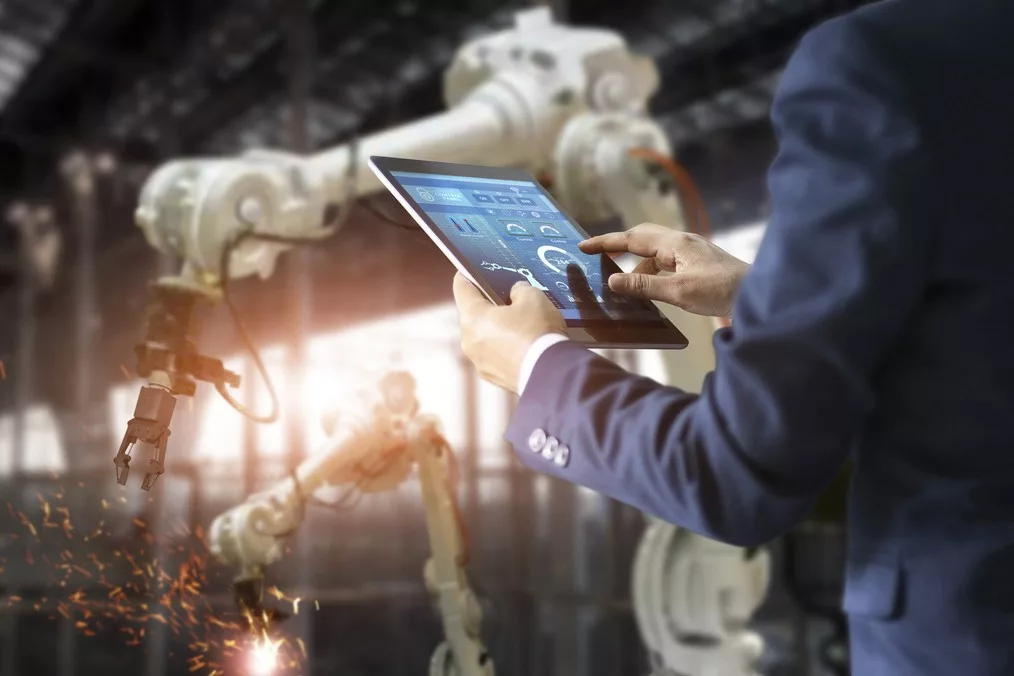
Image: iStock/ipopba
 Analyst Insight: Material movement is entering a transformative era, in which lift trucks and innovative technology are converging into a unified ecosystem. As manufacturing, warehousing and distribution operations evolve, success will depend less on adopting technology, such as automated guided vehicles (AGVs) and autonomous mobile robots (AMRs), for automation’s sake, and more on designing adaptable, complete systems that blend the strengths of humans, robots and data intelligence.
For decades, the backbone of material handling has been the traditional lift truck — ubiquitous, proven, and manually operated. Yet reliance on this human-led equipment has its challenges, including safety risks, operator shortages, turnover, rising labor costs and variability in performance. These issues have become increasingly difficult to manage as facilities strive for greater consistency, efficiency and uptime.
As automation matured, AGVs and AMRs entered the mix, each designed to meet different operational needs. AGVs excel in structured, repeatable and long-haul applications where predictability and precision are critical, while AMRs provide greater flexibility and adaptability for dynamic or mixed-use environments. Rather than competing technologies, these systems are each optimized for specific workflows, safety requirements and levels of autonomy.
Today, modern industrial facilities run hybrid fleets where manual, guided and autonomous vehicles coexist. However, this coexistence often lacks integration, with systems operating independently, thus limiting ability to share information or coordinate activity vehicle-wide. The industry’s next phase will rely on how well these technologies interoperate to achieve seamless orchestration.
Over the next several years, material handling operators should focus on three priorities: integration, intelligence and investment in scalability.
First, integrating mixed fleets under a common management platform will allow all vehicle types to share situational awareness, optimize routing, respond dynamically and enhance employee and workplace safety.
Second, improving operational visibility will be key to driving intelligence. Once systems are connected, the data they generate can be analyzed to identify patterns, predict issues and inform better decision-making.
Third, investment in adaptability — choosing autonomous and supporting systems that can scale and evolve alongside changing operational demands — will be critical to fostering long-term resilience and growth.
The road to fully connected material movement won’t be without challenges. Interoperability standards are still maturing, and integrating mixed fleets into a cohesive ecosystem remains complex. The human element may prove even more demanding; ensuring that employees understand, trust and adopt autonomous systems will determine whether technology accelerates progress or stalls it.
As vehicles, infrastructure, software and enterprise systems become increasingly connected, cybersecurity and data governance will also move to the forefront, demanding rigorous oversight and shared accountability across the organization.
In the near future, expect to see greater efficiency, safety and coordination in shared environments, as interoperability continues to advance. Hybrid fleets, where human-driven lift trucks operate in sync with autonomous vehicles, will become standard practice. As AI- and vision-driven perception continues to improve and interoperability standards mature, communication between diverse vehicle types will become seamless, enabling true cross-brand coordination and intelligent orchestration across the floor.
Resource Link: https://seegrid.com/
Outlook: The next decade will bring a fundamental shift in material movement as facilities evolve into autonomous logistics networks. With so many specialized solutions, mixed fleets of lift trucks, AGVs and AMRs will be essential, each providing best-fit capabilities for customer needs. The future of material handling won’t be defined by vehicle type, but by the intelligence that unites them — functioning as interoperable, self-optimizing nodes that move materials smarter, faster and safer.
Popular Stories

.webp?height=100&t=1783656185&width=150 "017_turning_disruption_into_opportunity_v1-(540p).png")



SupplyChainBrain 2026 ESG Guide: ESG — The Supply Chain’s Biggest Secret
VIEW THE LATEST ISSUECase Studies


Visit Our Sponsors |