
• Advertise
  • Contact Us
  • Supplier Directory
  • SCB YouTube
  • About Us
  • Login
  • Subscribe
  • Logout
  • My Profile
  • LOGISTICS
    • Air Cargo
    • All Logistics
    • Facility Location Planning
    • Freight Forwarding/Customs Brokerage
    • Global Gateways
    • Global Logistics
    • Last Mile Delivery
    • Logistics Outsourcing
    • LTL/Truckload Services
    • Ocean Transportation
    • Parcel & Express
    • Rail & Intermodal
    • Reverse Logistics
    • Service Parts Management
    • Transportation & Distribution
  • TECHNOLOGY
    • All Technology
    • Artificial Intelligence
    • Cloud & On-Demand Systems
    • Data Management (Big Data/IoT/Blockchain)
    • ERP & Enterprise Systems
    • Forecasting & Demand Planning
    • Global Trade Management
    • Inventory Planning/ Optimization
    • Product Lifecycle Management
    • Robotics
    • Sales & Operations Planning
    • SC Finance & Revenue Management
    • SC Planning & Optimization
    • Supply Chain Visibility
    • Transportation Management
  • GENERAL SCM
    • Business Strategy Alignment
    • Customer Relationship Management
    • Education & Professional Development
    • Global Supply Chain Management
    • Global Trade & Economics
    • Green Energy
    • HR & Labor Management
    • Quality & Metrics
    • Regulation & Compliance
    • Sourcing/Procurement/SRM
    • SC Security & Risk Mgmt
    • Supply Chains in Crisis
    • Sustainability & Corporate Social Responsibility
  • WAREHOUSING
    • All Warehouse Services
    • Conveyors & Sortation
    • Lift Trucks & AGVs
    • Order Management & Fulfillment
    • Packaging
    • RFID, Barcode, Mobility & Voice
    • Warehouse Automation
    • Warehouse Management Systems
  • INDUSTRIES
    • Aerospace & Defense
    • Apparel
    • Automotive
    • Chemicals & Energy
    • Consumer Packaged Goods
    • E-Commerce/Omni-Channel
    • Food & Beverage
    • Healthcare
    • High-Tech/Electronics
    • Industrial Manufacturing
    • Pharmaceutical/Biotech
    • Retail
  • THINK TANK
  • WEBINARS
    • On-Demand Webinars
    • Upcoming Webinars
    • Webinar Library
  • PODCASTS
  • WHITEPAPERS
  • VIDEOS
Home » Global Supply Chain Management » Brazil’s First Ethanol-Powered Ship Sails in Biofuels Win

Brazil’s First Ethanol-Powered Ship Sails in Biofuels Win
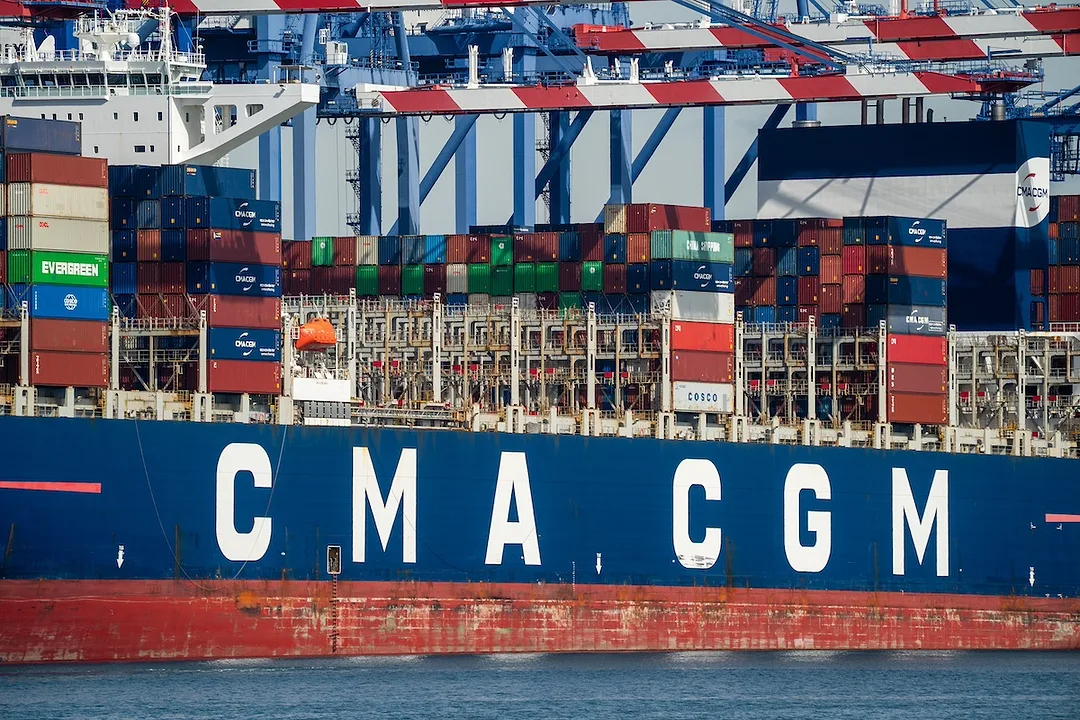
A blue container ship with "CMA CGM" written across its side in white lettering, docked at a port

Photo: Bloomberg

July 15, 2026
Bloomberg

The first container ship to run on Brazilian-made ethanol fuel set sail early on July 14 from the port of Santos, an unprecedented test for the nation’s biofuel industry that marks a key step toward cutting emissions in maritime transportation.

The CMA CGM Iron, which is adapted to run on methanol, ethanol and conventional fossil bunker fuel, will be bound for Asia, making stops in Sri Lanka and Singapore before reaching its final destination China. The ship is carrying various types of cargo.

“Brazil is strategic for us and the rest of the world,” said Neusa Marcelino, Brazil CEO of French shipping giant CMA CGM, adding that the ethanol-fueling operation is an audacious step in efforts to clean up ocean vessel transportation. 

The use of ethanol as bunker fuel creates a potentially huge market for biofuel makers and farmers in Brazil, the world’s second biggest producer of ethanol after the U.S., as companies build more capacity to produce the renewable fuel alternative locally.

Copersucar, the energy company that supplied the renewable fuel and helped organize the ethanol bunkering operation, said Brazil is keen to scale up production to cater to maritime ethanol demand in the future.

Widespread adoption of the fuel in shipping could lead to a substantial reduction in global emissions. It would also be a boon for Brazilian farmers. The nation’s ethanol is primarily made from sugarcane and more recently from corn feedstocks.

The global shipping industry accounts for as much as 3% of global greenhouse gas emissions, according to a 2020 International Maritime Organization study. If the industry were a country, it would rank as the sixth largest emitter worldwide, between Japan and Germany, according to the World Bank.

The CMA CGM Iron’s voyage comes as the IMO prepares to enforce a global net-zero framework for ocean vessel transportation. The group’s directive was approved in April 2025, but formal adoption was pushed back to December of this year after pressure from the U.S.

The long-awaited IMO rules would pave the way for ethanol to gradually displace oil as shipping’s dominant fuel and open the door for cleaner alternatives.

Narciso Bertholdi, who serves on the boards of two Brazilian corn ethanol producers, said potential US support for the guidelines would accelerate adoption of ethanol as a maritime fuel.

“Consider that the shipping industry consumes approximately 250 million tons of fuel annually. If just 10% of that volume were replaced by ethanol, demand would reach 32 billion liters (8.4 billion gallons) — virtually equivalent to the entire Brazilian ethanol market,” he said.

In May, the IMO cleared a key hurdle for Brazilian ethanol made from second-crop corn ahead of introduction of net-zero emissions guidelines.

A month earlier, Brazilian miner Vale ordered new ethanol-powered Guaibamax vessels from a Chinese shipbuilder. They are scheduled for delivery in 2029 and could be the first to use 100% ethanol to move iron ore on ocean vessels, the company said.

CMA CGM, the company behind the vessel in the initial Brazil sailing, plans to have about 200 ships adapted to run on renewable fuels by 2031. Currently, the company operates a 700-vessel fleet.

According to the World Shipping Council, some 440 dual-fuel container ships and vehicle carriers, which can run on renewable or lower emission fuels, are currently in operation worldwide. That’s up from 267 such vessels in March 2025. Also, there were 1,204 dual-fuel container ships and vehicle carriers on order or delivered as of March globally, up from 83 five years ago, council data shows.

Brazil produced 37 billion liters of ethanol overall in the crop year ended in March, according to UNICA industry data. 

In spite of that, Brazilian companies keep building more corn ethanol capacity, with demand for renewables in maritime transportation crucial to absorbing the additional supply.

Still, global shipping regulations will have to evolve to make biofuels scalable for maritime use, says Filippe Fernandez, Latin America commercial director at bunker fuel trader Bunker One.

European Union regulations, which exclude first-generation crop-based biofuels made from corn and sugarcane, represent a major obstacle, he said.

“Testing a fuel is one thing,” Fernandez said. “Building a market around it is another.”

    RELATED CONTENT

    RELATED VIDEOS

    Global Supply Chain Management Green Energy Sustainability & Corporate Social Responsibility
    • Related Articles

      100-Year-Old Norwegian Research Ship Sails the Globe for Sustainability

      Giant Cargo Ship Gets Fitted With Sails in Effort to Cut Carbon

      Shipping Giants Ask Watchdog to Avoid Biofuels in Green Push

    Bloomberg

    Firms Race to Fix Widespread Cyber Flaw Before Hackers Break In

    More from this author

    Subscribe to our Daily Newsletter!

    Timely, incisive articles delivered directly to your inbox.

    Featured Product

    Popular Stories

    • A cartoon illustration of a man sitting at a desk in front of a laptop, surrounded by five faceless humanoid robots

      The Productivity Story Everyone is Missing

      Technology
    • Planet earth from space showing realistic earth surface and world map as in outer space point of view

      Beyond Traditional Trade Agreements: A Proposal for Creating ‘Rules of Resilience’

      Global Supply Chain Management
    • A red and black container ship in open ocean

      Hormuz Attacks Against Commercial Shipping Reach Record Highs

      Global Gateways
    • An overhead view of a collection of multicolored lithium-ion batteries

      Building a Resilient U.S. Battery Supply Chain

      Green Energy
    • A blue container ship stacked with multi-colored containers sinking into an ocean of red tape that reads "tariffs"

      From Russian Oil to U.S. Supply Chains: The Hidden Risk of Secondary Tariffs

      Regulation & Compliance

    Digital Edition

    Scb q3 26 cover

    100 Great Supply Chain Partners 2026: The Secret to Supply Chain Success

    VIEW THE LATEST ISSUE

    Case Studies

    • Recycled Tagging Fasteners: Small Changes Make a Big Impact

    • A GRAPHIC SHOWING MULTIPLE FORMS OF SHIPPING, WITH A HUMAN STANDING AT THE CENTER, TOUCHING A SYMBOLIC MAP OF THE WORLD

      Enhancing High-Value Electronics Shipment Security with Tive's Real-Time Tracking

    • A GRAPHIC OF INTERLACING HONEYCOMBED ELEMENTS REPRESENTING GLOBAL BUSINESS TRANSACTIONS

      Moving Robots Site-to-Site

    • JLL Finds Perfect Warehouse Location, Leading to $15M Grant for Startup

    • Robots Speed Fulfillment to Help Apparel Company Scale for Growth

    Visit Our Sponsors

    4flow Amazon Freight Anaplan
    Arkieva AutoStore Blue Yonder
    Canadian National Railway Company Carton Cloud CoEnterprise
    Dassault Descartes Dexory
    Duravant E2Open EPG
    General Logistics Systems GEP Hy-Tek
    iGPS Knapp Korber
    Lyngsoe Odyssey Logistics OMP
    PeakAI Procurability Quinyx
    SAP Sikick Staples
    S&P Global Mobility Systech TADA
    Tive TransImpact US Bank
    Werner WSI
    • More From SCB
      • Featured Content
      • Video Library
      • Think Tank Blog
      • SupplyChainBrain Podcast
      • Whitepapers
      • On-Demand Webinars
      • Upcoming Webinars
    • Digital Offerings
      • Digital Issue
      • Subscribe
      • Manage Email Preferences
      • Newsletters
    • Resources
      • Events Calendar
      • 2026 Event Coverage
      • SCB's Great Supply Chain Partners
      • Supplier Directory
      • Case Study Showcase
      • Supply Chain Innovation Awards
      • 100 Great Partners Form
    • SCB Corporate
      • Advertise on SCB.COM
      • About Us
      • Privacy Policy
      • Contact Us
      • Data Sharing Opt-Out

    All content copyright ©2026 Keller International Publishing Corp All rights reserved. No reproduction, transmission or display is permitted without the written permissions of Keller International Publishing Corp

    Design, CMS, Hosting & Web Development :: ePublishing