
• Advertise
  • Contact Us
  • Supplier Directory
  • SCB YouTube
  • About Us
  • Login
  • Subscribe
  • Logout
  • My Profile
  • LOGISTICS
    • Air Cargo
    • All Logistics
    • Facility Location Planning
    • Freight Forwarding/Customs Brokerage
    • Global Gateways
    • Global Logistics
    • Last Mile Delivery
    • Logistics Outsourcing
    • LTL/Truckload Services
    • Ocean Transportation
    • Parcel & Express
    • Rail & Intermodal
    • Reverse Logistics
    • Service Parts Management
    • Transportation & Distribution
  • TECHNOLOGY
    • All Technology
    • Artificial Intelligence
    • Cloud & On-Demand Systems
    • Data Management (Big Data/IoT/Blockchain)
    • ERP & Enterprise Systems
    • Forecasting & Demand Planning
    • Global Trade Management
    • Inventory Planning/ Optimization
    • Product Lifecycle Management
    • Robotics
    • Sales & Operations Planning
    • SC Finance & Revenue Management
    • SC Planning & Optimization
    • Supply Chain Visibility
    • Transportation Management
  • GENERAL SCM
    • Business Strategy Alignment
    • Customer Relationship Management
    • Education & Professional Development
    • Global Supply Chain Management
    • Global Trade & Economics
    • Green Energy
    • HR & Labor Management
    • Quality & Metrics
    • Regulation & Compliance
    • Sourcing/Procurement/SRM
    • SC Security & Risk Mgmt
    • Supply Chains in Crisis
    • Sustainability & Corporate Social Responsibility
  • WAREHOUSING
    • All Warehouse Services
    • Conveyors & Sortation
    • Lift Trucks & AGVs
    • Order Management & Fulfillment
    • Packaging
    • RFID, Barcode, Mobility & Voice
    • Warehouse Automation
    • Warehouse Management Systems
  • INDUSTRIES
    • Aerospace & Defense
    • Apparel
    • Automotive
    • Chemicals & Energy
    • Consumer Packaged Goods
    • E-Commerce/Omni-Channel
    • Food & Beverage
    • Healthcare
    • High-Tech/Electronics
    • Industrial Manufacturing
    • Pharmaceutical/Biotech
    • Retail
  • THINK TANK
  • WEBINARS
    • On-Demand Webinars
    • Upcoming Webinars
    • Webinar Library
  • PODCASTS
  • WHITEPAPERS
  • VIDEOS
Home » Regulation & Compliance » USMCA’s Uncertain Fate Is Challenging North American Automakers
SCB FEATURE

USMCA’s Uncertain Fate Is Challenging North American Automakers
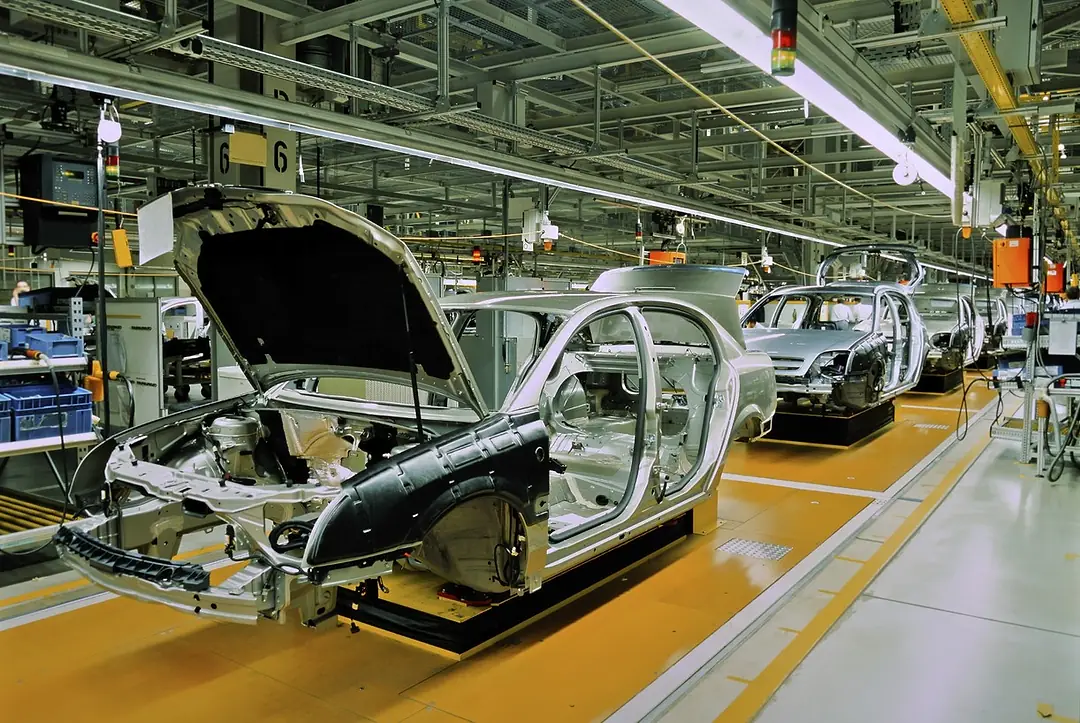
AUTOMOBILE MANUFACTURING ASSEMBLY LINE iStock-RainerPlendl-114288673.jpg

Photo: iStock/RainerPlendl

August 17, 2026
Robert J. Bowman, SupplyChainBrain

Of all industries doing business across North American borders, none stands to be more affected by a possible end to the United States-Mexico-Canada Agreement than automotive manufacturers.

Operations within Mexico would be especially impacted. The country’s automotive exports to the U.S. reached $58.9 billion in the first four months of 2025, versus $44.9 billion in the same period of 2018. In 2024, Mexico accounted for the largest share of U.S. auto imports, with 22.7% of the market.

The trend was interrupted, however, by a 25% tariff on imported vehicles and parts imposed by President Trump last year. It resulted in a 13.4% year-over-year drop in the value of Mexico’s auto-industry exports to the U.S. in the first two months of 2026.

Such short-term damage could pale by comparison, however, if the USMCA is dismantled. President Trump has indicated that he won’t pursue a 16-year renewal of the tripartite agreement, preferring instead to engage in annual joint reviews with Mexico and Canada until expiration on July 1, 2036. (That decision could be reversed at any time between now and then if the parties agree to undertake negotiations for a formal extension.)

Trump justified the 25% duty on auto imports under section 232 of the Trade Expansion Act of 1962, which permits such action if the U.S. Secretary of Commerce determines that a specific class of imports “threatens to impair” U.S. national security. That finding has proved to be “an expensive hit for the automotive supply chain,” says Angela Gamalski, partner in the Regulatory Department of the Honigman law firm. She notes that the 25% tariff was imposed on top of existing duties, meaning that the cumulative rate can range from $27.5% to 50%, depending on type of vehicle and country of origin.

The higher duties come with a heavy compliance burden, requiring original equipment manufacturers to track the origin of all automotive parts in order to qualify for certain mitigating offset licenses.

The licenses are run through the Commerce Department, which looks at the total number, cost and origin of auto parts to determine how much of a vehicle is being sourced in the U.S. Qualifying automakers making formal application for relief are given a dollar amount that they can apply as credit for tariffs they’re already paying. They can also assign that amount to specific importers within their supply chains that are taking the biggest tariff hit.

All of this figures into decisions by North American manufacturers as to where they’ll site their plants in the coming years, especially the reshoring of some production back to the U.S. But tariffs are just one element in that calculation, Gamalski says, along with issues of product quality, geography, labor, logistics and total landed cost.

“The automotive supply chain is planned so far in advance that you can’t pick up in mid-planning cycle and move something to re-source it,” she says.

USMCA is a crucial part of the picture because auto  parts qualifying under it are exempt from the section 232 tariffs. How that process would play out in the absence of the agreement or a similar treaty is uncertain, Gamalski says. “The million-dollar question for long-term planning cycles is, Are those 232s going to stay in place?”

Bilateral talks between the U.S. and Mexico could address the problem, she says, but the benefit of USMCA is that it establishes a “level playing field” among the three member countries, “with everyone working to apply the same standards.” The U.S. has been having “very different” conversations with Canada, Gamalski notes, “but there’s an understanding that the USMCA, at the end of the day, is a three-party agreement. It’s got to be balanced.”

Adding to the confusion and complexity for automakers is the recent emergence of “software-defined” vehicles, which are not directly addressed by the current USMCA. Instead, they’re subject to a separate regulatory regime under the Commerce Department’s Connected Vehicle Rules, administered by the agency’s Bureau of Industry and Security. While they particularly target vehicles, hardware and software relating to China and Russia, the rules promise to impact the entire automotive industry because they bring into the picture additional federal agencies, including the Federal Communications Commission. And they’re certain to target self-driving software regardless of where the cars were built.

A complete end to USMCA or anything like it in 2036 seems unlikely at this point. A new administration taking office in January of 2029 could recommit the U.S. to the notion of a tripartite pact. And the annual reviews that are directed by the current agreement could address at least some of the complexities facing North American automakers. “In some ways, it’s like a real estate lease,” Gamalski says. “You’re at the end of the term, and now you’re on a month-to-month lease.” But it’s the surrounding uncertainty around USMCA’s fate that is causing the industry particular pain at the moment.

The hope for manufacturers is that regulators will come to see the importance of a strong and distinct North American auto industry, and provide some stability in the form of a coherent, long-term policy for the entire region. With similar efforts taking shape in Asia and Europe, Gamalski says, “it’s hard to fathom that the parties would not continue to facilitate a trade agreement among them, given the competitiveness of the auto industry.”

    RELATED CONTENT

    RELATED VIDEOS

    Regulation & Compliance Sourcing/Procurement/SRM Supply Chain Security & Risk Mgmt Automotive
    • Related Articles

      Watch: Impact of the Trump Tariffs on North American Automakers

      President Trump Is Angry About How China Treats American Automakers. But the U.S. Is Actually Winning

      Facing an Uncertain Future, USMCA Renewal Draws Support From North American Industries

    • Related Directories

      ProcureAbility

    Robert J. Bowman, SupplyChainBrain

    Watch: The Impact of Data Center Construction on Local Communities

    More from this author

    Subscribe to our Daily Newsletter!

    Timely, incisive articles delivered directly to your inbox.

    Featured Product

    Popular Stories

    • A cartoon illustration of a man sitting at a desk in front of a laptop, surrounded by five faceless humanoid robots

      The Productivity Story Everyone is Missing

      Technology
    • Planet earth from space showing realistic earth surface and world map as in outer space point of view

      Beyond Traditional Trade Agreements: A Proposal for Creating ‘Rules of Resilience’

      Global Supply Chain Management
    • A red and black container ship in open ocean

      Hormuz Attacks Against Commercial Shipping Reach Record Highs

      Global Gateways
    • An overhead view of a collection of multicolored lithium-ion batteries

      Building a Resilient U.S. Battery Supply Chain

      Green Energy
    • A blue container ship stacked with multi-colored containers sinking into an ocean of red tape that reads "tariffs"

      From Russian Oil to U.S. Supply Chains: The Hidden Risk of Secondary Tariffs

      Regulation & Compliance

    Digital Edition

    Scb q3 26 cover

    100 Great Supply Chain Partners 2026: The Secret to Supply Chain Success

    VIEW THE LATEST ISSUE

    Case Studies

    • Recycled Tagging Fasteners: Small Changes Make a Big Impact

    • A GRAPHIC SHOWING MULTIPLE FORMS OF SHIPPING, WITH A HUMAN STANDING AT THE CENTER, TOUCHING A SYMBOLIC MAP OF THE WORLD

      Enhancing High-Value Electronics Shipment Security with Tive's Real-Time Tracking

    • A GRAPHIC OF INTERLACING HONEYCOMBED ELEMENTS REPRESENTING GLOBAL BUSINESS TRANSACTIONS

      Moving Robots Site-to-Site

    • JLL Finds Perfect Warehouse Location, Leading to $15M Grant for Startup

    • Robots Speed Fulfillment to Help Apparel Company Scale for Growth

    Visit Our Sponsors

    4flow Amazon Freight Anaplan
    Arkieva AutoStore Blue Yonder
    Canadian National Railway Company Carton Cloud CoEnterprise
    Dassault Descartes Dexory
    Duravant E2Open EPG
    General Logistics Systems GEP Hy-Tek
    iGPS Knapp Korber
    Lyngsoe Odyssey Logistics OMP
    PeakAI Procurability Quinyx
    SAP Sikick Staples
    S&P Global Mobility Systech TADA
    Tive TransImpact US Bank
    Werner WSI
    • More From SCB
      • Featured Content
      • Video Library
      • Think Tank Blog
      • SupplyChainBrain Podcast
      • Whitepapers
      • On-Demand Webinars
      • Upcoming Webinars
    • Digital Offerings
      • Digital Issue
      • Subscribe
      • Manage Email Preferences
      • Newsletters
    • Resources
      • Events Calendar
      • 2026 Event Coverage
      • SCB's Great Supply Chain Partners
      • Supplier Directory
      • Case Study Showcase
      • Supply Chain Innovation Awards
      • 100 Great Partners Form
    • SCB Corporate
      • Advertise on SCB.COM
      • About Us
      • Privacy Policy
      • Contact Us
      • Data Sharing Opt-Out

    All content copyright ©2026 Keller International Publishing Corp All rights reserved. No reproduction, transmission or display is permitted without the written permissions of Keller International Publishing Corp

    Design, CMS, Hosting & Web Development :: ePublishing