
Chery Eyes Canada Production as Chinese Carmakers Circle U.S.
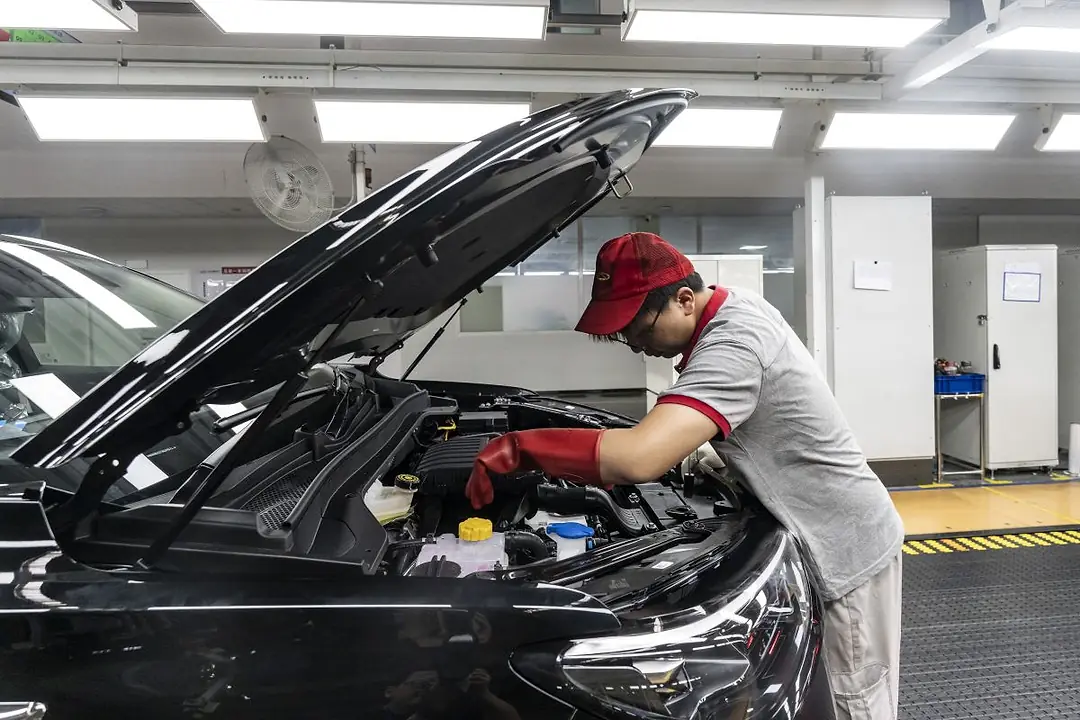
Workers on the assembly line making the Chery Automobile Co. Tiggo 8 at the company's production base in Wuhu, Anhui Province, China. Photographer: Qilai Shen/Bloomberg
Chery Automobile Co. is considering establishing local manufacturing in Canada, building on the launch of sales in that market next year and putting one of China’s biggest carmakers on the northern doorstep of the U.S.
While access to the U.S. remains highly uncertain, Chery sees Canada as an important enough market to develop a deeper presence. Options being considered include taking over idle capacity at existing plants, and working with partners, Executive Vice President Guibing Zhang said in an interview at Chery’s headquarters in Wuhu, China.
“Even without the American market, Canada is a market that is worth having a factory for manufacturing,” Zhang said. “We are looking for the suitable opportunity and communicating on the possible formats.”
If the plan is realized, Chery could be the first Chinese automaker to have a manufacturing presence in Canada, a major coup for Prime Minister Mark Carney’s efforts to bring investment into the domestic auto sector. But it also risks further straining ties with the U.S., given industry watchers view Canada as a launching pad for an inevitable entry by Chinese electric vehicles into the American market.
Currently, hefty tariffs and technology restrictions effectively block Chinese EVs from American roads and officials have been clear that Chinese cars from Canada aren’t going to cross the border to the U.S. President Donald Trump has drawn a clear distinction between imports and production, suggesting in September that he may be willing to allow a Chinese automaker to build in the U.S. and employ local workers.
U.S. Ambitions
Chery executives have expressed ambitions to enter the U.S. at some point. With the market closed off in the near-term, the carmaker is assessing idle capacity and speaking to investors in Canada who are interested in Chinese automakers, Zhang said, without identifying any companies.
Canada has rolled out the welcome mat to Chinese carmakers since striking a deal with Beijing to allow annual low-tariff imports of 49,000 of Chinese new-energy vehicles — a quota that will rise each year. Minister of Industry Melanie Joly visited China in June to meet with representatives from BYD Co., Geely Automobile Holdings Ltd. and Chery, saying at the time that the companies were willing to explore joint ventures.
Joly has previously set out conditions for Chinese auto manufacturing, including that it must have a locally-sourced supply chain and meet Canadian labor standards. The cars’ software must be secure enough to allay any national security concerns, she has said.
The minister has also ruled out the use of so-called “knockdown kits,” where the cars would be largely built in China and then shipped to Canada only for final assembly.
Zhang said that Chery’s Vice President Charlie Zhang has been in frequent communication with Joly.
Chery is gearing up to start sales in Canada next year; part of the high-stakes push by China’s automakers into overseas markets to make up for a slump in sales at home. While consumers are flocking to the cheaper, technology-focused models offered by the Chinese, the flood has sparked protectionist policies aimed at safeguarding domestic brands.
That, in turn, is pushing the Chinese to localize their production. Chery has a joint venture plant in Spain to help navigate European Union tariffs and quotas. It’s taken over a Nissan Motor Co. factory in South Africa to establish a manufacturing hub for the continent, and is exploring making vehicles at Nissan’s Sunderland plant in the U.K.
Rival BYD is also set to start selling cars in Canada. The world’s biggest EV maker has previously said it’s considering building a plant there, while it inquired about taking over an idled Stellantis NV plant in the Toronto suburbs to make buses, a local politician said in September. BYD previously operated a bus assembly plant in Ontario before it was shuttered in 2023.
Separately, Geely is set to start selling cars in Canada next year, though hasn’t said publicly whether it’s considering manufacturing there.
“If we can find some good ways to merge with partners, not only just from investments from Chery but from different parties, and if we can get the manufacturing going — I think that is something that the Canadian government would welcome,” Zhang said.
Popular Stories





100 Great Supply Chain Partners 2026: The Secret to Supply Chain Success
VIEW THE LATEST ISSUECase Studies


Visit Our Sponsors |
|
|
|
|
|
|
|
|
|
|
|
|
|
|
|
|
|
|
|
|
|
|
|
|
|
|
|
|
|
|
|
|
|
|
|
|
|
|
|
|
|
|
|
|
|
|
|
|
|
|
|