Supply chain planning has never mattered more. As organizations navigate continued volatility, shifting customer expectations, economic uncertainty, and the rapid acceleration of AI and new technology, the ability to plan, adapt, and make smarter decisions will be a critical competitive advantage over the next 12 months.
A survey of 240 enterprise shipping organizations across six industries examined how they see, govern, and decide their shipping economics. Every respondent manages a multi-modal transportation network with substantial parcel operations. The results were clear: shipping has outgrown its operating model.
Cost pressure has become a defining challenge for automotive supply chains. Demand volatility, shifting trade dynamics, transportation disruptions and evolving production footprints are forcing manufacturers and suppliers to balance cost, service and resilience in increasingly complex operating environments.
Despite major investments in AI, real-time visibility, and faster planning tools, many supply chain organizations continue to battle constant firefighting, expediting, and poor plan adherence. Why do these challenges persist? The answer may be that speed alone isn't enough.
John Rogelstad, managing consultant at The Logic Factory, explains the concept behind Demand-Driven Material Requirements Planning (DDMRP), and how it’s impacting North American manufacturing.
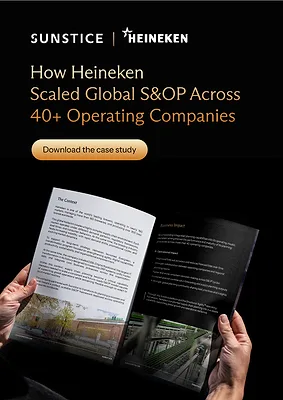
Heineken operates one of the world's most complex brewing supply chains, producing more than 350 brands across 160 breweries and serving nearly 190 markets. At this scale, planning requires continuous alignment of demand forecasts, production capacity, and inventory flows across dozens of operating companies — a challenge compounded by the historical reliance on locally developed planning tools that varied from market to market.
For years, supply chain organizations approached demand forecasting by looking backward, with historical sales trends, seasonal cycles and prior purchasing behavior forming the foundation for most planning decisions. But in an environment shaped by geopolitical instability, tariffs and volatile consumer demand, many organizations are realizing that the forecasting models of the past simply can’t keep up with the disruptions of today.
The latest news, analysis, trends and solutions regarding forecasting and demand planning and its impact on supply chain management. New technologies in predictive analytics and forecasting and demand planning are transforming the way companies are operating and performing ahead of competition in their industries. As these solutions continue to evolve, businesses are discovering new ways to increase efficiency and cut costs. Learn how companies around the world are using forecasting and demand planning solutions for supply chain optimization.
Subscribe to our Daily Newsletter!
Timely, incisive articles delivered directly to your inbox.