Trump is rebuilding a tariff wall that was struck down in February 2026, when the Supreme Court ruled levies issued under the International Emergency Economic Powers Act were illegal.
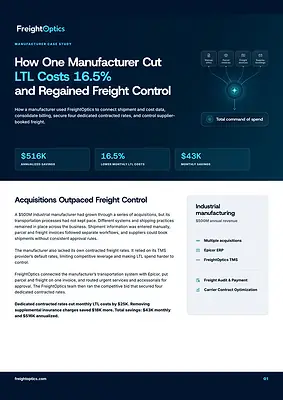
Before FreightOptics, the manufacturer didn’t have its own contracted rates and relied solely on the default rates available through its TMS provider. Shipment data was entered by hand, parcel and freight invoices moved through separate batches, and suppliers booked freight directly. Transportation decisions, carrier costs, and billing were spread across disconnected processes.
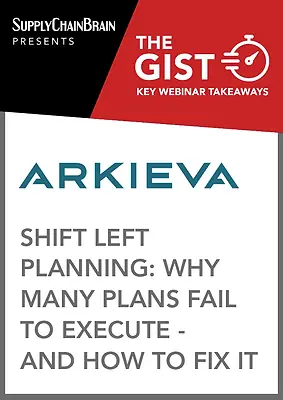
Despite major investments in AI, real-time visibility, and faster planning tools, many supply chain organizations continue to battle constant firefighting, expediting, and poor plan adherence. Why do these challenges persist? The answer may be that speed alone isn't enough.
Today’s world is more unpredictable than ever. From regulatory upheavals and trade tariffs to sudden shifts in consumer demand, businesses must be ready to respond swiftly and decisively. Traditional planning processes struggle to keep up with the urgent risks and opportunities that arise between meetings, triggering constant re-planning and creating room for misalignment and disorder.
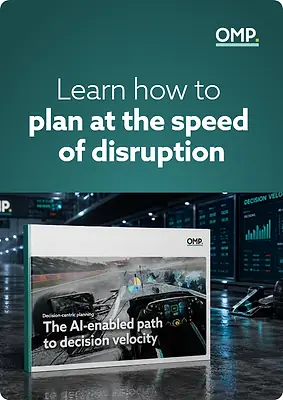
AI is moving fast. But is it generating the measurable results you need from your costly investments? Now that the initial hype is fading and the hard reality of execution is setting in, the real opportunity begins.
When e-commerce demand surged during the COVID-19 pandemic, cold chain logistics provider eGourmet Solutions faced a defining test of its operational scalability.
Maintaining exceptional service levels to ensure quality patient care is critical to AstraZeneca, a biopharmaceutical company. But for years, its exceptional service levels came at a cost for the company in the form of elevated inventory levels and planning decisions made with limited end-to-end visibility into its supply chain, which impacted agility and growth.
Life sciences supply chains are among the most complex in the world. Every day, supply chain leaders must balance shifting demand, constrained supply, and strict regulatory requirements, all while ensuring patients get the medications they need. The margin for error is small, and disconnected, stage-by-stage planning just cannot keep up.
How do you plan for a technology that doesn't exist yet, while keeping today's production lines running? That's the challenge Bekaert faced with its titanium fiber-based porous transport layers, a breakthrough component powering industrial-scale green hydrogen production
The latest supply-chain news, analysis, trends and tools for executives in the consumer packaged goods industry. Learn how consumer packaged goods companies and their suppliers around the world are managing the flow of products across all channels of the enterprise. Experts sound off on forecasting and demand planning, supply-chain visibility, logistics outsourcing, inventory optimization, transportation management, warehouse management, supply-chain security, corporate social responsibility and more.
Subscribe to our Daily Newsletter!
Timely, incisive articles delivered directly to your inbox.