
• Advertise
  • Contact Us
  • Supplier Directory
  • SCB YouTube
  • About Us
  • Login
  • Subscribe
  • Logout
  • My Profile
  • LOGISTICS
    • Air Cargo
    • All Logistics
    • Facility Location Planning
    • Freight Forwarding/Customs Brokerage
    • Global Gateways
    • Global Logistics
    • Last Mile Delivery
    • Logistics Outsourcing
    • LTL/Truckload Services
    • Ocean Transportation
    • Parcel & Express
    • Rail & Intermodal
    • Reverse Logistics
    • Service Parts Management
    • Transportation & Distribution
  • TECHNOLOGY
    • All Technology
    • Artificial Intelligence
    • Cloud & On-Demand Systems
    • Data Management (Big Data/IoT/Blockchain)
    • ERP & Enterprise Systems
    • Forecasting & Demand Planning
    • Global Trade Management
    • Inventory Planning/ Optimization
    • Product Lifecycle Management
    • Robotics
    • Sales & Operations Planning
    • SC Finance & Revenue Management
    • SC Planning & Optimization
    • Supply Chain Visibility
    • Transportation Management
  • GENERAL SCM
    • Business Strategy Alignment
    • Customer Relationship Management
    • Education & Professional Development
    • Global Supply Chain Management
    • Global Trade & Economics
    • Green Energy
    • HR & Labor Management
    • Quality & Metrics
    • Regulation & Compliance
    • Sourcing/Procurement/SRM
    • SC Security & Risk Mgmt
    • Supply Chains in Crisis
    • Sustainability & Corporate Social Responsibility
  • WAREHOUSING
    • All Warehouse Services
    • Conveyors & Sortation
    • Lift Trucks & AGVs
    • Order Management & Fulfillment
    • Packaging
    • RFID, Barcode, Mobility & Voice
    • Warehouse Automation
    • Warehouse Management Systems
  • INDUSTRIES
    • Aerospace & Defense
    • Apparel
    • Automotive
    • Chemicals & Energy
    • Consumer Packaged Goods
    • E-Commerce/Omni-Channel
    • Food & Beverage
    • Healthcare
    • High-Tech/Electronics
    • Industrial Manufacturing
    • Pharmaceutical/Biotech
    • Retail
  • THINK TANK
  • WEBINARS
    • On-Demand Webinars
    • Upcoming Webinars
    • Webinar Library
  • PODCASTS
  • WHITEPAPERS
  • VIDEOS
Home » Blogs » Think Tank » Ensuring Freshness: The Path to Sustainable Perishable Logistics

Think Tank
Think Tank RSS FeedRSS

Ensuring Freshness: The Path to Sustainable Perishable Logistics

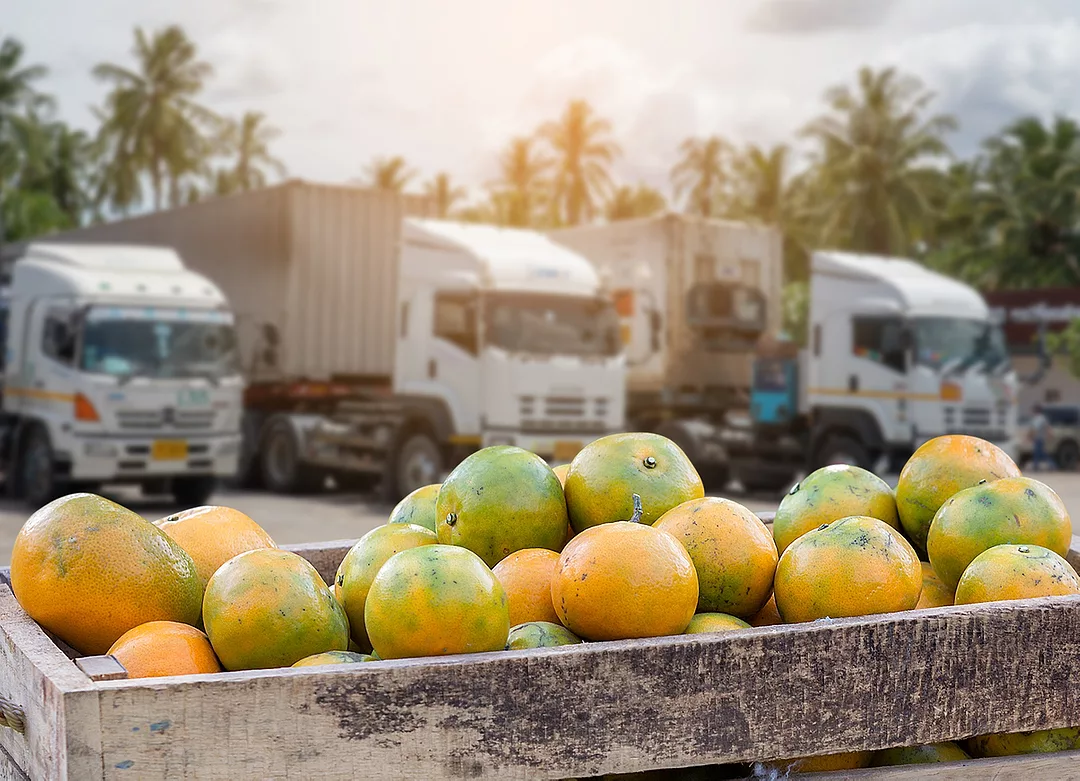
Vegetables in crates in front of a row of semi-trucks
Photo: luamduan, iStock
April 2, 2024
Anar Mammadov, SCB Contributor

Online grocery shopping has been on the rise, with perishable food items emerging as one of the key components driving growth. A recent report shows that a large percentage of consumers who have embraced online grocery shopping are making weekly orders for perishable items, including fruits, vegetables, meat, seafood, bread and other bakery items.

The trend in online perishable food sales poses a unique and complex logistical challenge. To avoid spoilage, these items must be stored and transported at controlled temperatures, while also meeting strict delivery timeframes.

Such demands can leave last-mile logistics companies with a difficult choice between efficiency and sustainability, but there are options that allow both to be achieved. Following are steps that can help companies to make progress on the path to sustainable perishable logistics.

Deploy technology to enhance efficiency in temperature control. The refrigeration necessary for keeping perishable foods fresh has the potential to impact the environment in two ways. The first involves hydrofluorocarbons (HFCs), which are the primary refrigerants used in cooling systems. Breakdowns in refrigeration equipment can cause HFCs to be released into the atmosphere.

HFCs are a dangerous greenhouse gas. While they only represent a small portion of greenhouse gas emissions — approximately 2% by some estimates — their impact on global warming is believed to be thousands of times higher than that of carbon dioxide. The U.S. Environmental Protection Agency recently announced plans to significantly cut back on the use of HFCs for refrigeration purposes.

Opting for equipment using alternative refrigerants is one step toward making perishable food logistics more sustainable. Refrigeration systems that use ammonia, which has virtually no impact on the environment if released into the air, are considered to be much safer for the environment than systems using HFCs.

Emissions resulting from energy production are another sustainability factor that must be addressed, as perishable logistics require products to be processed in refrigerated warehouses and transported in refrigerated vehicles, all of which require higher-than-average energy draws. Efforts to enhance the efficiency of refrigeration systems can dramatically decrease environmental impacts.

Optimizing insulation in warehouses and delivery vehicles can improve energy efficiency in perishable logistics, along with adjusting temperatures based on a vehicle’s contents. Technological innovations such as variable speed compressors can provide optimal cooling with minimal energy use.


Optimize routing to reduce emissions. By reducing the amount of time that delivery vehicles are on the road, perishable goods handlers can cut back on both emissions and fuel needs.

Route optimization platforms utilize artificial intelligence to analyze data on traffic, weather and delivery details to determine the most efficient routes. Such systems can even help guide delivery vehicles so that drivers can more quickly identify and remove items at each stop. Moreover, continuous monitoring of data sources allows these platforms to dynamically update routes as conditions change, sending updates to drivers when necessary.

In some cases, route optimization involves multimodal transport. Large vehicles may be most efficient for getting deliveries to micro-warehouses, where they’re redistributed to smaller vehicles for the last phase of delivery. Reliance on automated vehicles, which are often electric, for grocery and prepared food delivery is an emerging practice that promises to increase sustainability.

Enhance the efficiency of storage facilities. With perishable logistics, transportation is just part of the equation. There’s also the need to enhance the efficiency of warehouses.

In addition to installing better insulation and refrigeration systems, warehouses can upgrade lighting with energy-efficient LED technology. Sensors and timers ensure that the lights are only on when necessary.

Improved temperature monitoring can also drive higher levels of efficiency, providing information to automated, artificial intelligence-driven platforms that dynamically adjust temperatures.

Utilize local suppliers to reduce supply chain complexity. The reduction of transportation distances plays a significant role in lessening the environmental impact of perishable logistics. Partnering with local suppliers for perishable goods can support higher sustainability, as well as reduce the likelihood of food spoilage.

For all its environmental benefits, increasing sustainability in perishable logistics is a complex endeavor. Businesses must strive to take advantage of the latest technology to boost efficiency, while also considering new strategies for shrinking the supply chain.

Anar Mammadov is chief executive officer of Senpex Technology.

Last Mile Delivery Regulation & Compliance Supply Chain Security & Risk Mgmt Sustainability & Corporate Social Responsibility Food & Beverage

RELATED CONTENT

RELATED VIDEOS

Subscribe to our Daily Newsletter!

Timely, incisive articles delivered directly to your inbox.

Featured Product

Popular Stories

  • A LARGE CYLINDRICAL OBJECT SHRINK-WRAPPED IN WHITE PLASTIC IS LOWERED BY CRANE ONTO A FLAT BED TRUCK ON A DOCK

    AI Boom Has European Buyers Paying Extra to Secure Gas Turbines

    Technology
  • Close-up hands of unrecognizable man holding and using smartphone standing on city street.

    Five Supply Chain Security Risks Hiding Inside Your Mobile Apps

    Supply Chain Visibility
  • Businessman using AI agent system on laptop computer.

    AI in Supply Chain Can’t Succeed Without Foundational Systems

    Artificial Intelligence
  • 016_ai_and_data_transformation_in_distribution_v1-(540p).png

    Watch: AI and Data Transformation in Distribution

    Artificial Intelligence
  • A SHIP PLIES A NARROW WATERWAY, FLANKED BY SMALLER BOATS

    Houthis to Impose ‘Complete Ban’ on Israeli Ships in Red Sea

    Global Gateways

Digital Edition

2026 esg cover main scb q2 2026 cover

SupplyChainBrain 2026 ESG Guide: ESG — The Supply Chain’s Biggest Secret

VIEW THE LATEST ISSUE

Case Studies

  • Recycled Tagging Fasteners: Small Changes Make a Big Impact

  • A GRAPHIC SHOWING MULTIPLE FORMS OF SHIPPING, WITH A HUMAN STANDING AT THE CENTER, TOUCHING A SYMBOLIC MAP OF THE WORLD

    Enhancing High-Value Electronics Shipment Security with Tive's Real-Time Tracking

  • A GRAPHIC OF INTERLACING HONEYCOMBED ELEMENTS REPRESENTING GLOBAL BUSINESS TRANSACTIONS

    Moving Robots Site-to-Site

  • JLL Finds Perfect Warehouse Location, Leading to $15M Grant for Startup

  • Robots Speed Fulfillment to Help Apparel Company Scale for Growth

Visit Our Sponsors

4flow Arkieva Blue Yonder
Carton Cloud CoEnterprise Dassault
Duravant E2Open General Logistics Systems
Hy-Tek iGPS Korber
Lyngsoe Procurability Quinyx
SAP Sikick Systech
S&P Global Mobility TADA TransImpact
US Bank Werner Enterprises WSI
  • More From SCB
    • Featured Content
    • Video Library
    • Think Tank Blog
    • SupplyChainBrain Podcast
    • Whitepapers
    • On-Demand Webinars
    • Upcoming Webinars
  • Digital Offerings
    • Digital Issue
    • Subscribe
    • Manage Email Preferences
    • Newsletters
  • Resources
    • Events Calendar
    • 2026 Event Coverage
    • SCB's Great Supply Chain Partners
    • Supplier Directory
    • Case Study Showcase
    • Supply Chain Innovation Awards
    • 100 Great Partners Form
  • SCB Corporate
    • Advertise on SCB.COM
    • About Us
    • Privacy Policy
    • Contact Us
    • Data Sharing Opt-Out

All content copyright ©2026 Keller International Publishing Corp All rights reserved. No reproduction, transmission or display is permitted without the written permissions of Keller International Publishing Corp

Design, CMS, Hosting & Web Development :: ePublishing