
• Advertise
  • Contact Us
  • Supplier Directory
  • SCB YouTube
  • About Us
  • Login
  • Subscribe
  • Logout
  • My Profile
  • LOGISTICS
    • Air Cargo
    • All Logistics
    • Facility Location Planning
    • Freight Forwarding/Customs Brokerage
    • Global Gateways
    • Global Logistics
    • Last Mile Delivery
    • Logistics Outsourcing
    • LTL/Truckload Services
    • Ocean Transportation
    • Parcel & Express
    • Rail & Intermodal
    • Reverse Logistics
    • Service Parts Management
    • Transportation & Distribution
  • TECHNOLOGY
    • All Technology
    • Artificial Intelligence
    • Cloud & On-Demand Systems
    • Data Management (Big Data/IoT/Blockchain)
    • ERP & Enterprise Systems
    • Forecasting & Demand Planning
    • Global Trade Management
    • Inventory Planning/ Optimization
    • Product Lifecycle Management
    • Robotics
    • Sales & Operations Planning
    • SC Finance & Revenue Management
    • SC Planning & Optimization
    • Supply Chain Visibility
    • Transportation Management
  • GENERAL SCM
    • Business Strategy Alignment
    • Customer Relationship Management
    • Education & Professional Development
    • Global Supply Chain Management
    • Global Trade & Economics
    • Green Energy
    • HR & Labor Management
    • Quality & Metrics
    • Regulation & Compliance
    • Sourcing/Procurement/SRM
    • SC Security & Risk Mgmt
    • Supply Chains in Crisis
    • Sustainability & Corporate Social Responsibility
  • WAREHOUSING
    • All Warehouse Services
    • Conveyors & Sortation
    • Lift Trucks & AGVs
    • Order Management & Fulfillment
    • Packaging
    • RFID, Barcode, Mobility & Voice
    • Warehouse Automation
    • Warehouse Management Systems
  • INDUSTRIES
    • Aerospace & Defense
    • Apparel
    • Automotive
    • Chemicals & Energy
    • Consumer Packaged Goods
    • E-Commerce/Omni-Channel
    • Food & Beverage
    • Healthcare
    • High-Tech/Electronics
    • Industrial Manufacturing
    • Pharmaceutical/Biotech
    • Retail
  • THINK TANK
  • WEBINARS
    • On-Demand Webinars
    • Upcoming Webinars
    • Webinar Library
  • PODCASTS
  • WHITEPAPERS
  • VIDEOS
Home » Blogs » Think Tank » The Current State of Live Tracking Technologies

Think Tank
Think Tank RSS FeedRSS

The Current State of Live Tracking Technologies

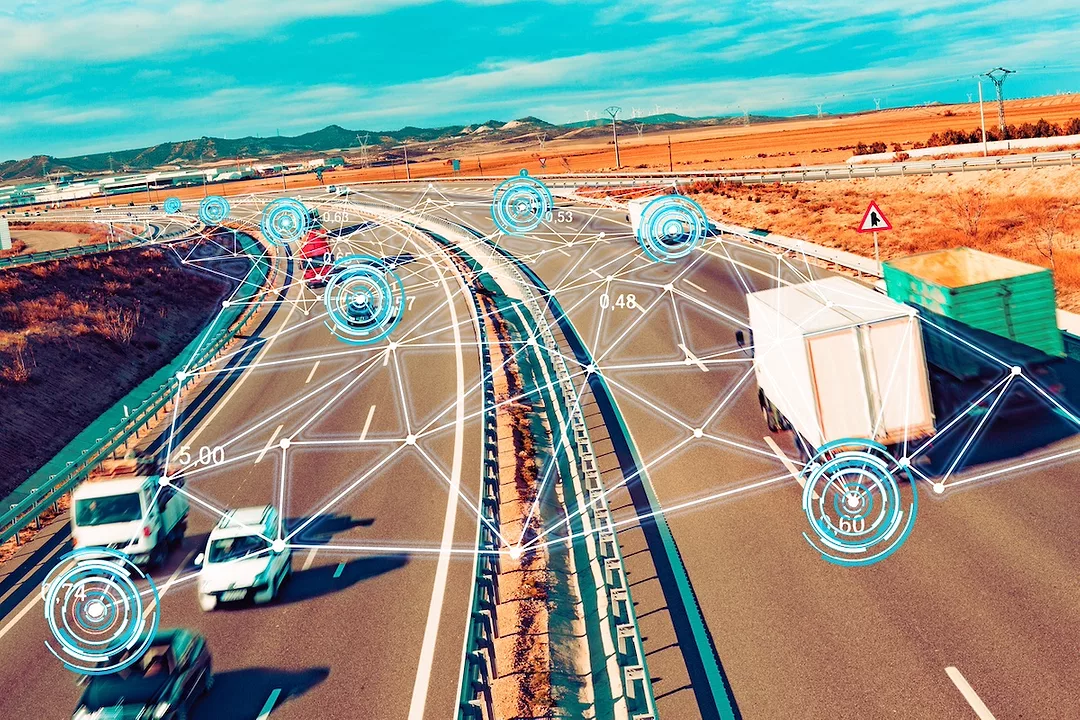
A visualization of trucks and cars on a freeway connected by blue lines that connect at large circular targets
Photo: istockphoto.com/portfolio/carloscastilla
August 2, 2024
Keiley Ostrow, SCB Contributor

The demand for live tracking of goods continues to grow. Businesses need accountability for items shipped, and want the automation gained from live tracking. Customers want to know where their goods are, whether it’s to coordinate meeting the package on arrival or definitively know that it arrived at its intended destination.

So far, however, it’s been a cost-prohibitive proposition to live-track most shipments. While the technology continues to push tracking devices forward, businesses need to evaluate the pros and cons of what’s available today, and what their use cases are when it comes to getting shipments safely from one place to another.

The prevalent option available today is tracking devices with lithium batteries. These are attached to a shipment and provide constant updates as the freight moves from one place to another. But lithium batteries, while they’re rechargeable and last a long time, are considered dangerous goods, and require safe disposal. And because these devices are also expensive, companies need to get them back so they can be used again. This requires engineering a reverse logistics plan for the trackers themselves, and deploying resources to manage and maintain a tracking-device inventory.

An additional nuance with these types of tracking devices is that they require pairing and activation. A warehouse or desk agent must manually associate the shipment reference to the tracker device ID, and ensure that the device is powered up and activated. This introduces opportunities for mistakes by inadvertently mistyping long IDs, forgetting to associate, or forgetting to activate. Ultimately, this limits the scale of deployment for trackers on goods.

There’s also the issue of dark zones where certain places get zero coverage, and the device is unable to communicate back to the business. Device suppliers will add in more capabilities, such as Wi-Fi, GPS, LTE, LoRa and NBIoT, to name a few, to improve data quality and isolate where shipments are. These capabilities require high-powered batteries, and the more complex the device, the more expensive it becomes.

Another consideration is the form factor. Such devices are bulky and thereby not discreet. To bad actors, it’s obvious to identify which shipments are being tracked and how. 

For all these reasons, applying such devices to most shipments is a non-starter because the return on investment is just not there.  

There’s great demand for devices that can address cost, be simpler to manage, be easily disposed of, have high data quality and eliminate the need for reverse logistics. And while we haven’t found the holy grail that can do all of these things at once, there have been improvements in certain areas, including making the device thinner, less bulky and less environmentally impactful.

This means, for the near term, that companies need to think carefully about their use case to determine what tracking technology is the best match. 

If your needs are around security and tracking the detailed telemetry of location, light, motion or shock in high-risk zones, you’ll need a high-powered device that can run all of those sensors. A low-powered model won’t be able to power all the sensors. Also, these devices are more expensive, may require reverse logistics, and they may contain lithium batteries that require safe disposal. But data quality will be good, and the cost-benefit analysis would make sense for high-value goods.

For those who don’t require a detailed resolution and answers to basic questions like “What building is the shipment in” and “Is the shipment moving in the right direction,” there are now trackers that take advantage of low-powered, non-dangerous goods batteries. Combine that with a form factor of a shipping label that can be printed as part of normal labeling processes as well as be disposed of in normal waste streams, and the possibilities of live tracking at scale become attainable.  

While the demand for live tracking in logistics is surging, current options present challenges in terms of cost, environmental impact, complexity and scalability. Tracking devices with lithium batteries, despite their effectiveness, come with safety and disposal concerns, as well as logistical hurdles for retrieval and maintenance. 

Moving forward, companies must carefully assess their tracking needs and weigh the trade-offs. For high-value goods requiring detailed monitoring, high-powered devices may be necessary despite their drawbacks. On the other hand, for more basic tracking needs, newer low-powered trackers offer a promising solution with their reduced environmental impact, simplified disposal, and easier integration into existing processes. As technology continues to evolve, finding the right balance between functionality, sustainability, and cost-effectiveness will be key to unlocking the full potential of live tracking.

Keiley Ostrow is vice president of business development at Reelables.

Technology Supply Chain Visibility

RELATED CONTENT

RELATED VIDEOS

Subscribe to our Daily Newsletter!

Timely, incisive articles delivered directly to your inbox.

Featured Product

Popular Stories

  • On Demand - Webinar Descartes Tue Jun 23 2026 11a ET.png

    Descartes AI Exchange: AI Agents for Fleet Performance Management

    General SCM
  • A UNIFORMED OFFICER STANDS NEAR A HIGHWAY WITH TRUCKS ON IT

    U.S. Customs Ramps Up AI Investment in Push to Sharpen Enforcement

    Artificial Intelligence
  • On Demand Webinar - Arkieva - Wed Jun 24 2026 2p ET.png

    Shift Left Planning: Why Many Plans Fail to Execute—and How to Fix It

    Webinars
  • A MAP OF THE STRAIT OF HORMUZ SHOWING DOZENS OF BLUE DOTS DISTRIBUTED THROUGHOUT THE WATERWAY

    Traffic Flows Through Hormuz Despite Shock Ship Attack

    Global Gateways
  • Satellite view of the Strait of Hormuz with white graphic lines representing global shipping lanes and maritime traffic between the Persian Gulf and Gulf of Oman.

    Hormuz Highlights How Maritime Risk Assessment Needs to Change

    Global Gateways

Digital Edition

2026 esg cover main scb q2 2026 cover

SupplyChainBrain 2026 ESG Guide: ESG — The Supply Chain’s Biggest Secret

VIEW THE LATEST ISSUE

Case Studies

  • Recycled Tagging Fasteners: Small Changes Make a Big Impact

  • A GRAPHIC SHOWING MULTIPLE FORMS OF SHIPPING, WITH A HUMAN STANDING AT THE CENTER, TOUCHING A SYMBOLIC MAP OF THE WORLD

    Enhancing High-Value Electronics Shipment Security with Tive's Real-Time Tracking

  • A GRAPHIC OF INTERLACING HONEYCOMBED ELEMENTS REPRESENTING GLOBAL BUSINESS TRANSACTIONS

    Moving Robots Site-to-Site

  • JLL Finds Perfect Warehouse Location, Leading to $15M Grant for Startup

  • Robots Speed Fulfillment to Help Apparel Company Scale for Growth

Visit Our Sponsors

4flow Arkieva Blue Yonder
Carton Cloud CoEnterprise Dassault
Duravant E2Open General Logistics Systems
Hy-Tek iGPS Korber
Lyngsoe Procurability Quinyx
SAP Sikick Systech
S&P Global Mobility TADA TransImpact
US Bank Werner Enterprises WSI
  • More From SCB
    • Featured Content
    • Video Library
    • Think Tank Blog
    • SupplyChainBrain Podcast
    • Whitepapers
    • On-Demand Webinars
    • Upcoming Webinars
  • Digital Offerings
    • Digital Issue
    • Subscribe
    • Manage Email Preferences
    • Newsletters
  • Resources
    • Events Calendar
    • 2026 Event Coverage
    • SCB's Great Supply Chain Partners
    • Supplier Directory
    • Case Study Showcase
    • Supply Chain Innovation Awards
    • 100 Great Partners Form
  • SCB Corporate
    • Advertise on SCB.COM
    • About Us
    • Privacy Policy
    • Contact Us
    • Data Sharing Opt-Out

All content copyright ©2026 Keller International Publishing Corp All rights reserved. No reproduction, transmission or display is permitted without the written permissions of Keller International Publishing Corp

Design, CMS, Hosting & Web Development :: ePublishing