
• Advertise
  • Contact Us
  • Supplier Directory
  • SCB YouTube
  • About Us
  • Login
  • Subscribe
  • Logout
  • My Profile
  • LOGISTICS
    • Air Cargo
    • All Logistics
    • Facility Location Planning
    • Freight Forwarding/Customs Brokerage
    • Global Gateways
    • Global Logistics
    • Last Mile Delivery
    • Logistics Outsourcing
    • LTL/Truckload Services
    • Ocean Transportation
    • Parcel & Express
    • Rail & Intermodal
    • Reverse Logistics
    • Service Parts Management
    • Transportation & Distribution
  • TECHNOLOGY
    • All Technology
    • Artificial Intelligence
    • Cloud & On-Demand Systems
    • Data Management (Big Data/IoT/Blockchain)
    • ERP & Enterprise Systems
    • Forecasting & Demand Planning
    • Global Trade Management
    • Inventory Planning/ Optimization
    • Product Lifecycle Management
    • Robotics
    • Sales & Operations Planning
    • SC Finance & Revenue Management
    • SC Planning & Optimization
    • Supply Chain Visibility
    • Transportation Management
  • GENERAL SCM
    • Business Strategy Alignment
    • Customer Relationship Management
    • Education & Professional Development
    • Global Supply Chain Management
    • Global Trade & Economics
    • Green Energy
    • HR & Labor Management
    • Quality & Metrics
    • Regulation & Compliance
    • Sourcing/Procurement/SRM
    • SC Security & Risk Mgmt
    • Supply Chains in Crisis
    • Sustainability & Corporate Social Responsibility
  • WAREHOUSING
    • All Warehouse Services
    • Conveyors & Sortation
    • Lift Trucks & AGVs
    • Order Management & Fulfillment
    • Packaging
    • RFID, Barcode, Mobility & Voice
    • Warehouse Automation
    • Warehouse Management Systems
  • INDUSTRIES
    • Aerospace & Defense
    • Apparel
    • Automotive
    • Chemicals & Energy
    • Consumer Packaged Goods
    • E-Commerce/Omni-Channel
    • Food & Beverage
    • Healthcare
    • High-Tech/Electronics
    • Industrial Manufacturing
    • Pharmaceutical/Biotech
    • Retail
  • THINK TANK
  • WEBINARS
    • On-Demand Webinars
    • Upcoming Webinars
    • Webinar Library
  • PODCASTS
  • WHITEPAPERS
  • VIDEOS
Home » Blogs » Think Tank » Building a Resilient U.S. Battery Supply Chain

Think Tank
Think Tank RSS FeedRSS

Building a Resilient U.S. Battery Supply Chain

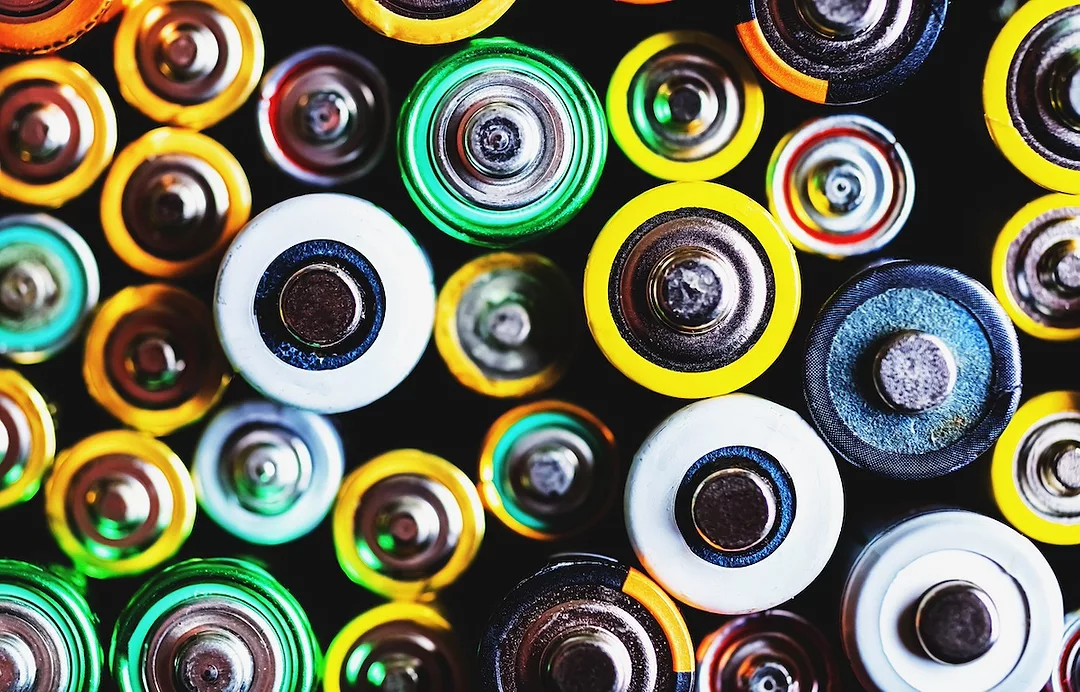
An overhead view of a collection of multicolored lithium-ion batteries

Photo: iStock / shaunl

October 21, 2026
Jeremy Furr, SCB Contributor

Billions of dollars are being invested to strengthen domestic battery supply chains. Much of the conversation has centered on accessing critical minerals and the raw materials needed for battery production. Those investments are important, but raw materials are only one part of the equation.

True resilience requires the ability to process those materials, manufacture components and ultimately recycle batteries within the same ecosystem. In some cases, the U.S. has access to the necessary mineral deposits but lacks sufficient mining, refining or processing capacity to convert them into battery-grade materials. As a result, materials may originate domestically, leave the country for processing, then return for use in U.S. manufacturing.

Understanding where these gaps exist is essential to strengthening the supply chain. Expanding domestic manufacturing capacity without corresponding investments elsewhere in the supply chain can simply shift dependencies rather than eliminate them. Building resilience requires a coordinated approach that strengthens each link and enables the supply chain to respond more effectively when disruptions occur.

Not all battery supply chains face the same vulnerabilities. Different chemistries rely on different raw materials, processing capabilities, components and manufacturing infrastructure, which means their exposure to a global supply disruption can vary significantly.

For some battery technologies, critical steps in the supply chain remain concentrated outside the U.S. Others benefit from a more established domestic manufacturing and recycling base. That distinction matters when companies assess how reliably a battery technology can be produced if access to foreign materials or components is constrained.

Building that capacity also takes time. Countries with established supply chains for newer battery technologies have spent decades developing manufacturing expertise and working through production challenges. Strengthening U.S. capacity will require not only building infrastructure, but finding ways to accelerate that learning curve.

The question, then, isn’t just whether the U.S. has access to the materials a battery requires. It’s whether those materials can be processed, manufactured into finished batteries and ultimately recovered for reuse within a domestic supply chain.

The lead battery industry provides a model for a mature domestic battery ecosystem, supported by established manufacturing and end-of-life recovery infrastructure.

According to Battery Council International, more than 174 million lead batteries are recycled domestically each year, delivering more than 2.2 billion pounds of lead back into the battery manufacturing supply chain.

Spent batteries provide a source of feedstock that can be processed and returned to battery manufacturing. By keeping valuable materials in circulation, this system reduces dependence on newly mined materials and creates a more reliable domestic supply of battery materials.

For emerging battery chemistries, recycling infrastructure should grow alongside manufacturing capacity so that materials can be recovered and reused as markets scale.

Domestic recycling capacity only strengthens the supply chain if materials remain in circulation. Recycling facilities need sufficient feedstock moving through their operations. Growing exports of spent batteries can remove valuable materials from the domestic supply chain that could otherwise be recycled and returned to U.S. manufacturing.

Once spent batteries leave the country, the materials recovered from them might not return to U.S. manufacturers. That leaves domestic recyclers competing for a smaller pool of feedstock and can increase the need for imported material, recreating the very foreign dependencies that recycling can help reduce.

Building a complete domestic battery ecosystem requires not just infrastructure, but confidence that demand will be there to support it. Mining, refining, component production, manufacturing and recycling facilities require significant capital and years of investment. Companies are more likely to make those commitments when they have confidence that a battery technology has a durable market.

The mature lead battery supply chain demonstrates what a complete domestic ecosystem can look like, but it also shows that these systems are built over decades. Strengthening U.S. battery resilience will require sustained investment across the entire supply chain and the market certainty needed to support it.

Jeremy Furr is senior vice president, strategic sourcing at Stryten Energy.

Green Energy Regulation & Compliance Sourcing/Procurement/SRM Supply Chain Security & Risk Mgmt Sustainability & Corporate Social Responsibility Automotive High-Tech/Electronics

RELATED CONTENT

RELATED VIDEOS

Subscribe to our Daily Newsletter!

Timely, incisive articles delivered directly to your inbox.

Featured Product

Popular Stories

  • Stacks of multi-colored shipping containers arranged in rows at a port, with rows of blue and grey shipping cranes lining the background along the coastline

    Port of Savannah Approved for New 3.5M TEU Terminal

    Global Gateways
  • An overhead view of a port, with stacks of containers and vehicles moving through rows

    Podcast | AI in Supply Chain Planning: Impact, Promise and Limits

    Artificial Intelligence
  • On Demand Webinar Oliver Wight Wed Oct 14 2026 2p ET.png

    AI in IBP: From Data to Decisions

    Webinars
  • SCB_Q426_SAP_FSR_THUMB_2.jpg

    An AI Playbook for Your Journey to Autonomous Planning

    Global Logistics
  • A LARGE COMPLEX OF BUILDINGS SITS IN THE DESERT

    Aramco HQ Hit as Houthis Widen Attacks on Saudi Arabia

    Global Trade & Economics

Digital Edition

Scb q3 26 cover

100 Great Supply Chain Partners 2026: The Secret to Supply Chain Success

VIEW THE LATEST ISSUE

Case Studies

  • Recycled Tagging Fasteners: Small Changes Make a Big Impact

  • A GRAPHIC SHOWING MULTIPLE FORMS OF SHIPPING, WITH A HUMAN STANDING AT THE CENTER, TOUCHING A SYMBOLIC MAP OF THE WORLD

    Enhancing High-Value Electronics Shipment Security with Tive's Real-Time Tracking

  • A GRAPHIC OF INTERLACING HONEYCOMBED ELEMENTS REPRESENTING GLOBAL BUSINESS TRANSACTIONS

    Moving Robots Site-to-Site

  • JLL Finds Perfect Warehouse Location, Leading to $15M Grant for Startup

  • Robots Speed Fulfillment to Help Apparel Company Scale for Growth

Visit Our Sponsors

4flow Amazon Freight Anaplan
Arkieva AutoStore Blue Yonder
Canadian National Railway Company Carton Cloud CoEnterprise
Dassault Descartes Dexory
Duravant E2Open EPG
General Logistics Systems GEP Hy-Tek
iGPS Knapp Korber
Lyngsoe Odyssey Logistics OMP
PeakAI Procurability Quinyx
SAP Sikick Staples
S&P Global Mobility Systech TADA
Tive TransImpact US Bank
Werner WSI
  • More From SCB
    • Featured Content
    • Video Library
    • Think Tank Blog
    • SupplyChainBrain Podcast
    • Whitepapers
    • On-Demand Webinars
    • Upcoming Webinars
  • Digital Offerings
    • Digital Issue
    • Subscribe
    • Manage Email Preferences
    • Newsletters
  • Resources
    • Events Calendar
    • 2026 Event Coverage
    • SCB's Great Supply Chain Partners
    • Supplier Directory
    • Case Study Showcase
    • Supply Chain Innovation Awards
    • 100 Great Partners Form
  • SCB Corporate
    • Advertise on SCB.COM
    • About Us
    • Privacy Policy
    • Contact Us
    • Data Sharing Opt-Out

All content copyright ©2026 Keller International Publishing Corp All rights reserved. No reproduction, transmission or display is permitted without the written permissions of Keller International Publishing Corp

Design, CMS, Hosting & Web Development :: ePublishing