.webp?height=100&t=1784121195&width=150 "018_what's_holding_back_ai_initiatives-_v1-(540p).png")
Report: Space Launch Boom Risks Outpacing Supply Chain Capacity
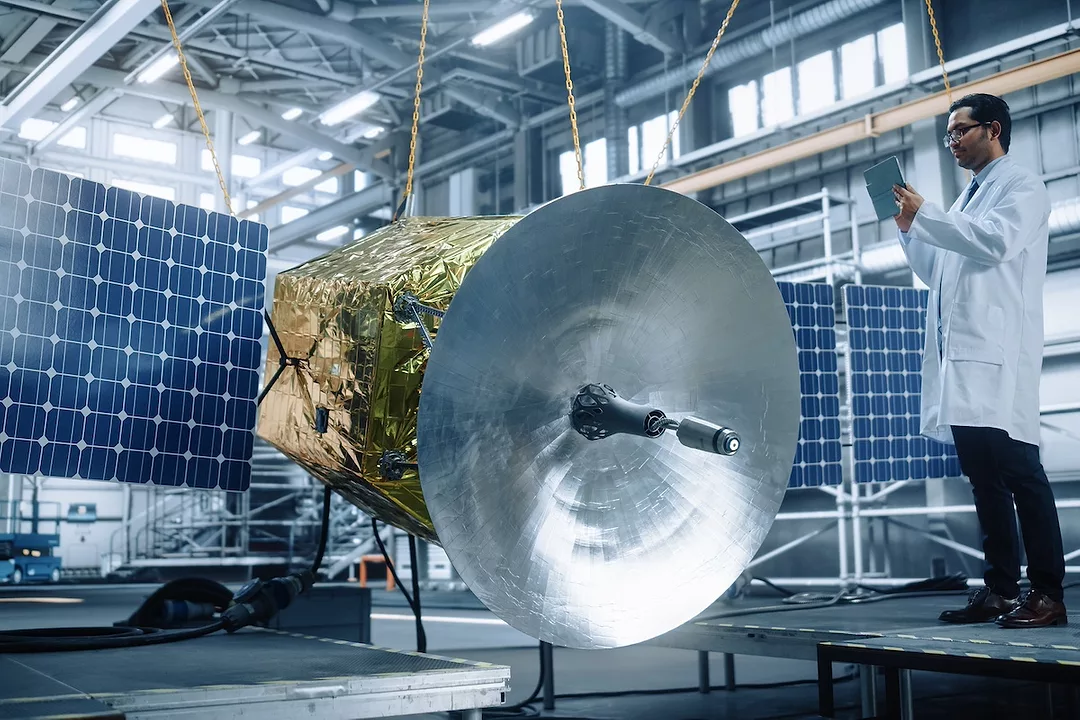
Photo: iStock / gorodenkoff
As the U.S. space sector has entered an era of unprecedented growth, the industry could soon face a situation where its capacity falls well behind its demand.
According to a report from the Aerospace Industries Association (AIA) and accounting firm PwC, more than 3,700 objects were launched into space in the United States in 2025, nearly 10 times as many as there were in 2019. That's been largely driven by a surge in launches of so-called proliferated low Earth orbit (pLEO) satellites, used for everything from military communication networks to high-speed global internet.
"Satellite miniaturization, decreased launch costs, low-cost electronically steered arrays, and propulsion advancements have enabled this shift, and the result is broader and faster demand than ever before," the report reads.
Read More: The Supply Chain Math Behind Elon Musk's Moon Base Ambitions
In the midst of this shift, companies have ramped up their space launches by using existing facilities rather than building out new capacity. As of 2024, the average age of the aerospace sector's private industrial structures was nearly 26 years, with many manufacturers remaining reluctant to invest in new facilities given the volatile nature of capital investments in space programs year to year. At the same time, that reliance on aging infrastructure has started to expose capacity constraints, as facilities designed for far lower production volumes have struggled to keep pace with rapidly accelerating demand.
The space sector is also at a structural disadvantage when it comes to competing with other industrial manufacturers for key supplier contracts. As the report notes, space is a small volume industry that offers slower market growth for high-demand products like semiconductors, which are core components of space systems for avionics, communications, power, sensors and actuation controls. For any number of other components, manufacturers for the automotive, energy and data center sectors can guarantee more predictable demand long term, and as a result, they'll often get prioritized for contracts ahead of the space industry.
Stakeholders who spoke to the AIA and PwC said that in many cases, suppliers have even declined to bid on space work entirely, citing "high complexity requirements and low return on effort." In one example, a legacy supplier was said to have declined to rebid for a vessel used to store high pressure gases, because space-specific production was consuming more than 30% of the engineering team's time while generating low single-digit revenue.
"Oftentimes, the same equipment can be used to fulfill larger and more predictable orders in other industries," the report explained.
The report offered a series of recommendations to address these issues, including improved demand visibility, expansions of supplier bases to include more companies, more government investments in manufacturing capacity, and streamlined procurement processes. Short of that, the report warns, supply chains could soon be faced with substantial bottlenecks that limit the pace of future space launches, and the growth of the industry at large.
Popular Stories

.webp?height=100&t=1784491177&width=150 "030_ai_in_the_warehouse-_real_use_cases_v1-(540p).png")


SupplyChainBrain 2026 ESG Guide: ESG — The Supply Chain’s Biggest Secret
VIEW THE LATEST ISSUECase Studies


Visit Our Sponsors |