
SCB FEATURE
The Supply Chain Math Behind Elon Musk's Moon Base Ambitions
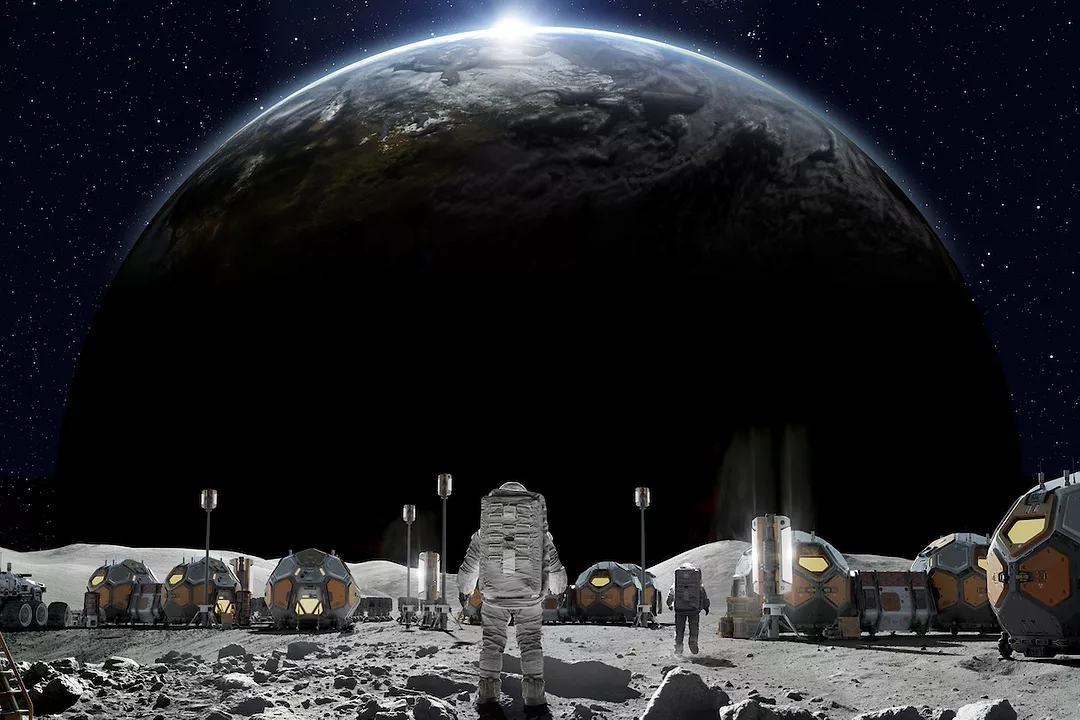
Photo: iStock / peepo
Elon Musk has made no secret over the years of his ambitious plans for colonizing Mars. As far back as 2007, the tech billionaire and SpaceX founder said he not only intends to send the first ever humans on the 140 million mile trip to the Red Planet, but also to establish a permanent settlement. Even so, the "how" of that plan has long been a source of skepticism among the scientific community, which might explain why he recently turned his attention closer to home.
In a February 8 post to X, Musk acknowledged the many logistical complications that come with the lengthy journey to Mars, made even more difficult by a launch window that only opens up once every 26 months. Combined with the fact that there are few guarantees for the survival of those making the trip, it's no wonder he's now pivoted to a relatively lower bar: A "self-growing" city on Earth's moon within the next decade. However, even that might be out of the realm of possibility when you game out what it might actually take to achieve that goal.
"This looks exactly like a mega-scale project procurement challenge — and based on what we know today, the numbers don't add up for a 10-year timeline," says Kseniia Litovskaia, a logistics industry veteran who helped manage infrastructure procurement for the 2014 Winter Olympics in Sochi, and worked on Russia's Western High-Speed Diameter highway project in St. Petersburg.
The current cost to deliver cargo to the lunar surface runs approximately $1.2 million per kilogram, Litovskaia points out, while a lunar base supporting just six to eight people would require 200-300 kW of power, roughly the equivalent of 40-60 U.S. homes. On top of that, there are few (if any) quick fixes if a critical component fails. When a factory on Earth urgently needs to replace a broken part, a company can track down a local supplier, and can spend up for rush shipping by air, sea, rail or truck. On the moon, options are far more limited.
"In Earth-based projects, lead time can be compressed with money," Litovskaia says. "In lunar logistics, lead time is determined by physics."
Those physics are inflexible to say the least. The launch window to the moon opens every 10 or so days under ideal conditions, cargo preparation for launch can take anywhere from weeks to months, and the transit itself tacks on another two to three days if all goes according to plan. That means every critical system requires 100% redundancy at minimum, which doubles or triples cargo mass, and further drives up transportation costs.
When you factor in the idea of a "self-growing" city, the equation gets even harder to solve. In the unforgiving vacuum of space, temperatures on the moon can swing from 250 degrees Fahrenheit in direct sunlight, to -410 degrees in darkness. Abrasive lunar dust can also seriously damage equipment, and operating at one-sixth the gravity of Earth changes virtually every industrial process. To make a base truly self-sustaining, it would need what's known as "In Situ Resource Utilization," or ISRU, where oxygen, water, fuel and building materials can be produced from lunar soil. While these technologies do exist today in laboratories, they remain unproven in actual lunar conditions, says Litosvskaia, and most have yet to even reach the "prototype tested in relevant environment" stage of readiness, which is the minimum threshold needed for mission inclusion according to NASA.
That's not to say that a lunar base in some form can't be achieved, says Nathan Silvernail, who worked as an engineer with SpaceX for seven years, before becoming co-founder and CEO of carbon-negative material building company Plantd. The issue certainly isn't with the journey itself, Silvernail explains, given that it takes roughly three days to get to the moon, a far cry from the six month trip to Mars. Rather, it's that a truly self-sustaining base on the moon requires a complex industrial ecosystem that represents a massive lift from a logistical and technological perspective.
"I don't think that's possible at any point in time," he notes.
Still, Silvernail draws a sharp distinction between what’s technically achievable and what's being proposed by Musk. And in fact, reaching the moon and assembling an initial outpost might no longer be the stuff of science fiction, he points out. Similar to how the International Space Station started as a single habitation unit before expanding into a series of modules, he sees a potential lunar base beginning as little more than a landed spacecraft doubling as living quarters, gradually supplemented by cargo flights carrying additional habitat modules, power systems and life-support hardware until a semi-permanent foothold takes shape. But, such a base would still require frequent resupply trips, and it wouldn't be anything close to a self-sustaining model.
Ultimately, realizing the goal of a moon base in any form might not be entirely out of the question, but it does present its fair share of challenges. Attacking those problems will first require a realistic reset, Silvernail says.
"You cannot solve for 'point B' until you figure out how to get to 'point A,'" he posits.
In practical terms, that means prioritizing a modest, continuously supplied presence on the lunar surface, and proving that humans can live and work there safely and reliably before leaping to promises of autonomy. Until then, the supply chain math seems to suggest that humanity's presence on the moon is likely to stay tethered to Earth for decades to come.
Popular Stories



100 Great Supply Chain Partners 2026: The Secret to Supply Chain Success
VIEW THE LATEST ISSUECase Studies


Visit Our Sponsors |
|
|
|
|
|
|
|
|
|
|
|
|
|
|
|
|
|
|
|
|
|
|
|
|
|
|
|
|
|
|
|
|
|
|
|
|
|
|
|
|
|
|
|
|
|
|
|
|
|
|
|