
SCB FEATURE
AI Boom Leaves Consumer Tech Fighting for Memory Capacity
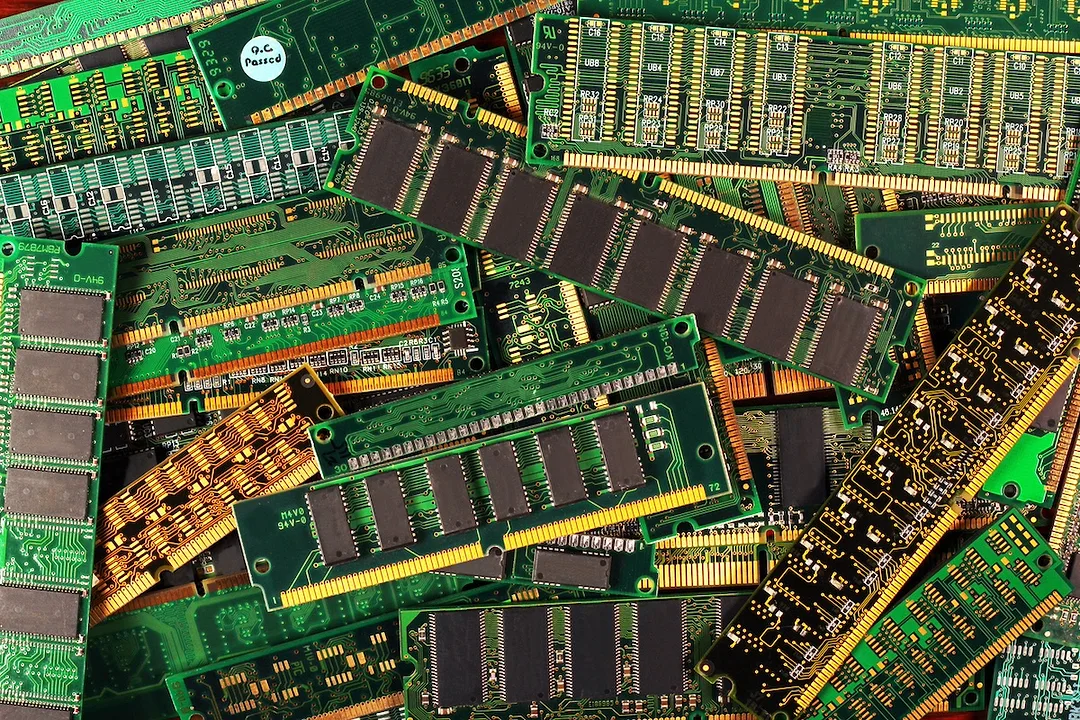
Photo: iStock / aquatarkus
There's no denying that artificial intelligence has fundamentally reshaped the world as we know it in any number of ways. But behind the chatbots such as Claude and ChatGPT, the self-driving vehicles motoring through our streets, and the photo and video generators favored heavily by American president Donald Trump, are acres upon acres of data centers packed with memory chips that have suddenly become some of the most sought-after components in the world.
That has come at the expense of the ongoing need for more conventional chip technology that feeds the devices in our pockets, on our laptops and our game consoles.
"Memory is now the most expensive component in a smartphone," explained Carl Pei, CEO for consumer tech retailer Nothing. "It's more expensive than the processor, more expensive than the display, and can account for more than 50% of the total hardware bill."
Before the rise of AI, the memory industry was notorious for its constant oversupply issues and yearly price dips, driven by a consumer tech sector that rarely matched in demand what manufacturers were producing. But, as thousands of data centers have come online, an explosion in demand for advanced memory chips has dramatically shifted the priorities of manufacturers, and sent prices for those components to unprecedented highs.
The price of computer memory has been falling at an exponential rate for decades, mostly due to the parsing out of Moore's Law, which accurately predicted in 1975 that the capacity of memory chips would double every two years, correspondingly driving down the price of data memory storage. That's all changed now, says computer science researcher and GitHub developer Daniel Lemire, in an August 5 post to X, noting the rise in the costs of the newly needed components: "We just undid about 20 years of progress."
Read More: Podcast | How to Survive Another Semiconductor Shortage
Today, a classic oversupply scenario has switched almost overnight into one of scarcity. In a July 31 earnings call, Apple CEO Tim Cook described the current market as "a 100-year flood on memory pricing." Kwak Noh-jung, the CEO for semiconductor giant SK hynix, told Reuters in June that 2027 will likely be "the worst year in the industry's history from the supply perspective." Around that same time, Pei, warned on social media that if anyone has been waiting to buy a new device, "the best time was yesterday."
The Tech Behind the Shortage
So, what's driving the "memory shortage"?
Servers in AI data centers require what's known as high bandwidth memory, or HBM, a specialized form of dynamic random-access memory (DRAM) that's stacked directly beside an AI processor. Computers, smartphones, tablets and gaming consoles, on the other hand, rely on more conventional forms of DRAM, each of which bears various combinations of letters and numbers that mean little to the everyday consumer.
Pivoting to the growing demand for data centers — each equipped with hundreds of thousands of stacks of HBM chips — means the world's largest memory manufacturers have redirected swathes of engineering talent, manufacturing capacity and investments away from conventional DRAM products used in consumer electronics.
"This is more serious than a temporary shortage caused by a disrupted factory or shipping route," says Rich Pleeth, founder and CEO for logistics software provider Finmile, and a former marketing manager with Google. "This is a structural reallocation of manufacturing capacity towards AI data centers."
Previously, SK hynix, Samsung Electronics and Micron Technology accounted for more than 90% of the global DRAM market. But SK hynix announced in 2024 that it would be converting one of its main consumer DRAM production lines to HBM. Then, in December 2025, Micron announced that it would be dramatically scaling back production of consumer memory products in favor of HBM. And in the ensuing months, Samsung also made no secret of its own plans to double down on data center memory chips. In total, up to 70% of memory chip products created globally in 2026 will likely be ticketed for AI data centers, according to supply chain risk management firm Everstream Analytics.
As a result, the builders of consumer tech sellers have been left to scramble for a dwindling share of the world's conventional memory supply. That saw memory product prices soar by 50% in the last quarter of 2025 alone, and then by another 40-50% by the end of Q1 in 2026, Everstream estimated.
The Road Ahead
The problem with a supply crunch like this is that there's no easy way out. Spinning up additional production capacity costs billions of dollars and takes years to build, data center expansions aren't slowing down anytime soon, and demand for consumer electronics isn't going away.
"American consumers have fallen in love with their $600 flat-screen TV — that's never coming back," says Jonathan Colehower, managing director with tech consulting firm UST. "It is a lot to ask of the American consumer, and I think that as an economy, we are in for some tough times."
Going all-in on HBM manufacturing has also proven to be a winning strategy for semiconductor companies, with SK hynix pulling in a record $31 billion in operating profit in 2025, doubling the previous year's total and representing a massive turnaround from the operating loss it reported in 2023. As long as AI memory continues to command premium prices, manufacturers will have little incentive to shift capacity back toward conventional DRAM.
In the meantime, consumer electronics have continued to get more expensive. Apple, Xbox, Lenovo and Sony all recently announced price hikes stemming from the memory shortage, while HP has publicly spoken of growing concerns regarding longer lead times, increased component costs and greater uncertainty in planning for future production cycles. Further into the future, SK hynix expects to see memory product demand outstrip its supply capacity even beyond 2030, CEO Kwak Noh-jung said in July.
"This is a reversal of everything we’ve come to expect from this industry," Pei said in a January blog post. "When something that used to get cheaper every year suddenly becomes a lot more expensive, the economics fundamentally change."
Popular Stories





100 Great Supply Chain Partners 2026: The Secret to Supply Chain Success
VIEW THE LATEST ISSUECase Studies


Visit Our Sponsors |
|
|
|
|
|
|
|
|
|
|
|
|
|
|
|
|
|
|
|
|
|
|
|
|
|
|
|
|
|
|
|
|
|
|
|
|
|
|
|
|
|
|
|
|
|
|
|
|
|
|
|