
SCB FEATURE
Understanding the U.S. DoT’s American Supply Chain Sovereignty Initiative
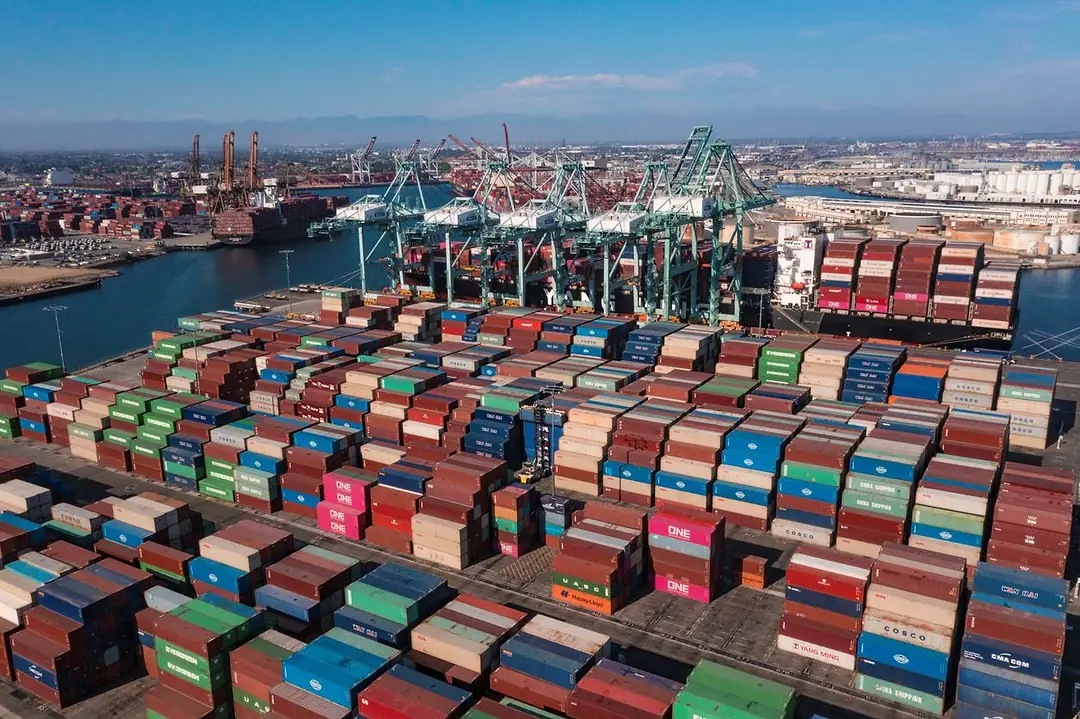
The Port of San Pedro at the Port of Los Angeles. Photo: iStock/Jorge Villalba
The American Supply Chain Sovereignty Initiative announced by U.S. Secretary of Transport Sean Duffy at a press conference at the Port of Los Angeles in July could provide an extra layer of visibility into supply chain disruptions and bottlenecks in the flow of cargo. But, say experts, in order for this government-run data platform to work, it will need significant levels of participation from the companies that own and move cargo. That, in turn, will require carefully considered and trustworthy data privacy protections.
“Secretary Duffy talked about role-based user access, and that’s an important clarification for companies that are going to self-report,” says Kaitlyn Huissen, vice president, product level intelligence at Exiger, a supply chain visibility and risk management tech platform. “Transaction-level data is very commercially sensitive.” Huissen says that who gets which signals about disruptions, and when, will need to be considered from a legislative perspective. If companies are self-reporting in order to participate, ensuring privacy will be critical, she warns.
There are other hurdles on the way to success, says Kerry Rosenhagen, expert director and the supply chain design practice lead at EFESO Management Consultants. “Every participant in this chain runs on a different system with a different data structure. The hard problem is not building a dashboard; it is agreeing on a standardized transaction data structure and taxonomy that participants can reach through an API,” says Rosenhagen. “Get that right and this becomes infrastructure. Get it wrong and it becomes another portal someone has to update by hand, which is where earlier data-sharing efforts have tended to end up.”
Another challenge is that it’s hard to establish what, exactly, the ASCSI proposes to do or be. As Huissen points out, the word “sovereign” in the title implies a “mission to onshore everything.” Or, additionally, “more freedom and power to make choices in the event of disruption,” she speculates. Rosenhagen, too, says it’s unclear what the value proposition is. “There is not enough detail yet to assess the value or the impact. The department's release and the Secretary's remarks at the port describe somewhat different things, and until the actual scope is defined, anything more specific is speculation.”
The DoT’s press release (there is no ASCSI website as yet) describes it as an initiative to “launch a high-visibility dashboard connecting major hubs like the Port of Los Angeles directly to ocean carriers, trucking companies, railroads, and retailers like Walmart.”
Secretary Duffy, said the June 12 release, is calling on Congress to include the necessary legislation in this year’s National Defense Authorization Act. “By authorizing USDOT to create role-based access for specific data points, Congress will give the Department the framework and flexibility required to securely streamline national logistics.”
That part, at least, is relatively clear. Role-based access refers to that critical element of security when it comes to sharing commercially sensitive information, or “limited sharing of specific data points with specific operators,” as the DoT explained in a written response to SupplyChainBrain’s questions about the program.
“For example, under this framework: 1. Marine Terminal Operators get role-based access to container-level and vessel-specific data points weeks in advance so they can plan how best to seamlessly expedite CTPAT containers. 2. Railroads and Chassis Providers receive access only to aggregated, anonymized 6-to-8-week volume forecasts by container-type (e.g. 20 vs. 40-foot containers) — without container-level details,” the DoT explained.
And an act of Congress is needed, the DoT spokesperson continued, because, “When Congress created FLOW (the Freight Logistics Optimization Works), they placed very specific parameters on how data was to be handled. So Secretary Duffy… was referring to the need for Congress to reword the statute to accommodate carveouts.”
However, other aspects of the program seem harder to unravel.
At one point during the June 12 press conference, Secretary Duffy offered an analogy to the Transportation Security Administration’s PreCheck program for air passengers. Asked how this differs from the current Customs-Trade Partnership Against Terrorism (C-TPAT) program, the spokesperson for the DoT said: “Like TSA Pre-Check, the existing C-TPAT program does excellent regulatory legwork before cargo even arrives at a U.S. port. But today, depending on the operating environment, a C-TPAT-cleared container can routinely get buried at the bottom of the stack under unvetted cargo upon arrival, where it can sit stranded for days. Today the only ‘fix’ for this situation is costly and inefficient digs to cherry-pick containers, which is typically discouraged due to the impacts on broader terminal operations.”
“Just as an airport officer physically directs Pre-Check passengers to a dedicated fast lane,” the spokesperson continued, “ASCSI instead acts as the digital architecture that pushes a physical signaling mechanism upstream while providing better but limited visibility at each handoff.”
SupplyChainBrain also asked how this new online dashboard will differ from and/or interact with existing supply chain visibility platforms, such as the Port of Los Angeles' Port Optimizer and the existing DoT FLOW system, or the more broad-based, commercial platforms such as Exiger, Kinaxis, Logility and Blue Yonder. The DoT spokesperson replied that: “[The] American Supply Chain Sovereignty Initiative is not a replacement for commercial solutions or localized port software, but a resource that participants can incorporate into existing platforms to optimize their operations.”
“Most notably, by integrating with Customs and Border Protection systems, ASCSI empowers operators to physically move freight more efficiently through CBP’s C-TPAT program,” the spokesperson explained. “ASCSI will also enhance container velocity, alleviate yard congestion for marine terminal operators, and help railroads and chassis providers plan equipment better.”
Huissen says it might help to think of the proposed system as a sort of weather service for supply chains. For example, in an event like 2024's Baltimore bridge collapse, shippers want to know whether they have cargo trapped there, and what cascading effects the disruption will have. “It’s not necessarily a god’s eye view into every product, but there’s more freedom of information, so that when there is disruption, the parties can be informed so they can reroute,” she explains.
“This is supposed to build on FLOW, which invites suppliers, traders, transportation companies and so on to self-report information into this tool. It’s all voluntary. [ASCSI] is meant to give a bit more protection to companies that want to participate in this aggregating platform,” she says.
The DoT said it aims to have the ASCSI digital architecture for inbound containerized freight deployed within 12 months of the bill's enactment. “Integration of outbound containerized exports and dry/liquid bulk commodities across our coastal ports and inland waterways will follow.”
Given the snail’s pace of law-making under the current administration, it looks like it will be a good long while before this initiative sees the light of day, if ever. According to GovTrack.us, there are 18,380 bills and resolutions currently before the United States Congress, but of those only about 7% will become law.
Watch this space.
Popular Stories



100 Great Supply Chain Partners 2026: The Secret to Supply Chain Success
VIEW THE LATEST ISSUECase Studies


Visit Our Sponsors |
|
|
|
|
|
|
|
|
|
|
|
|
|
|
|
|
|
|
|
|
|
|
|
|
|
|
|
|
|
|
|
|
|
|
|
|
|
|
|
|
|
|
|
|
|
|
|
|
|
|
|