The "Amazon-Prime Effect" - the notion that everything you order should arrive on your doorstep in two days - has left brands and retailers scrambling to keep up. As consumers' expectations grow and their patience around delivery time shrinks, one tactic businesses use to combat increasing time constraints is transparency.
Researchers from Hewlett-Packard Enterprise have unveiled what they claimed was a breakthrough in computing with a new machine capable of handling vast amounts of data at supercomputing speeds.
Tesco is starting to incorporate machine learning algorithms across the business, from internal applications such as driver routing to customer-facing apps like integration, with Google's home assistant device. Tesco is starting to incorporate machine learning algorithms across the business, from internal applications such as driver routing to customer-facing apps like integration, with Google's home assistant device.
"Without big data analytics, companies are blind and deaf, wandering out onto the web like deer on a freeway," wrote Geoffrey Moore, author of Crossing the Chasm. Certainly, many CFOs, and not just those with web-based businesses, would wholeheartedly agree: Data are the sensory information produced by a business that has its eyes and ears on operations and customers.
Stratasys is developing a cloud-service platform that comprises expandable, server rack-like modular 3-D printer units configured under one software platform to work simultaneously to mass produce parts.
The "last mile" is a telecom term for delivering telephone, cable or internet services to the customer. With the most connections to make, it's the bottleneck of the system. It's also the most expensive and difficult to upgrade. These words also aptly describe retail's woes in delivering orders to the consumer.
Microsoft last week unveiled new tools intended to democratize artificial intelligence by enabling machine smarts to be built into software from smartphone games to factory floors.
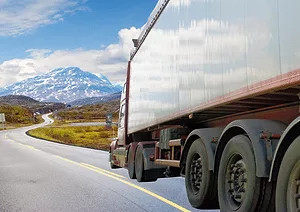
Smart companies with trucking fleets are improving fuel efficiency, lowering NOx and reducing greenhouse gas emissions by taking advantage of new technology solutions - including idle reduction products, automated transmissions, low rolling resistance tire, tire pressure systems, engine parameters, and technologies that automate maintenance practices, according to FleetOwner.