• Advertise
  • Contact Us
  • Supplier Directory
  • SCB YouTube
  • About Us
  • Login
  • Subscribe
  • Logout
  • My Profile
  • LOGISTICS
    • Air Cargo
    • All Logistics
    • Facility Location Planning
    • Freight Forwarding/Customs Brokerage
    • Global Gateways
    • Global Logistics
    • Last Mile Delivery
    • Logistics Outsourcing
    • LTL/Truckload Services
    • Ocean Transportation
    • Parcel & Express
    • Rail & Intermodal
    • Reverse Logistics
    • Service Parts Management
    • Transportation & Distribution
  • TECHNOLOGY
    • All Technology
    • Artificial Intelligence
    • Cloud & On-Demand Systems
    • Data Management (Big Data/IoT/Blockchain)
    • ERP & Enterprise Systems
    • Forecasting & Demand Planning
    • Global Trade Management
    • Inventory Planning/ Optimization
    • Product Lifecycle Management
    • Robotics
    • Sales & Operations Planning
    • SC Finance & Revenue Management
    • SC Planning & Optimization
    • Supply Chain Visibility
    • Transportation Management
  • GENERAL SCM
    • Business Strategy Alignment
    • Customer Relationship Management
    • Education & Professional Development
    • Global Supply Chain Management
    • Global Trade & Economics
    • Green Energy
    • HR & Labor Management
    • Quality & Metrics
    • Regulation & Compliance
    • Sourcing/Procurement/SRM
    • SC Security & Risk Mgmt
    • Supply Chains in Crisis
    • Sustainability & Corporate Social Responsibility
  • WAREHOUSING
    • All Warehouse Services
    • Conveyors & Sortation
    • Lift Trucks & AGVs
    • Order Management & Fulfillment
    • Packaging
    • RFID, Barcode, Mobility & Voice
    • Warehouse Automation
    • Warehouse Management Systems
  • INDUSTRIES
    • Aerospace & Defense
    • Apparel
    • Automotive
    • Chemicals & Energy
    • Consumer Packaged Goods
    • E-Commerce/Omni-Channel
    • Food & Beverage
    • Healthcare
    • High-Tech/Electronics
    • Industrial Manufacturing
    • Pharmaceutical/Biotech
    • Retail
  • THINK TANK
  • WEBINARS
    • On-Demand Webinars
    • Upcoming Webinars
    • Webinar Library
  • PODCASTS
  • WHITEPAPERS
  • VIDEOS
Home » Managing the ‘Single-Point-of-Failure’ Risk in China
Analysis

Managing the ‘Single-Point-of-Failure’ Risk in China

Safety in the Supply Chain
Source: Bloomberg
May 1, 2020
Rajesh Kalidindi, SCB Contributor
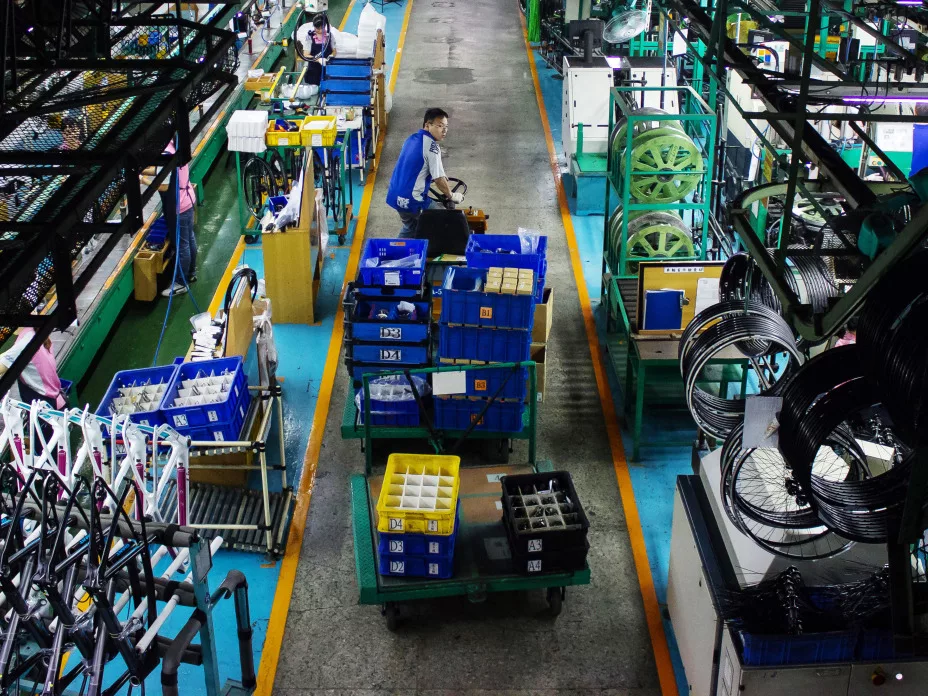
While manufacturers have increasingly been motivated to diversify their supply bases beyond China over the past decade, the announcement of tariffs in 2018 heightened the need to reduce the risk of a “single point of failure.” The coronavirus outbreak intensified this concern, but companies are struggling to find alternative locations that match Chinese manufacturing capabilities and infrastructure.

As supply chains restructure to reduce their dependence on China, they’re asking broader questions about operationalizing risk management in an environment characterized by volatility, uncertainty, complexity and ambiguity (VUCA).

Over the course of the last 30 years, China became a dominant manufacturing hub, and now contributes parts and labor to a huge range of products across virtually every industry.

China’s rise to the status of manufacturing juggernaut, particularly for electronic components, was facilitated by a number of competitive advantages, including:

  • A large labor base and low labor costs,
  • A lightly regulated environment,
  • Cheap, accessible land,
  • Proximity to raw materials and second-tier suppliers, and
  • Sophisticated infrastructure and access to trade routes.

As China’s prosperity grew over the past decade, these advantages began to erode. Wages rose steadily, as workers demanded better pay and benefits. Environmental and business regulations became more stringent. And Chinese manufacturers began to turn their attention from producing exports to supplying goods for the country’s growing domestic market.

Beginning in 2018, however, the Trump Administration’s threats to impose tariffs on Chinese goods brought the world’s overdependence on Chinese manufacturing into sharp relief.

Whether it’s due to reliance on one location, part or supplier, “single-point-of-failure” risks can be especially devastating to supply chains. A jarring reminder of their impact came for the global auto industry in 2011, when a high concentration of Japanese suppliers suffered from the devastating Tōhoku earthquake and tsunami. 

While electronics and a range of other industries have relied heavily on Chinese suppliers and manufacturers for years, risk-management concerns have only recently surfaced. The single-point-of-failure risk is especially high given the percentage of parts that rely solely on suppliers in China.

When the first tariffs were imposed in 2018, many companies created war rooms or tiger teams to develop alternative sourcing strategies for contract manufacturers and tier-1 suppliers, with some efforts also focusing on single-sourced tier-2 parts. Although a lack of suppliers and infrastructure in Southeast Asia and other regions make this a difficult task, companies such as Fitbit have moved aggressively, announcing a goal to remove all of manufacturing from China. Dozens of other companies, including Dell, Google and Nintendo, announced plans to move significant portions of their operations, while others planned to delay investment in Chinese manufacturing.

Of course, just a few months after this trade conflict appeared to be resolved, the coronavirus outbreak led to closed factories throughout China, roiling markets worldwide.

By the time the coronavirus epidemic emerged in early 2020, an understanding that supply chains must prepare for a new age of volatility was already widespread. Heightened awareness of risks in China is leading to a broader acknowledgement that risk management needs to be an ongoing part of supply-chain planning, and that successful organizations must develop resilient, agile operations. Technologies enabled by artificial intelligence are emerging that will broaden visibility, predict risk events and generate recommendations.

Rajesh Kalidindi is CEO of LevaData.

    RELATED CONTENT

    RELATED VIDEOS

    KEYWORDS China
    Rajesh Kalidindi, SCB Contributor

    Why Strategic Sourcing Technology Is Key to Gaining a Competitive Supply Chain Advantage

    More from this author

    Subscribe to our Daily Newsletter!

    Timely, incisive articles delivered directly to your inbox.

    Featured Product

    Popular Stories

    • A pair of hands reaches towards a cluster of icons showing global logistics network distribution and transportation

      CSCMP's State of Logistics Report: Get Used to the Fog

      Logistics
    • An overhead view of a shipping port stacked with containers, with stylized lines forming a grid connecting ships and berths

      Adani Ports Partners With Kaleris for AI Terminal Software

      Global Gateways
    • A GLASS OF ROSE WINE IS FLANKED BY PLATES OF FOOD, A MEDIEVAL TOWN SQUARE OUT OF FOCUS IN THE BACKGROUND

      EU Votes to Move Ahead with U.S. Trade Deal

      Global Trade & Economics
    • SHIPPING CONTAINERS BEARING THE FLAGS OF THE US AND CHINA SWING AND CLASH IN MIDAIR

      Supreme Court Allows First-Term Trump Tariffs to Remain in Place

      Global Supply Chain Management
    • A shipping container painted with the Canadian flag being lifted by a crane

      Canada Looks to Crack Down on Forced Labor Imports

      Global Supply Chain Management

    Digital Edition

    2026 esg cover main scb q2 2026 cover

    SupplyChainBrain 2026 ESG Guide: ESG — The Supply Chain’s Biggest Secret

    VIEW THE LATEST ISSUE

    Case Studies

    • Recycled Tagging Fasteners: Small Changes Make a Big Impact

    • A GRAPHIC SHOWING MULTIPLE FORMS OF SHIPPING, WITH A HUMAN STANDING AT THE CENTER, TOUCHING A SYMBOLIC MAP OF THE WORLD

      Enhancing High-Value Electronics Shipment Security with Tive's Real-Time Tracking

    • A GRAPHIC OF INTERLACING HONEYCOMBED ELEMENTS REPRESENTING GLOBAL BUSINESS TRANSACTIONS

      Moving Robots Site-to-Site

    • JLL Finds Perfect Warehouse Location, Leading to $15M Grant for Startup

    • Robots Speed Fulfillment to Help Apparel Company Scale for Growth

    Visit Our Sponsors

    4flow Arkieva Blue Yonder
    Carton Cloud CoEnterprise Dassault
    Duravant E2Open General Logistics Systems
    Hy-Tek iGPS Korber
    Lyngsoe Procurability Quinyx
    SAP Sikick Systech
    S&P Global Mobility TADA TransImpact
    US Bank Werner Enterprises WSI
    • More From SCB
      • Featured Content
      • Video Library
      • Think Tank Blog
      • SupplyChainBrain Podcast
      • Whitepapers
      • On-Demand Webinars
      • Upcoming Webinars
    • Digital Offerings
      • Digital Issue
      • Subscribe
      • Manage Email Preferences
      • Newsletters
    • Resources
      • Events Calendar
      • 2026 Event Coverage
      • SCB's Great Supply Chain Partners
      • Supplier Directory
      • Case Study Showcase
      • Supply Chain Innovation Awards
      • 100 Great Partners Form
    • SCB Corporate
      • Advertise on SCB.COM
      • About Us
      • Privacy Policy
      • Contact Us
      • Data Sharing Opt-Out

    All content copyright ©2026 Keller International Publishing Corp All rights reserved. No reproduction, transmission or display is permitted without the written permissions of Keller International Publishing Corp

    Design, CMS, Hosting & Web Development :: ePublishing