
Why Biden’s Offshore Tax Plan Is Unlikely to Renew Rust Belt Factories
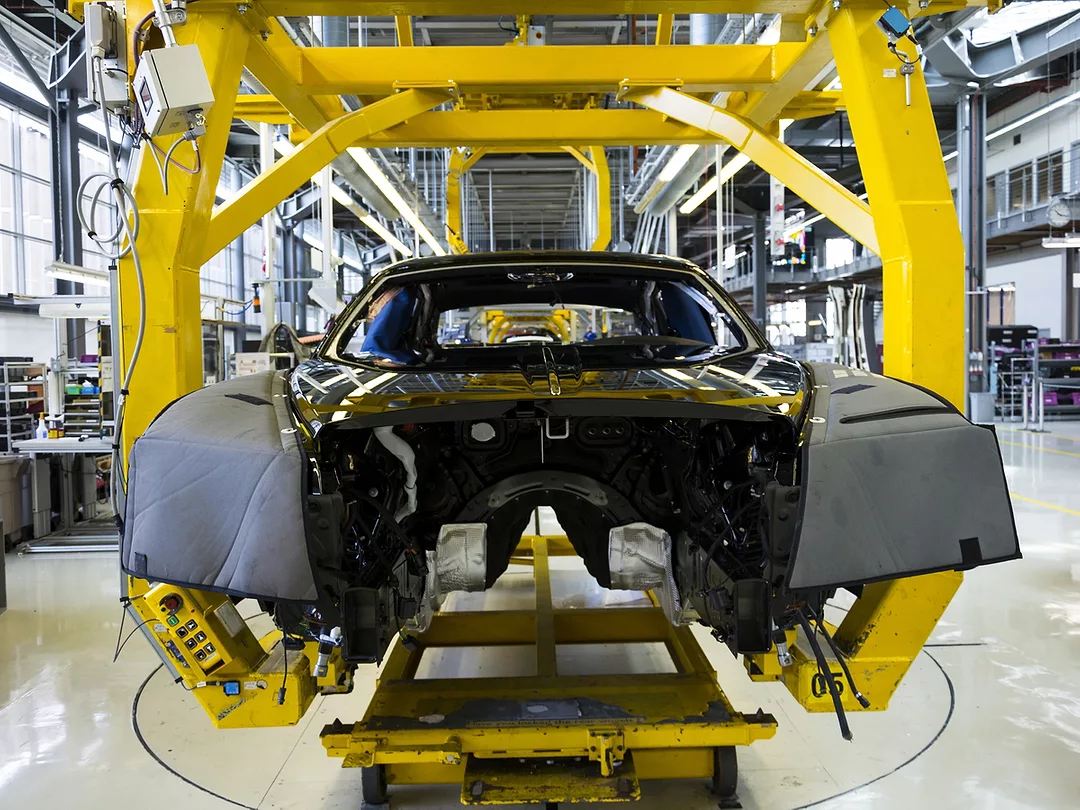
An automotive production line. Photo: Shutterstock.
Democratic presidential nominee Joe Biden’s plan to curb corporate offshoring and to renew domestic manufacturing may block companies from parking profits in tax havens, but may not do enough to make shuttered factories hum again.
Biden’s proposal uses a carrot-and-stick approach that raises taxes on a corporation’s foreign profits but rewards companies with tax incentives for moving jobs and investment back to the U.S.
Biden launched a renewed focus on economic issues this week, beginning with a push to boost American manufacturing and operations. He called for a 10% tax penalty on U.S. companies that move operations overseas and a 10% tax credit for companies that create jobs in the U.S.
“Under Donald Trump, Michigan lost auto jobs even before Covid hit,” he said of the recession that began shortly after the coronavirus shut down much of the country. “And what about offshoring? Has Trump delivered on stopping companies from shipping American jobs overseas? You already know the answer to that. Of course not.”
But the tax breaks may not be juicy enough for companies to justify a massive supply-chain shift back to the Midwest or create a slew of new jobs when companies are relying more heavily on automation.
“Raising taxes on foreign investments by U.S. companies will reduce foreign investment by U.S. companies, but it is not clear that it will increase U.S. investments,” Alan Viard, an economist at the right-leaning think tank American Enterprise Institute, said. “Instead, it may simply reduce total investment by U.S. companies.”
For Biden’s plan to work companies would have to significantly boost productivity and output, said Kathleen Bostjancic from Oxford Economics.
“But that usually means using more automation, so maybe you can bring back the output, but not necessarily the jobs,” she said.
That presents a challenge for Biden, who has focused on reviving the economy and increasing employment in critical battleground states, including Michigan, where he unveiled the plan on Wednesday at a United Auto Workers union hall.
“Going back since the 1970s every politician has said they were going to bring back Youngstown, Ohio, steel manufacturing, but no one has known how to do it,” said Michael Graetz, a professor of tax law at Columbia University.
Still, the plan could fix a perennial problem that both Democrats and Republicans have denounced: corporations ducking federal tax bills by shifting profits offshore where they can pay little or nothing to the Internal Revenue Service.
Current U.S. tax laws, which were last updated in 2017 in President Donald Trump’s tax law overhaul, imposed a minimum tax on some foreign corporate profits, but the law is very “feeble” resulting in an “America last” outcome, said Kimberly Clausing, a Reed College professor focusing on the taxation of multinational firms. Corporations opt to operate in tax havens or other countries over the U.S., she said.
Biden’s plan creates a large disincentive to move profits out of the U.S. The plan would place a 30.8% tax on profits generated from offshore manufacturing on products sold in the U.S., which means companies would pay more on foreign profits than the 28% they would pay at home under the Biden plan. The current corporate tax rate is 21%.
Trump’s 2017 law also sought to target profit shifting by putting a 10.5% levy on some offshore income, but the ability to use foreign tax credits and large exemptions has meant that few companies have stopped using sophisticated tax planning techniques to lower their tax bills.
The plan also includes a 10% “Made in America” tax break for bringing back domestic manufacturing jobs, renovating closed factories and investing in advanced manufacturing technology.
But the “Made in America” tax credit isn’t likely to provide enough of an economic boost to offset the higher taxes that companies would face, said Daniel Bunn, the vice president of global projects at the right-leaning Tax Foundation.
“I don’t see that as a strong incentive,” he said. “The tax credit will be pretty quickly offset with the tax hikes and won’t be better for creating U.S. jobs.”
Biden took some criticism on the tax credit from the left as well.
Americans for Tax Fairness, a progressive group, said Biden’s “Made in America” goal was admirable, “Corporations already don’t pay enough in taxes and don’t need any further tax breaks. Removing the perverse tax incentives to move jobs overseas should be enough to restore them here,” the group said in a statement.
Instead of coming back to the U.S., Biden’s plan could encourage companies to avoid the American tax system all together, Graetz said. Companies could undergo a so-called corporate inversion, become foreign-owned or new startups could choose to be based outside the U.S.
The IRS can only tax U.S. based companies or foreign companies operating within the U.S. Foreign companies doing business in other countries are outside of the U.S.’s reach, which means that American corporations could be at a disadvantage.
“Apple is competing with Samsung and none of this can apply to Samsung,” Graetz said.
Biden’s offshore and corporate tax proposals — which would be a challenge to get through Congress, unless Democrats win large majorities in both chambers — won’t be enough to fix longstanding economic issues in the areas hit hardest by the decline of manufacturing.
“It can’t be all about tax incentives,” Clausing said. “You need public investment, education, infrastructure funding. You combine all of that and if you can get a few things marginally better you can start a virtuous cycle instead of a vicious one.”
Popular Stories





SupplyChainBrain 2026 ESG Guide: ESG — The Supply Chain’s Biggest Secret
VIEW THE LATEST ISSUECase Studies


Visit Our Sponsors |
|
|
| |
|
|
|
|
|
|
|
|
|
|
|
|
|
|
|
|
|
|
|
|
|
|
|
|
|
|
|
|