.webp?height=100&t=1784835632&width=150 "LSG26_LTAgentEdgeImage_DB-1313-1 (1).png")
SPECIAL REPORT
Drayage Best Practices: Five Tips to Elevate Operations
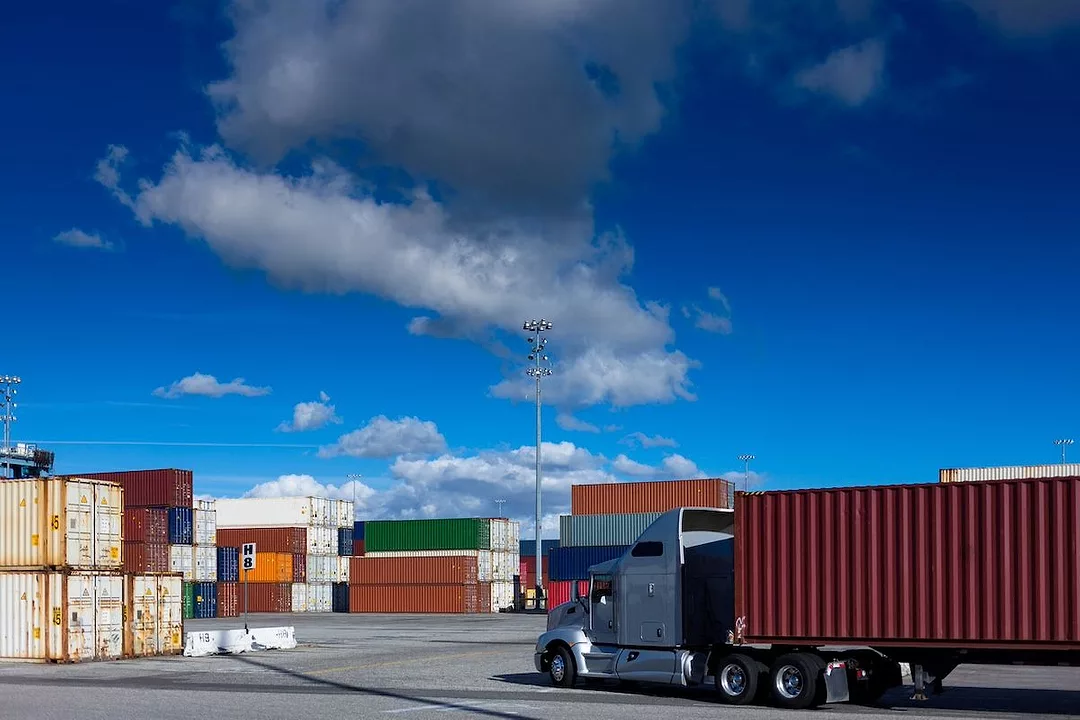
Photo: iStock/halbergman
Drayage operators today face relentless pressure: Customers expect real-time visibility, drivers demand simpler workflows, and razor-thin margins leave no room for error. Manual processes, from quoting and dispatching to invoicing, create bottlenecks that erode margins and hold back growth.
The path forward is clear: digitize and automate. Operators who embrace technology don’t just cut waste; they scale smarter, improve service and grow without adding headcount. Tom Burke, product portfolio team leader with logistics provider CargoWise Landside, warns, “Shippers simply won’t use you if you don’t have up-to-date technology.”
With that urgency in mind, here are the five biggest challenges in drayage today and the best practices leading operators are using to overcome them.
1 Digitize Rates, Quotes, Orders and Dispatching
Responding quickly to customer requests is now the standard. Manual processes slow operators down and frustrate customers who expect quick, accurate responses. A single quote can require multiple spreadsheets, mileage checks and toll calculations. The result: inconsistent pricing, missed opportunities and strained relationships.
Leading operators centralize and digitalize quoting and dispatch to respond faster, reduce errors and win more business. By consolidating cost factors — fuel surcharges, reefer fees, tolls, and all of the accessorials — they eliminate bottlenecks in quoting. Requests that once took days are now completed in minutes, and quotes flow directly into orders and dispatch. Customers gain transparent, professional documents that build confidence and strengthen long-term relationships.
One mid-size trucking company illustrates the difference. Before automating, it could handle only 60–70 customer requests a day, and large RFPs often took several days. After adopting a digital system, it can process 200 quotes in a day and turns around RFPs in hours. Customers also gained more confidence in the results and no longer challenge most quotes. According to the company’s manager, “It makes us look like a bigger company than we are.”
2 Optimize Driver Interactions
Drivers are at the heart of drayage operations, yet too often their time is consumed by paperwork, phone calls and trips to the office. Every hour off the road means growing frustration, higher turnover and reduced service capacity. Dispatchers spend their days fielding repetitive calls, while customers wait for updates.
Forward-thinking carriers equip drivers with mobile tools that simplify their day, speed up communication and improve transparency. Instructions are delivered to mobile devices, proof-of-delivery is captured on the spot, and updates flow instantly into the transportation management system (TMS). Dispatchers shift from chasing drivers to managing exceptions, while customers get real-time updates.
The impact is clear. More than 70% of drivers say mobile apps help them do their jobs better. Some operators report tripling their driver-to-dispatcher ratios, enabling growth without headcount. Less paperwork also improves job satisfaction, lowering costly turnover.
As Burke puts it, “Anytime that a driver spends not driving is time they’re not getting paid.”
3 Automate Wait Times, Tracking and Visibility
Every idle hour in drayage carries a price, and those expenses quickly erode thin margins. Congestion at ports and terminals can add hundreds of dollars a day in detention or storage charges. Without clear documentation, customers dispute invoices, and operators waste time justifying fees. Meanwhile, shippers now expect continuous updates. Phone calls and spreadsheets are no longer enough.
Competitive operators deliver continuous visibility with automated tracking and event updates, reducing disputes and wasted time. Geofencing and real-time triggers capture wait times automatically, creating a digital record that protects margins and proves detention or storage charges. Updates flow directly to shippers and forwarders, cutting dispatch calls. Integrations through electronic data interchange (EDI) and application programming interfaces (API) keep data consistent across systems, so drivers, customers and operators all see the same information.
The results are compelling. Operators that adopted automation doubled revenue per employee, scaled without adding headcount, and cut disputes with digital proof of wait times. Dispatch call volumes dropped, as customers received updates before asking.
4 Streamline Invoicing and Settlements
Few challenges hit drayage operators harder than billing. Manual processes introduce errors that trigger disputes, delay payments and strain customer relationships. For operators already working on thin margins, slow or inaccurate invoicing quickly becomes a cash flow problem.
Industry leaders streamline invoicing and settlements with digital workflows that accelerate cash flow and strengthen customer trust. By auto-rating shipments and generating invoices the same day, they replace manual reconciliation with accuracy and speed. Supporting documents feed directly from mobile apps and system integrations, ensuring each charge aligns with the shipment record. Customers receive itemized invoices, and drivers are paid reliably, reducing friction across the payment cycle.
The gains are significant. Order-to-invoice cycles that once stretched to 10 days now shrink to one or two. Disputes fall sharply as itemized bills with complete documentation reduce confusion. Where invoicing once required error-prone paperwork, the process now runs seamlessly in the background.
Says Burke: “Slow invoicing is like leaving money on the table.”
5 Organizational Commitment to Digital Transformation
Technology alone does not drive transformation. Even the best tools fail without leadership buy-in and frontline adoption. Successful adoption starts at the top: Executives set priorities, allocate resources and reinforce that digital transformation is essential to compete. Super users and frontline staff then carry that vision forward by piloting new tools, training colleagues and embedding digital workflows into daily operations. Incremental rollouts help organizations build confidence and sustain momentum.
The payoff is clear. Companies that treat transformation as an organizational commitment, not just software, see smoother rollouts and stronger returns. When efficiency gains are reinvested, the benefits compound.
Burke notes, “Technology adoption must be driven from the top down. Without that commitment, you won’t win at it.”
Solutions from CargoWise Landside as the Enabler
The five best practices outlined here — digitizing the front end, optimizing driver interactions, automating visibility, streamlining invoicing, and securing organizational commitment — are increasingly non-negotiable in drayage. But achieving them requires more than isolated fixes.
That’s where CargoWise Landside comes in. The solutions unify every stage of the drayage process, from rates and orders to invoicing and settlements, eliminating the need for patchwork systems. Customers are often surprised to find all these capabilities in a single solution.
“The broad scope of the CargoWise Landside offerings enables container drayage companies to digitalize all aspects of their operation to reduce costs, grow revenue and meet the increasing demands from their customers,” says Burke.
And while the pressures of today demand speed and accuracy, CargoWise Landside is also preparing operators for what comes next. With innovations in AI, predictive analytics and automation, the platform ensures companies aren’t just solving today’s problems but preparing for tomorrow’s opportunities.
By unifying these best practices on a single platform, operators protect margins, scale efficiently and build resilience for the challenges still to come.
Resource Link: https://www.cargowise.com/landside/
Popular Stories

.webp?height=100&t=1784491177&width=150 "030_ai_in_the_warehouse-_real_use_cases_v1-(540p).png")

SupplyChainBrain 2026 ESG Guide: ESG — The Supply Chain’s Biggest Secret
VIEW THE LATEST ISSUECase Studies


Visit Our Sponsors |