.webp?height=100&t=1784835632&width=150 "LSG26_LTAgentEdgeImage_DB-1313-1 (1).png")
Bill Targets China's Access to Advanced Chipmaking Tools
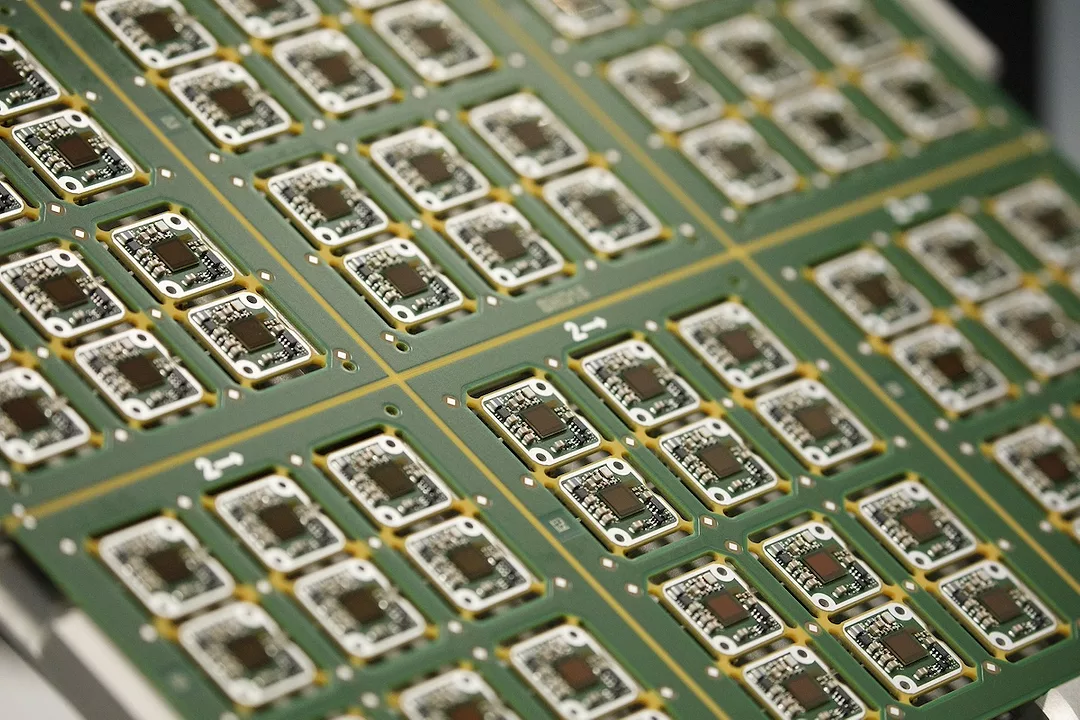
Republican Congressman Michael Baumgartner has introduced a bill that would close loopholes in export controls on advanced chipmaking equipment, as a way to prevent China from acquiring the tools needed to build cutting-edge semiconductors.
Dubbed the Multilateral Alignment of Technology Controls on Hardware, or MATCH Act, the bill would ban the sale of most essential semiconductor manufacturing equipment (SME) to any destination inside a country of concern. It would also blacklist some of China's biggest chip companies, including XMT, Hua Hong, Huawei, SMIC and YMTC, and give U.S. allies 150 days to show progress with aligning on these controls.
“China has made it abundantly clear that it intends to dominate the technologies that underpin both our economy and our national defense," Baumgartner said in an April 2 release. "The United States cannot afford to leave open back doors that allow the Chinese Communist Party to acquire the tools it needs to leap ahead in semiconductor manufacturing."
The bill has bipartisan support in the U.S. House of Representatives, with co-sponsors spanning both major parties and companion legislation being introduced in the Senate by Republican Senator Pete Ricketts and Democrat Andy Kim. This comes as concerns have grown over China exploiting gaps between the U.S. and allied export controls, with chipmaking currently ranking as the largest export from the Netherlands to China, and the second largest from Japan.
Although China is the world's largest source of rare earth minerals used in semiconductors, it currently lacks the ability to mass-produce some of the most advanced chips without access to Western equipment, particularly extreme ultraviolet lithography machines made by Dutch company ASML. China has also made significant progress in recent years despite that, with Huawei releasing a smartphone in 2023 equipped with an advanced chip manufactured domestically by SMIC. Even so, the process used by SMIC was not viewed as cost-effective or efficient at scale, keeping China largely reliant on Western nations for mass production.
Popular Stories


.webp?height=100&t=1784491177&width=150 "030_ai_in_the_warehouse-_real_use_cases_v1-(540p).png")

SupplyChainBrain 2026 ESG Guide: ESG — The Supply Chain’s Biggest Secret
VIEW THE LATEST ISSUECase Studies


Visit Our Sponsors |