A large percentage of companies continue to experience supply chain fraud and many of those may not be doing enough to address the problem, according to a new survey by Deloitte.
Across industries, companies have been intensifying their focus on cybersecurity. This is a direct consequence of the expanding role that digitization is playing in their business and operating models and the demonstrated potential for significant damage resulting from a successful cyberattack.
Section 54 of the Modern Slavery Act 2015 has come into force in English law. The U.K. government has issued a practical guide on the section saying the measure is designed to create a level playing field between those businesses, whose turnover is over a certain threshold, which act responsibly and those that need to change their policies and practices.
Shoppers, particularly younger ones, believe it's important for retailers to have a physical store, and they expect that store to make a good first impression.
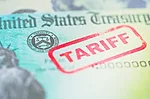
It's easy to scoff at the anti-free-trade rhetoric emanating from the U.S. presidential campaign trail. Donald Trump keeps yelling about China, Mexico and Japan. Bernie Sanders won't stop shouting about greedy multinational corporations. Hillary Clinton, Ted Cruz and John Kasich are awkwardly leaning in the same direction. If you're a typical pro-trade business executive, you're tempted to ask: Were these people throwing Frisbees on the quad during Econ 101?
There is no doubt that lithium-ion batteries, when packed together without the proper packaging and handling precautions, can certainly be dangerous. In 2014, the Federal Aviation Administration applied heat to a container packed with 5,000 lithium-ion batteries that resulted in a thermal runaway and subsequent explosion of flammable gases emitted within the container. Even a favorite fire suppressant, when used, was ineffective in extinguishing the fire. The danger appears to be inherent in all aircraft configurations, passenger or all-cargo.
The transportation and warehousing industry suffered more than 95,000 industrial accidents and illnesses in 2014, according to the Bureau of Labor Statistics of the U.S. Department of Labor. That works out to 225 per 10,000 workers - one of the highest rates of any industry. Most estimates put the annual cost of workplace injuries at more than $50bn, so it makes sense from a business as well as a moral point of view to make safety a priority. The following are some proven ways to increase safety.
A group of logistics entrepreneurs is launching a Silicon Valley-style accelerator for supply-chain technology start-ups, aiming to draw new investment and talent to the freight business.
As the U.S. economy continues to improve, consumer confidence has been on the rise, which would typically indicate growth for consumer packaged goods manufacturers as well. However, according to a new Hot Topic Report from Acosta, a sales and marketing agency in the CPG industry, unit sales are flat across most categories, and trade promotions continue to decline as a key factor in driving incremental volume. This decline leads to more unprofitable sales for manufacturers. Despite this, CPG manufacturers continue to allocate an average of 15 percent to 20 percent of gross sales to trade promotion.
Carbon pricing, in the form of a carbon tax or a cap-and-trade system, is used by businesses and governments all over the world to cut greenhouse gas emissions and, according to proponents, grow the economy.