A third (35 percent) of businesses in the manufacturing industry are extremely concerned about potential supply chain disruption, according to research released by BSI, the business standards company and the Business Continuity Institute (BCI).
Analyst Insight: In 2010, as we began to offer a supply chain risk management class at Lehigh, our body of knowledge continued to expand and migrated into a very effective methodology to review, evaluate and benchmark a company's end-to-end supply chain maturity and inherent risk. The methodology encompassed 100 questions-of-discovery across 10 tenets of the supply chain resulting in a Red, Yellow & Green "spider diagram" profile of a company's supply chain maturity and inherent risk. – Gregory L. Schlegel, Founder, The Supply Chain Risk Management Consortium, and Adjunct Professor, Supply Chain Risk Management, Lehigh University
Billions of transactions around the world everyday connect buyers and sellers in the online marketplace. This globally connected marketplace demands and deserves a sound international mailing and shipping protocol.
Millennial influence within business-to-business buying decision groups is growing rapidly, according to a study by Google and the research house Millward Brown Digital.
In the late 1680s, a group of ship owners, merchants and ships' captains - in essence, the supply chain managers of the day - transformed global commerce by "inventing" business insurance. In 2015, the insurance industry will return the favor by supporting supply chain innovation through sharing the tools that insurers have depended on to predict and quantify risk. How and why (now) will that happen? And what do supply chain stakeholders need to do?
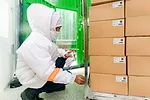
The Reusable Packaging Association has issued comprehensive protocols to ensure the continued safe use of reusable plastic containers (RPCs) for fresh and perishable products in the supply chain. The guidelines encompass washing, handling, storing, packing, displaying and collecting RPCs. They also include rigorous and defined Hazard Analysis & Critical Control Points (HACCP), and hourly, daily, monthly, and quarterly microbiological testing.
Seeing what is happening to their customers and feeling the heat from possible threats, technology companies are increasing spending on security for their own systems, according to a survey of chief financial officers. Meanwhile, incentives to spend big on security are still in short supply for retailers and other private companies.
Analyst Insight: No matter what "expert" you ask – all will point to the fact that SRM is on the rise. This growing realization that buyers and suppliers must work together to achieve success in today's complex and volatile economic climate is a welcome sea change in thinking that only will continue. A key to getting SRM right? Make sure you are putting in mechanisms to manage the business with the supplier – not just to manage the supplier. – Kate Vitasek, Faculty for the University of Tennessee's Center for Graduate Executive Education programs.
Analyst Insight: There is now a false sense of security in supply chain risk management. Sixty-eight percent of companies believe they are better prepared than five years ago, yet supply chains experience an average of three material disruptions a year, according to Supply Chain Insights. Supply chain preparedness is for standard risk factors, such as financial viability, natural disasters, product quality, globalization and outsourcing. But, what about other risks and the security of supply chain? – Mickey North Rizza, VP Strategic Services, BravoSolution