.webp?height=100&t=1782792122&width=150 "005_veteran_winemaker_gallo_embarks_on_an_ai_journey_v2-(540p).jpg")
Opinion: End Your Global Supply Chain Paper Chase
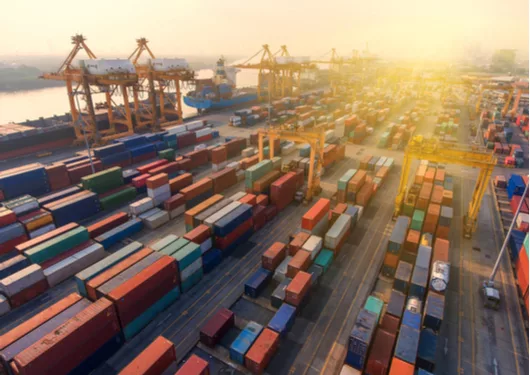
International trade is bogged down by antiquated technologies. According to "The Current and Future State of Supply Chain Transformation," a 2016 report by Capgemini, 48 percent of respondents "admit that right now 'traditional' methods such as phone, fax and email are still the dominant ways to interact with supply chain partners."
This is true even though enterprise resource planning systems have been available for more than two decades. Yet, about half of the executives in that survey of major global manufacturing and retail organizations haven't been able to implement the seamless information flows that are essential for supply chain operations.
In North America, the emergence of digital solutions into robust supply chain networks has been much more successful. So, you might wonder why that can't that be duplicated on a global scale.
The reason is complexity.
In the simpler domestic North American environment, the value of integrated technology solutions has been largely realized. These systems typically include a relatively low number of participants. For example: a shipper; a receiver; one or two carriers; a distribution center; and often a 3PL that has technology for end-to-end supply chain management.
On the global stage there is a similar—but unfulfilled—need to wrap product movements into a truly seamless process in which all parties have complete visibility into every aspect of their operations. And it must be a process where accurate and timely data analytics permit rapid response to any changes, providing the ability to anticipate and manage future supply chain requirements.
Global supply chains involve a larger number of direct transportation participants, including ocean, air and land carriers; customs brokers; consolidators; etc. Additional players in international supply chains multiply the complexity—governments with different laws and regulations; banks; insurance providers; and more. Global movements often involve 10, 20 or even 30 participants, and their sometimes-changing requirements. And then there is the matter of language and regional business practices.
Though all this sounds daunting, there is reason to be optimistic. In the past few years the introduction of global trade management (GTM) software has digitized the international shipping processes for efficient and unimpeded flows across borders.
Already, many Fortune 2000 companies have made the conversion to GTM with excellent results. There are examples from major industrial product suppliers to fast-moving consumer goods retailers who have adopted GTM with great success.
GTM dissolves the barrier a single importer or exporter faces in developing and continuously updating data in all aspects of its international trade. GTM providers have already done this work, and they can monetize it over a large number of users, making it economical for everyone involved.
Though GTM ultimately makes international trading much simpler, there is important work that must be done—both by the GTM provider and by your enterprise—to achieve significant supply chain improvements.
The key to GTM is its ability to take in disparate data formats and procedures from all the participants in a global transaction, and produce a standard flow of data for all the parties to use. Eliminated are non-standard email messaging, phone calls across multiple time zones, faxes, and the confusing myriad paper documents that are still in widespread use around the world.
Even electronic data interchange—which was a major step toward electronic trade management—has been "customized" to fit the individual circumstances of importers and exporters, at the expense of standardization. However, new technology paradigms like Blockchain and IoT (internet of things) promise more efficiency and standardization, which stand to multiply the value of GTM solutions.
Since adoption of GTM requires abandonment of some long-standing but counter-productive internal practices, your enterprise will need to make a commitment to this change, and to develop processes for an orderly transition. Providers of GTM solutions can provide the necessary support for this initial phase.
Once the set-up investment is made, positive results follow.
In one case, a major fashion retailer had an aggressive growth goal but was challenged to manage its global supply chain. The retailer faced the need to coordinate and communicate information to factories overseas for deliveries and to manage production. They had to know which stores and even which shelves needed products. They worked for some time to develop internal supply chain management systems, but reached a point where they realized this was economically infeasible.
Turning to external resources, the company adopted a GTM system that manages compliance with the export and import regulations in each country where they do business, plus a myriad of other details that are particular to their business. It books goods with carriers, tracks them, and reports data analytics across their entire system. This allows the retailer's managers to understand how individual carriers, freight forwarders, customs brokers, etc., are performing.
In another case, an international agricultural supplier was experiencing problems moving products through customs. It was impractical to hire, train and maintain staff that could assure compliance with strict but differing customs laws and regulations in dozens of countries. Plus, with an array of service providers moving these products, the global agricultural supplier did not have accurate and timely tracking of those shipments. Ultimately, it was a GTM solution that enabled management of this complex agricultural business across multiple regions, including Europe, China, South America and North America.
GTM isn't only for the Fortune 2000 group. If you aren't in that group, you can benefit from GTM, though at a different scale. The ongoing transaction costs of a GTM system are affordable for virtually any user, but the start-up investment can be significant. Smaller enterprises might find that a simpler GTM solution is cost-effective.
Regardless of company size, implementing a GTM solution enables four key methods:
- Collaboration: Digital information easily shared between global supply chain partners
- Automation: Business rules applied to automate previous manual tasks
- Analytics: Provide insight and visibility to all global supply chain data to uncover value opportunities and enhance continuous improvement
- Flexibility: Quickly and efficiently adapt to any kind of global supply chain change
These enablers provide value by creating efficiency, reducing supply chain risk, and providing a standard global platform that provides "digital agility". Given that these benefits are now readily available, it’s time to consider the adoption of a GTM system for your international supply chain. Make it a priority to review the solutions available, and to understand how your operations would benefit. Chances are, you’ll realize that it’s time to make the move to join the growing ranks of successful companies that have improved the performance of their global supply chains, and their ability to compete in dynamic global markets.
Resource Link:
Amber Road
Popular Stories

.webp?height=100&t=1782739023&width=150 "003_the_future_of_ai_in_transportation,_warehousing_and_logistics_v1-(540p).png")



SupplyChainBrain 2026 ESG Guide: ESG — The Supply Chain’s Biggest Secret
VIEW THE LATEST ISSUECase Studies


Visit Our Sponsors |
|
|
|
|
|
|
|
|
|
|
|
|
|
|
|
|
|
|
|
|
|
|
|
|
|
|
|
|
|
|
|
|
|
|
|
|
|
|