
• Advertise
  • Contact Us
  • Supplier Directory
  • SCB YouTube
  • About Us
  • Login
  • Subscribe
  • Logout
  • My Profile
  • LOGISTICS
    • Air Cargo
    • All Logistics
    • Facility Location Planning
    • Freight Forwarding/Customs Brokerage
    • Global Gateways
    • Global Logistics
    • Last Mile Delivery
    • Logistics Outsourcing
    • LTL/Truckload Services
    • Ocean Transportation
    • Parcel & Express
    • Rail & Intermodal
    • Reverse Logistics
    • Service Parts Management
    • Transportation & Distribution
  • TECHNOLOGY
    • All Technology
    • Artificial Intelligence
    • Cloud & On-Demand Systems
    • Data Management (Big Data/IoT/Blockchain)
    • ERP & Enterprise Systems
    • Forecasting & Demand Planning
    • Global Trade Management
    • Inventory Planning/ Optimization
    • Product Lifecycle Management
    • Robotics
    • Sales & Operations Planning
    • SC Finance & Revenue Management
    • SC Planning & Optimization
    • Supply Chain Visibility
    • Transportation Management
  • GENERAL SCM
    • Business Strategy Alignment
    • Customer Relationship Management
    • Education & Professional Development
    • Global Supply Chain Management
    • Global Trade & Economics
    • Green Energy
    • HR & Labor Management
    • Quality & Metrics
    • Regulation & Compliance
    • Sourcing/Procurement/SRM
    • SC Security & Risk Mgmt
    • Supply Chains in Crisis
    • Sustainability & Corporate Social Responsibility
  • WAREHOUSING
    • All Warehouse Services
    • Conveyors & Sortation
    • Lift Trucks & AGVs
    • Order Management & Fulfillment
    • Packaging
    • RFID, Barcode, Mobility & Voice
    • Warehouse Automation
    • Warehouse Management Systems
  • INDUSTRIES
    • Aerospace & Defense
    • Apparel
    • Automotive
    • Chemicals & Energy
    • Consumer Packaged Goods
    • E-Commerce/Omni-Channel
    • Food & Beverage
    • Healthcare
    • High-Tech/Electronics
    • Industrial Manufacturing
    • Pharmaceutical/Biotech
    • Retail
  • THINK TANK
  • WEBINARS
    • On-Demand Webinars
    • Upcoming Webinars
    • Webinar Library
  • PODCASTS
  • WHITEPAPERS
  • VIDEOS
Home » Year 2030: The End of Waste-Generating Supply Chains
ANALYSIS

Year 2030: The End of Waste-Generating Supply Chains
The End of Waste-Generating Supply Chains
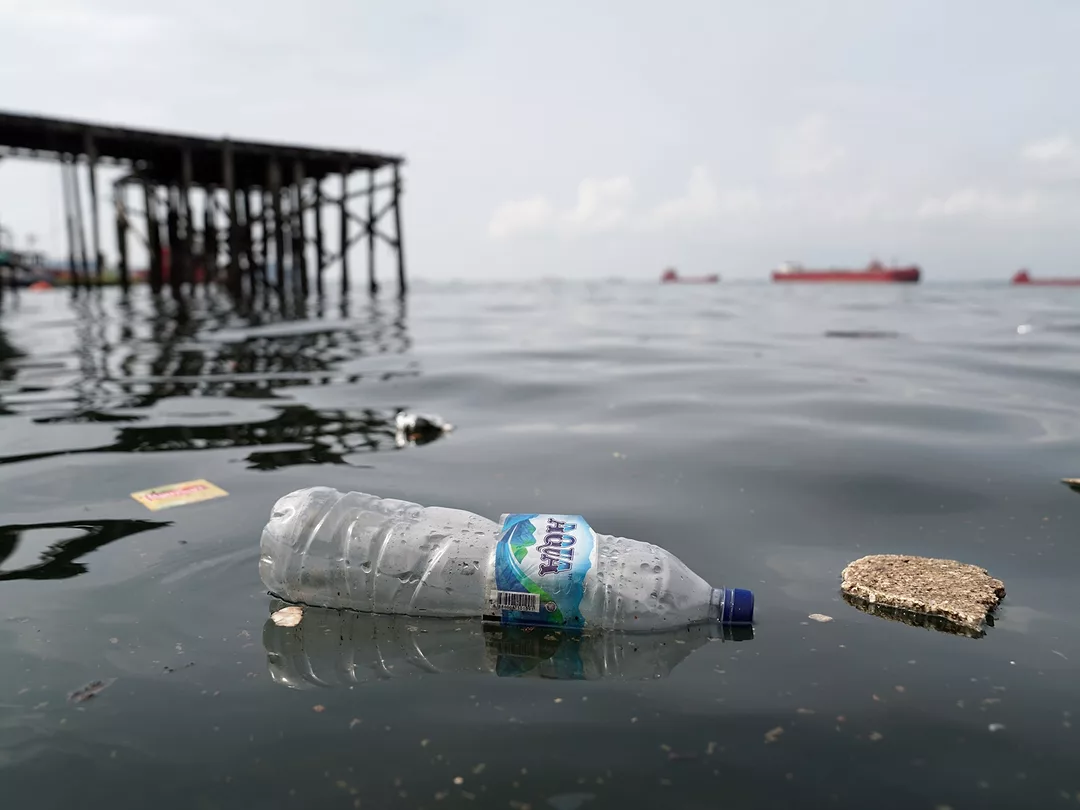
A plastic water bottle floats near the port city of Balikpapan in Indonesia. Photo: Bloomberg.
February 9, 2020
John Johnson, SCB Contributor
Analyst insight: By 2029, the circular economy will not only represent the mainstream economy, it will be the only economy. Consumer product supply chains will no longer be allowed to produce waste, which will be viewed by society and consumers as unacceptable.

According to retail respondents in Gartner’s 2018 Supply Chain and the Circular Economy Survey, consumer demand for sustainability is a chief driver for pursuing circular initiatives, trailing only cost optimization. In fact, 81% of consumers say it is “very important” or “extremely important” for businesses to embrace programs to improve the environment.

Eight million tons of plastics enter the ocean each year. That’s the equivalent of one truckload every minute. Without any action, this would increase to four truckloads per minute by 2050, making plastic the largest mass inhabiting ocean water. One million plastic bottles are sold every minute, and an overwhelming 95% of plastic packaging is lost to the economy after a single use.

Even if your organization is in a region that isn’t among the top polluters, it’s likely that your company does business within countries high on the list, so you need to become involved. And it’s likely that government regulations will require your involvement anyway. For example, in 2018 the European Parliament approved a sweeping ban on single-use plastics. Under the proposed directive, items such as plastic straws, cotton swabs, disposable plastic plates and cutlery would be banned by 2021, and 90% of plastic bottles must be recycled by 2025.

Given these trends, it’s essential to operate a supply chain that considers how consumers dispose of products at the end of their useful life. It’s not enough today to collaborate with suppliers. You must clearly understand what happens to packages after consumption. It helps that sustainability is proving to have a strong ROI:

  • Research conducted by the NYU Stern Center for Sustainable Business found that sustainability-marketed products delivered 50.1% of market growth from 2013 to 2018, while representing only 16.6% of the consumer packaged goods (CPG) market in dollar sales in 2018.
  • Across all categories, sustainability-marketed products delivered $113.9 billion in sales in 2018 for U.S. consumer purchases, a 29% increase over 2013. And they’re expected to grow to $140.5 billion by 2023.

Companies such as HP, Nike, Unilever, Cisco and H&M are exploring circular-economy models that place supply chain at the center of determining new modes of sourcing, production and logistics, including reverse logistics. These models aim to drive business growth with minimal natural resources, operating with a progressively smaller environmental footprint as the lifecycle analysis (LCA) improves for each generation of new products.

Consider launching circular-economy initiatives within and outside of your industry, and provide supplier training and development programs to support best practices for strategies that are crucial to the circular economy, such as sustainable packaging, responsible sourcing, elimination of conflict materials, and a focus on improving labor conditions.

Outlook

Just a few years ago, it seemed unlikely that supply chains would be waste-free. Now that expectation is real. To remain competitive, supply-chain leaders must dramatically alter how supply chains operate, shifting from wasteful linear models to circular models that reuse and renew. They need to:

  • Design a strategy for change toward a more circular approach by highlighting consumer demand for increasingly sustainable initiatives.
  • Collaborate with internal product designers and suppliers to create sustainability innovation, and understand how products are consumed and disposed of after consumption.

John Johnson is senior editor with Gartner.

    RELATED CONTENT

    RELATED VIDEOS

    Sustainability & Corporate Social Responsibility
    KEYWORDS Sustainability & Corporate Social Responsibility
    • Related Articles

      The End of Single-Source Supply Chains

      Surely 3D Printing Won't Mean the End of the Supply Chain. Or Will It?

      Does IBM Sale of POS Unit Spell the End of Point-of-Sale Hardware Business?

    John Johnson, SCB Contributor

    How Emerging Retail Models Could Shake Up Supply Chains

    More from this author

    Subscribe to our Daily Newsletter!

    Timely, incisive articles delivered directly to your inbox.

    Featured Product

    Popular Stories

    • On Demand - Webinar Descartes Tue Jun 23 2026 11a ET.png

      Descartes AI Exchange: AI Agents for Fleet Performance Management

      General SCM
    • A UNIFORMED OFFICER STANDS NEAR A HIGHWAY WITH TRUCKS ON IT

      U.S. Customs Ramps Up AI Investment in Push to Sharpen Enforcement

      Artificial Intelligence
    • On Demand Webinar - Arkieva - Wed Jun 24 2026 2p ET.png

      Shift Left Planning: Why Many Plans Fail to Execute—and How to Fix It

      Webinars
    • A MAP OF THE STRAIT OF HORMUZ SHOWING DOZENS OF BLUE DOTS DISTRIBUTED THROUGHOUT THE WATERWAY

      Traffic Flows Through Hormuz Despite Shock Ship Attack

      Global Gateways
    • Satellite view of the Strait of Hormuz with white graphic lines representing global shipping lanes and maritime traffic between the Persian Gulf and Gulf of Oman.

      Hormuz Highlights How Maritime Risk Assessment Needs to Change

      Global Gateways

    Digital Edition

    2026 esg cover main scb q2 2026 cover

    SupplyChainBrain 2026 ESG Guide: ESG — The Supply Chain’s Biggest Secret

    VIEW THE LATEST ISSUE

    Case Studies

    • Recycled Tagging Fasteners: Small Changes Make a Big Impact

    • A GRAPHIC SHOWING MULTIPLE FORMS OF SHIPPING, WITH A HUMAN STANDING AT THE CENTER, TOUCHING A SYMBOLIC MAP OF THE WORLD

      Enhancing High-Value Electronics Shipment Security with Tive's Real-Time Tracking

    • A GRAPHIC OF INTERLACING HONEYCOMBED ELEMENTS REPRESENTING GLOBAL BUSINESS TRANSACTIONS

      Moving Robots Site-to-Site

    • JLL Finds Perfect Warehouse Location, Leading to $15M Grant for Startup

    • Robots Speed Fulfillment to Help Apparel Company Scale for Growth

    Visit Our Sponsors

    4flow Arkieva Blue Yonder
    Carton Cloud CoEnterprise Dassault
    Duravant E2Open General Logistics Systems
    Hy-Tek iGPS Korber
    Lyngsoe Procurability Quinyx
    SAP Sikick Systech
    S&P Global Mobility TADA TransImpact
    US Bank Werner Enterprises WSI
    • More From SCB
      • Featured Content
      • Video Library
      • Think Tank Blog
      • SupplyChainBrain Podcast
      • Whitepapers
      • On-Demand Webinars
      • Upcoming Webinars
    • Digital Offerings
      • Digital Issue
      • Subscribe
      • Manage Email Preferences
      • Newsletters
    • Resources
      • Events Calendar
      • 2026 Event Coverage
      • SCB's Great Supply Chain Partners
      • Supplier Directory
      • Case Study Showcase
      • Supply Chain Innovation Awards
      • 100 Great Partners Form
    • SCB Corporate
      • Advertise on SCB.COM
      • About Us
      • Privacy Policy
      • Contact Us
      • Data Sharing Opt-Out

    All content copyright ©2026 Keller International Publishing Corp All rights reserved. No reproduction, transmission or display is permitted without the written permissions of Keller International Publishing Corp

    Design, CMS, Hosting & Web Development :: ePublishing