EDITOR'S Q&A
How Will Supply Chains Adjust to the Post-Pandemic Age?
The coronavirus pandemic is bringing about radical changes in global supply chains. But whether companies can draw on the lessons of the present to handle the challenges of future such events is still in question. In this conversation with SupplyChainBrain Editor-in-Chief Bob Bowman, Jonathan A. Havens, partner in the law firm of Saul Ewing Arnstein & Lehr LLP, discusses what kind of transformative steps supply chains should be taking in order to be ready for the next big disruption — and whether such actions are even feasible, given the cost of production.
SCB: What are the major impacts of the coronavirus on supply chains that you’ve seen to date?
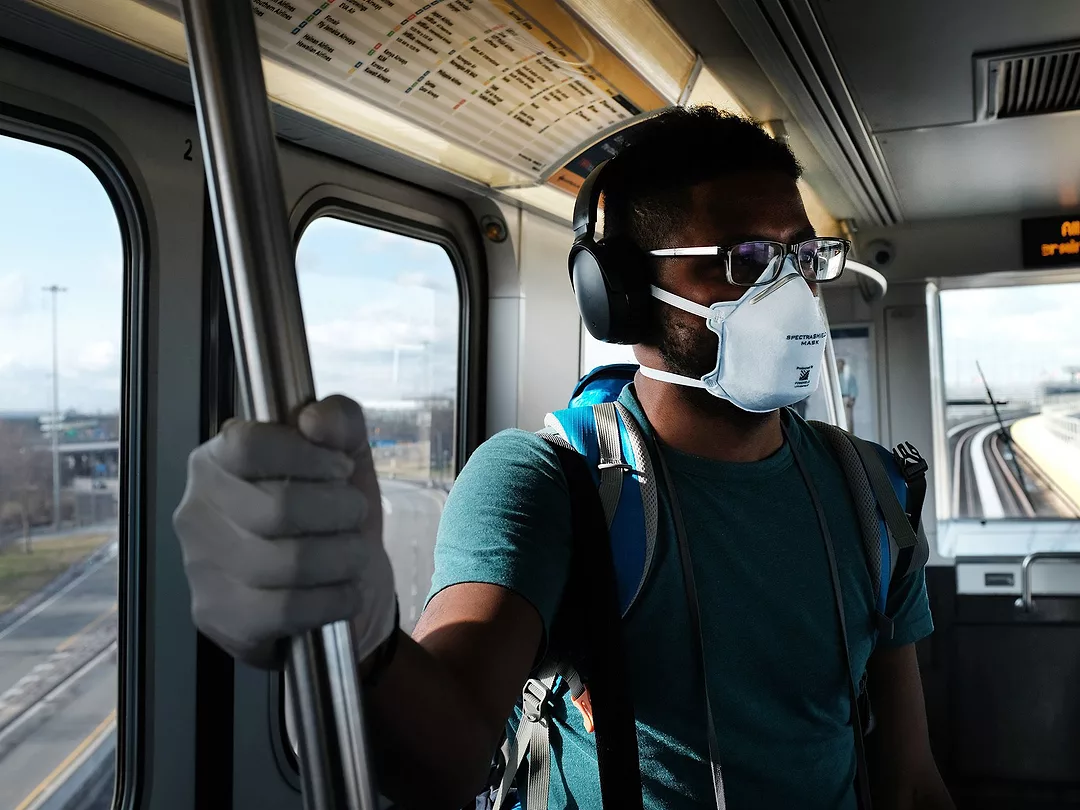
Havens: One is demand. It’s putting a strain on supply chains. They weren’t designed to deal with a global pandemic of this magnitude, the likes of which we haven't seen in a hundred years. There have been some comments about whether this is a supply-chain issue or production issue. I think it could be a bit of both. The world has never needed so many masks and other forms of PPE [personal protective equipment]. But hospital systems don't know exactly how many masks they're going to need. So the biggest challenges are, one, ramping up production capabilities fast, where we’re confident of the quality of the products that are being made. And two, assessing pain points in the supply chain — figuring out how to get those products from manufacturer to end users.
SCB: In the process of doing this, how can companies monitor prices and avoid price gouging?
Havens: That's a good question, because if given the choice between buying an expensive product or not buying a product at all, I think most people right now are going to choose the expensive product. That being said, people are price sensitive. If you were paying $5 for a hand sanitizer and now someone's charging you $50, you're not going to be able to buy very many units. However, now that we've been in this for a bit of time, we’re starting to see additional suppliers and importers coming online. People are pivoting from different industries to help bring more supply into the country.
SCB: Are there regulatory issues with imports that must be dealt with?
Havens: The U.S. Food and Drug Administration has been lowering barriers to entry for certain kinds of medical devices like personal protective equipment. In essence, it’s issuing emergency-use authorizations for certain products in order to encourage additional supply, and make it easier to get needed product into the country. While that’s the case, there are still regulatory requirements. You can't just flood the market with a bunch of masks and call them N95 masks if they don’t meet the standards. And if you’re price-gouging or hoarding, regulators are paying attention to that.
SCB: How do regulators determine that that’s going on?
Havens: You've seen the Federal Trade Commission and state attorneys general going after actors who are hoarding product, who are buying up all the supplies so they can control the price. It's a little hard to say what the threshold is. What does someone need to charge in order to draw the ire of a regulator? As you can expect any attorney to say, it depends on the facts and circumstances, but you can't just charge anything you want and expect that a regulator's not going to pay attention to that.
SCB: What do you see as the future impact on supply chains of CDC testing guidelines for products and people?
Havens: I'm not a virologist or scientist by background, so I can't speak to what the best practices are for testing product to make sure it doesn't have COVID-19 disease particles on it. But the one thing we're all realizing is that our supply chains aren’t set up to deal with things like this. Maybe they can handle minor outbreaks of less aggressively spreading diseases and viruses. But people have questions about how we know whether the shipment they’re getting from another country is virus-free. I don't know the answer, but I suspect that CDC is evaluating this issue and will probably provide additional guidance to industry. I think that there will be conversations around swabbing or some other sort of testing of product to make sure it doesn't contain COVID-19 particles.
SCB: Do you foresee any permanent changes in sourcing patterns and decisions as a result of this crisis?
Havens: I think it would be helpful to have a supply chain with more accurate reporting of real-time metrics. I know some major suppliers and distributors say they do that already. But I think tracking could be better, generally. When it comes to knowing who has what, and what can be easily transferred from one region or state to another, you've seen some positive stories. The state of Oregon entered into an agreement with the state of New York because it had, at one point, more ventilators available than New York did. But I think this is more anecdotal and reactive than proactive. A positive lesson to be learned from this would be that we need more real-time tracking of the supply chain.
SCB: Not necessarily a move toward greater reliance on domestic sourcing of critical materials, such as medical equipment and pharmaceuticals?
Havens: There will those who say that’s what we should do. I'm not saying that's a bad idea, but I hesitate to think that once the pandemic is done, we’re going to have enough product, whether from domestic or foreign manufacturers, to keep it on hold for the next pandemic. It costs a lot of money to produce the amount of product that’s needed and is being used right now. I don't think companies are just going to make a bunch of product and expect that someone's going to buy it. I do think maybe we should talk about more domestic supply, but the real question in my mind is, how much?
Popular Stories





100 Great Supply Chain Partners 2026: The Secret to Supply Chain Success
VIEW THE LATEST ISSUECase Studies


Visit Our Sponsors |
|
|
|
|
|
|
|
|
|
|
|
|
|
|
|
|
|
|
|
|
|
|
|
|
|
|
|
|
|
|
|
|
|
|
|
|
|
|
|
|
|
|
|
|
|
|
|
|
|
|
|