
• Advertise
  • Contact Us
  • Supplier Directory
  • SCB YouTube
  • About Us
  • Login
  • Subscribe
  • Logout
  • My Profile
  • LOGISTICS
    • Air Cargo
    • All Logistics
    • Facility Location Planning
    • Freight Forwarding/Customs Brokerage
    • Global Gateways
    • Global Logistics
    • Last Mile Delivery
    • Logistics Outsourcing
    • LTL/Truckload Services
    • Ocean Transportation
    • Parcel & Express
    • Rail & Intermodal
    • Reverse Logistics
    • Service Parts Management
    • Transportation & Distribution
  • TECHNOLOGY
    • All Technology
    • Artificial Intelligence
    • Cloud & On-Demand Systems
    • Data Management (Big Data/IoT/Blockchain)
    • ERP & Enterprise Systems
    • Forecasting & Demand Planning
    • Global Trade Management
    • Inventory Planning/ Optimization
    • Product Lifecycle Management
    • Robotics
    • Sales & Operations Planning
    • SC Finance & Revenue Management
    • SC Planning & Optimization
    • Supply Chain Visibility
    • Transportation Management
  • GENERAL SCM
    • Business Strategy Alignment
    • Customer Relationship Management
    • Education & Professional Development
    • Global Supply Chain Management
    • Global Trade & Economics
    • Green Energy
    • HR & Labor Management
    • Quality & Metrics
    • Regulation & Compliance
    • Sourcing/Procurement/SRM
    • SC Security & Risk Mgmt
    • Supply Chains in Crisis
    • Sustainability & Corporate Social Responsibility
  • WAREHOUSING
    • All Warehouse Services
    • Conveyors & Sortation
    • Lift Trucks & AGVs
    • Order Management & Fulfillment
    • Packaging
    • RFID, Barcode, Mobility & Voice
    • Warehouse Automation
    • Warehouse Management Systems
  • INDUSTRIES
    • Aerospace & Defense
    • Apparel
    • Automotive
    • Chemicals & Energy
    • Consumer Packaged Goods
    • E-Commerce/Omni-Channel
    • Food & Beverage
    • Healthcare
    • High-Tech/Electronics
    • Industrial Manufacturing
    • Pharmaceutical/Biotech
    • Retail
  • THINK TANK
  • WEBINARS
    • On-Demand Webinars
    • Upcoming Webinars
    • Webinar Library
  • PODCASTS
  • WHITEPAPERS
  • VIDEOS
Home » Cargill to Add Giant Sails to Cargo Ships to Curb Emissions

Cargill to Add Giant Sails to Cargo Ships to Curb Emissions
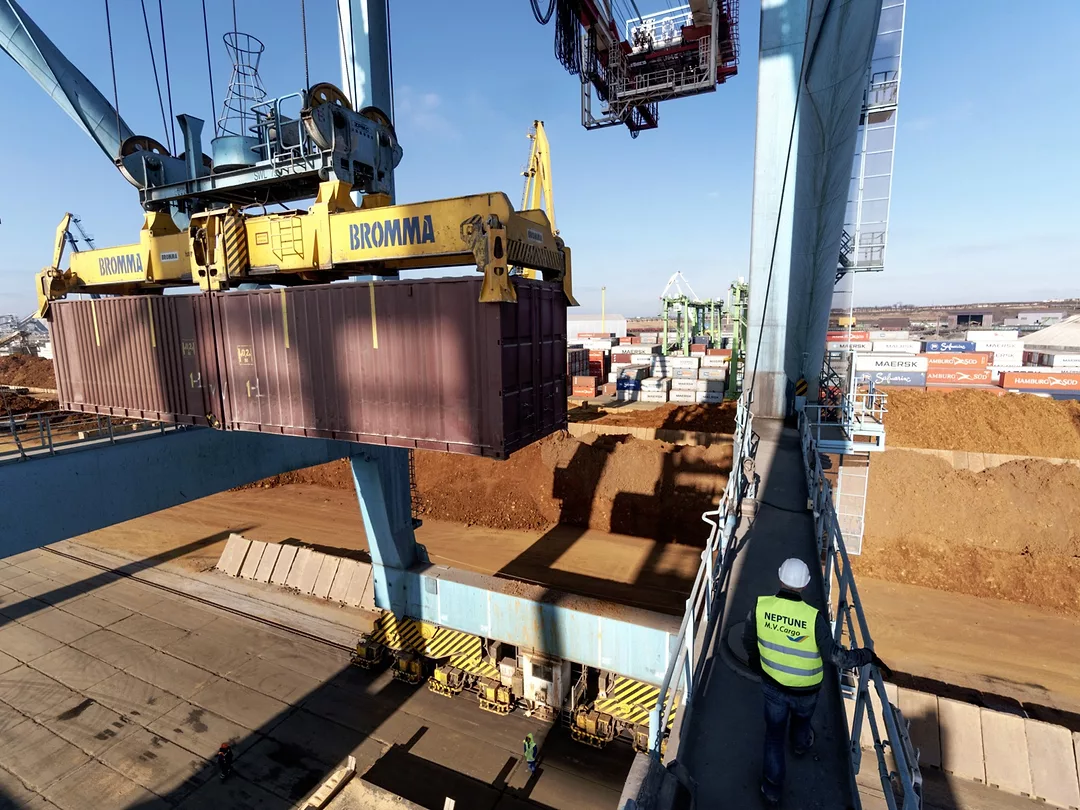
Cargill Cargo
A gantry crane loads a shipping container filled with corn for export from a grain terminal operated by Cargill Inc. Photo: Bloomberg.
October 30, 2020
Bloomberg

Cargill Inc., the world’s biggest agricultural commodities trader, plans to harness wind power by fixing massive wing sails to some of its cargo fleet to reduce fuel use and greenhouse gas emissions.

Shipping is responsible for about 90% of world trade, and it also accounts for almost 3% of man-made carbon-dioxide emissions. The industry has vowed to cut greenhouse gas emissions by 50% by 2050, from 2008 levels. How it gets there and what new fuel technologies it uses to replace traditional petroleum-based ones is still up for grabs.

Cargill wants to add — in an as yet untested idea — solid wing sails, as high as 45 meters (148 feet), attached to the decks of cargo ships with specially designed hulls which the trader and its partners say could reduce fuel use by as much 30%. Minnesota-based Cargill has some 600 vessels under charter at any given time.

“What we like about wind and what we like about this concept most is you are reducing fuel,” Jan Dieleman, president of Cargill’s ocean transportation business, said in an interview from Geneva.

The initiative will improve the efficiency of whichever new fuels — from hydrogen to liquefied natural gas — are eventually adopted, Dieleman said.

“You have to put this in between what the new fuels are and what we can do today,” Dieleman said. “This is kind of in the middle of those two timelines.”

Carbon Costs

Some major ship charterers and owners, including oil and metals trading giant Trafigura Group, have proposed a levy on carbon dioxide emissions to reduce the industry’s footprint and meet climate targets.

The new wind sail venture, which could see MR2 tanker ships each fitted with three wings on the water by 2022, is being completed in partnership with BAR Technologies, a U.K. firm spun-off from Ben Ainslie Racing (BAR) — the eponymous British sailing team of the Olympic medalist and America’s Cup winner. No specific financial details were disclosed.

“What we are very confident of is that the economics work,” John Cooper, chief executive officer of BAR Technologies — also a former Formula One motor sports executive with the McLaren Racing team — said in an interview.

While the sails will significantly add to a vessel’s costs, a 30% reduction in C02 emissions “is a very good economic model for the vessel owner and the vessel charterer as well,” Cooper said. “We do expect a fairly clean payback period.”

The wing sails will be installed first on mid-sized tanker ships that carry edible oils, biofuels or ethanol. If successful, they could then be adapted for dry bulk carriers hauling grains and oilseeds. The new ships might even prompt a change in shipping routes, said Dieleman. Vessel captains won’t just seek the most direct or easiest tanker journeys. They might also search out routes with more wind.

The massive sails will be made of solid composite material and will resemble movable airplane wings that will provide lift and wind propulsion to ships. They will also be collapsible to avoid coming into contact with infrastructure such as cranes or bridges.

Nascent Technology

Still, BAR Technologies hasn’t yet physically tested the technology on scale models or smaller ships. Rather, the design has been created based on computer modeling and simulation similar to that used by America’s Cup racing teams called computational fluid dynamics.

The Cargill project with BAR isn’t the first to try and harness wind to reduce greenhouse gas emissions. Maersk Tankers began installing wind rotor sails on ships in 2018. That technology uses wind rotors in cylindrical tubes to provide lift and aid propulsion, which reduces fuel consumption and emissions by 7% to 10%, Maersk said.

It’s not the first time Cargill has tried to use wind for its modern cargo ships. Back in 2011 it attached giant wind kites to vessels in another joint venture it hoped would cut fuel use and emissions.

“We tried kites and that didn’t work. But we’re not giving up,” Dieleman said.

    RELATED CONTENT

    RELATED VIDEOS

    Logistics Ocean Transportation Global Trade & Economics Sustainability & Corporate Social Responsibility Food & Beverage
    • Related Articles

      China, EU Bolster Greener Global Shipping to Curb Emissions

      Texas Tells Cargo Ships to Join Tesla and ‘Escape California’

      Maersk Line to Add More Ships to Singapore Hub

    • Related Directories

      ProcureAbility

    Bloomberg

    Airbus Delays XLR Deliveries to IndiGo as War Hits Suppliers

    More from this author

    Subscribe to our Daily Newsletter!

    Timely, incisive articles delivered directly to your inbox.

    Featured Product

    Popular Stories

    • A TRUCK WITH ITS CONTAINER DOOR OPEN SITS UNDER A SIGN THAT READS INTERNATIONAL BORDER COMMERCIAL TRUCKS

      Importers Into Mexico Can No Longer Delay Complying With New Customs Declaration Law

      Data Management (Big Data/IoT/Blockchain)
    • 018_how_3pls_can_get_started_with_ai_v1-(540p).png

      Watch: How 3PLs Can Get Started With Automation

      Logistics Outsourcing
    • An employee in a warm suit crouches down to get boxes of food ready for shipping at a warehouse

      Packaging Optimization Is Boosting Cold Chain Growth

      Air Cargo
    • A FIGURE IN CAMOUFLAGE LOOKS THROUGH A SCOPING DEVICE AT A SHIP IN THE DISTANCE, BELCHING SMOKE

      Strait of Hormuz Ship Transits Are Rising Thanks to U.S. Help

      Global Gateways
    • Heat Haze Distorts Video of Semi-Trucks Driving Down an Interstate Surrounded by Mountains on a Sunny Day

      The Biggest Challenges Facing Logistics Operators This Summer

      Logistics

    Digital Edition

    2026 esg cover main scb q2 2026 cover

    SupplyChainBrain 2026 ESG Guide: ESG — The Supply Chain’s Biggest Secret

    VIEW THE LATEST ISSUE

    Case Studies

    • Recycled Tagging Fasteners: Small Changes Make a Big Impact

    • A GRAPHIC SHOWING MULTIPLE FORMS OF SHIPPING, WITH A HUMAN STANDING AT THE CENTER, TOUCHING A SYMBOLIC MAP OF THE WORLD

      Enhancing High-Value Electronics Shipment Security with Tive's Real-Time Tracking

    • A GRAPHIC OF INTERLACING HONEYCOMBED ELEMENTS REPRESENTING GLOBAL BUSINESS TRANSACTIONS

      Moving Robots Site-to-Site

    • JLL Finds Perfect Warehouse Location, Leading to $15M Grant for Startup

    • Robots Speed Fulfillment to Help Apparel Company Scale for Growth

    Visit Our Sponsors

    4flow Arkieva Blue Yonder
    Carton Cloud CoEnterprise Dassault
    Duravant E2Open General Logistics Systems
    Hy-Tek iGPS Korber
    Lyngsoe Procurability Quinyx
    SAP Sikick Systech
    S&P Global Mobility TADA TransImpact
    US Bank Werner Enterprises WSI
    • More From SCB
      • Featured Content
      • Video Library
      • Think Tank Blog
      • SupplyChainBrain Podcast
      • Whitepapers
      • On-Demand Webinars
      • Upcoming Webinars
    • Digital Offerings
      • Digital Issue
      • Subscribe
      • Manage Email Preferences
      • Newsletters
    • Resources
      • Events Calendar
      • 2026 Event Coverage
      • SCB's Great Supply Chain Partners
      • Supplier Directory
      • Case Study Showcase
      • Supply Chain Innovation Awards
      • 100 Great Partners Form
    • SCB Corporate
      • Advertise on SCB.COM
      • About Us
      • Privacy Policy
      • Contact Us
      • Data Sharing Opt-Out

    All content copyright ©2026 Keller International Publishing Corp All rights reserved. No reproduction, transmission or display is permitted without the written permissions of Keller International Publishing Corp

    Design, CMS, Hosting & Web Development :: ePublishing