EDITOR'S Q&A
Walmart Embraces a Local Fulfillment Model for Grocery
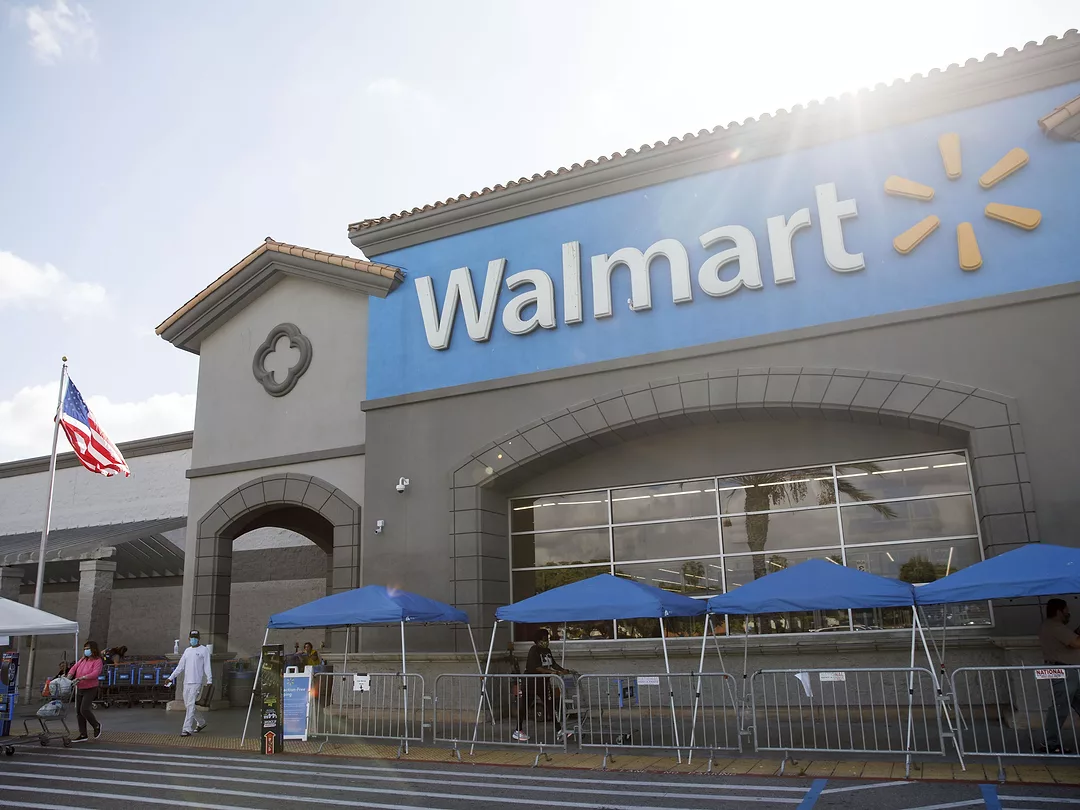
Walmart recently unveiled a new strategy to implement local fulfillment centers for handling e-commerce grocery orders within its physical stores. In this conversation with SupplyChainBrain Editor-in-Chief Bob Bowman, Steve Hornyak, Chief Operating Officer of Fabric, discusses how the new model will operate, and how it ties in with a wider trend of micro-fulfillment centers inside brick-and-mortar grocery stores.
SCB: Tell me about Walmart's strategy to implement local fulfillment centers. What does it consist of?
Hornyak: I can't speak on behalf of Walmart, but I'll just share my opinion on their approach. As you know, Walmart is a behemoth in the e-commerce space, and has been strategically working on this ever since it acquired Jet.com. With over 5,000 locations, and within an hour’s drive of 98% of the U.S. population, Walmart is looking at ways to take advantage of its physical retail footprint to better serve customers. Walmart is EDLP: Every Day Low Price. That’s a key advantage. Obviously automation comes into play because it allows them to be more responsive to their customers, to have a lower cost of labor and total fulfillment. About 50% of Walmart’s business in grocery is click and collect, and 50% is click and deliver.
SCB: The plan appears to involve carving out a certain amount of space from the existing retail footprint, and using it for online fulfillment.
Hornyak: It does. Walmart has announced multiple strategies. They've got an in-store, back-of-store model, as well as a greenfield model where they'll be building facilities adjacent to stores. Then they've got central regional distribution, and they're doing automation in all three.
SCB: Is this a cousin of the trend we're seeing elsewhere of micro-fulfillment centers, in which retailers and grocery stores set aside a certain amount of space in the back of the store for internet order fulfillment?
Hornyak: It is. A lot of the players out there are setting aside space and doing it manually. You’ll start seeing more of a trend toward putting in what I call giant vending machines —robotic systems with automated, hyper-dense micro-fulfillment — in the back of the store. You can shrink down and get these things in as small as 5,000 square feet.
SCB: In theory, you could have humans picking from these sections, but it does seem to be something that’s tailor-made for an automation approach.
Hornyak: Yes. Talking about grocery in general — not specifically Walmart — for a typical grocery store, you cap out from an in-store manual pick perspective at about 100 orders a day. Beyond that, you just physically can't do it. You're taking too much product off, you're not able to replenish fast enough, and you're destroying the in-store shopping experience for others. That's number one. Number two is speed. Humans can only move so fast. They have to physically drive there to do the picking. And number three is quality. When you order something online, you expect to get it. Between 10% and 20% of orders are coming back with an out-of-status. By dropping a micro-fulfillment center into a typical store, you can increase order-fulfillment by five to 10 times in the same square footage. In other words, you're getting almost a magnitude of higher revenue per square foot than in a traditional retail environment. That's probably the biggest driver of this. Ultimately, retailers are going to have to move to automation. There are 45,000 to 50,000 physical stores in the U.S. that are in the grocery business, including the Walmarts and Targets of the world. We expect upwards of 10% of those to have micro-fulfillment centers within the next five years.
SCB: Does this setup give a big-box retailer like Walmart a significant advantage over Amazon, which is, despite having some physical store presence, essentially an online retailer?
Hornyak: It absolutely does. The main reason is proximity to customers. This is all about the same-day proposition. When you talk micro-fulfillment, you're radically reducing the last mile, and that’s the biggest cost of fulfillment — upwards of 80% of your total. With customers expecting delivery to be free, or part of a paid annual subscription, the lower you can drop that cost, the more profitable you can be.
SCB: Do you see this as a part of a larger trend, where distribution centers are being located in more urban centers closer to the customer, as opposed to the multi-million square-foot facility at the edge of town?
Hornyak: Yes. There are evolutions, revolutions and transformations. This is an absolute transformation of the supply-chain infrastructure in the U.S. and globally. As you go to same-day, you can’t do that from centralized fulfillment centers. Those regional centers won't go away — they'll just be used as part of the entire ecosystem, to feed goods out to the micro-fulfillment centers. There are some areas where you can actually skip them, so you can reduce that node in your network.
SCB: But it does seem like another blow against smaller retailers, who don’t have the coverage of a big-box retailer like Walmart, or the retail footprint to devote to this type of operation.
Hornyak: You're right. It will make things more difficult for them. You've got folks like Shopify out there that are doing a fantastic job with the small guys, giving them an entire turnkey solution. While it's going to be difficult for them to get to same-day, they're most definitely getting to one-day delivery when it comes to the small guys. For a lot of specialty products, two days is still going to be okay. What it comes down to is that same-day delivery of consumables is going to be the big thing. Health and beauty, drug, and grocery are going to be the three that move there fastest.
We’ve got a multi-tenant facility in production just outside New York City, for small businesses with a high concentration of e-commerce activity. They want to offer the same-day proposition there, but also want to be able to cover nationally within two days. For those that are nimble and strategic, that will be an advantage for them.
Popular Stories
.webp?height=100&t=1780416295&width=150 "025_the_rapid_evolution_of_warehouse_modernization_v1-(540p).png")

.webp?height=100&t=1780424221&width=150 "023_automation's_scalability_in_the_warehouse_v1 (540p).png")

SupplyChainBrain 2026 ESG Guide: ESG — The Supply Chain’s Biggest Secret
VIEW THE LATEST ISSUECase Studies


Visit Our Sponsors |
|
|
| |
|
|
|
|
|
|
|
|
|
|
|
|
|
|
|
|
|
|
|
|
|
|
|
|
|
|
|
|