• Advertise
  • Contact Us
  • Supplier Directory
  • SCB YouTube
  • About Us
  • Login
  • Subscribe
  • Logout
  • My Profile
  • LOGISTICS
    • Air Cargo
    • All Logistics
    • Facility Location Planning
    • Freight Forwarding/Customs Brokerage
    • Global Gateways
    • Global Logistics
    • Last Mile Delivery
    • Logistics Outsourcing
    • LTL/Truckload Services
    • Ocean Transportation
    • Parcel & Express
    • Rail & Intermodal
    • Reverse Logistics
    • Service Parts Management
    • Transportation & Distribution
  • TECHNOLOGY
    • All Technology
    • Artificial Intelligence
    • Cloud & On-Demand Systems
    • Data Management (Big Data/IoT/Blockchain)
    • ERP & Enterprise Systems
    • Forecasting & Demand Planning
    • Global Trade Management
    • Inventory Planning/ Optimization
    • Product Lifecycle Management
    • Robotics
    • Sales & Operations Planning
    • SC Finance & Revenue Management
    • SC Planning & Optimization
    • Supply Chain Visibility
    • Transportation Management
  • GENERAL SCM
    • Business Strategy Alignment
    • Customer Relationship Management
    • Education & Professional Development
    • Global Supply Chain Management
    • Global Trade & Economics
    • Green Energy
    • HR & Labor Management
    • Quality & Metrics
    • Regulation & Compliance
    • Sourcing/Procurement/SRM
    • SC Security & Risk Mgmt
    • Supply Chains in Crisis
    • Sustainability & Corporate Social Responsibility
  • WAREHOUSING
    • All Warehouse Services
    • Conveyors & Sortation
    • Lift Trucks & AGVs
    • Order Management & Fulfillment
    • Packaging
    • RFID, Barcode, Mobility & Voice
    • Warehouse Automation
    • Warehouse Management Systems
  • INDUSTRIES
    • Aerospace & Defense
    • Apparel
    • Automotive
    • Chemicals & Energy
    • Consumer Packaged Goods
    • E-Commerce/Omni-Channel
    • Food & Beverage
    • Healthcare
    • High-Tech/Electronics
    • Industrial Manufacturing
    • Pharmaceutical/Biotech
    • Retail
  • THINK TANK
  • WEBINARS
    • On-Demand Webinars
    • Upcoming Webinars
    • Webinar Library
  • PODCASTS
  • WHITEPAPERS
  • VIDEOS
Home » Five Takeaways from the UN’s Latest 3,000-Page Climate Report

Five Takeaways from the UN’s Latest 3,000-Page Climate Report
solar farm
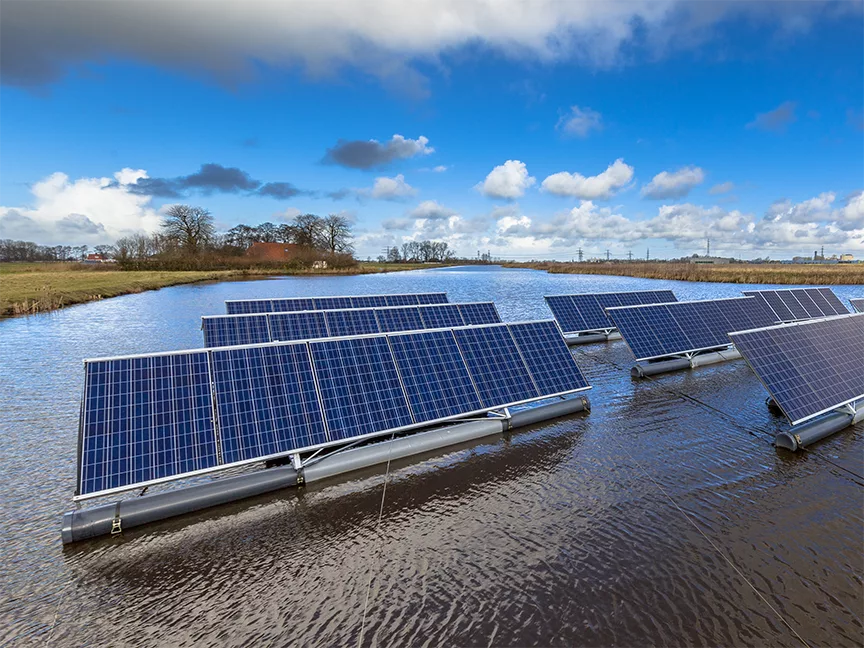
Photovoltaic panels at a floating solar farm. Photo: Getty.
April 5, 2022
Bloomberg

The UN Intergovernmental Panel on Climate Change has released its latest 3,000-page look at how humanity can avoid compounding catastrophe if nations take sufficient action to do so. So far humanity hasn’t, the report concludes. Left unchanged, the world’s current emissions trend could result in warming of more than twice the target limit set forth in the 2015 Paris Agreement of no more than 1.5° Celsius (2.7° Fahrenheit) above pre-industrial levels. 

The new report updates previous work by the IPCC — its last work on this topic came out in 2014 — as well as assessing the potential of technology and offering evidence that climate action, done right, can improve the health and wellbeing of people around the world. Here are five top takeaways.

1. 1.5°C is almost out of reach 

Nations, cities, businesses and investors raced to reach net-zero emissions by 2050 after the publication of a previous IPCC report in 2018. Yet according to the new report, emissions have continued to drain the “carbon budget,” an accounting tool scientists use to estimate how much time is left before temperature limits are likely to be breached. The short time that’s passed makes keeping the goal much more difficult. While “net-zero by 2050” is a slogan with breathing room, a new factoid puts the challenge into sharper focus: Global greenhouse gas emissions must peak by 2025. 

2. We know what to do and have the tools to do it 

More than a dozen countries have enjoyed a shrinking emissions rate for more than a decade, the panel said, with some seeing 4% annual declines consistent with a 2°C warmer world. There are cost-effective methods of cutting carbon that together could meet half the 2030 emissions target. Solar and wind costs fell 85% and 55% between 2010 and 2019, making them now cheaper than fossil-fuel-powered electricity generation in many places. Carbon-free and low carbon technologies, including nuclear and hydroelectric power, made up 37% of the electricity generated globally in 2019. The report heralds “digitalization” — robotics, AI, the internet of things — as a powerful way to increase energy efficiency and manage renewable power. ​​​​​​

3. Carbon removal is “unavoidable” to reach net zero 

Keeping to the 1.5°C or even 2°C warming limit will be increasingly difficult without going into what scientists call “overshoot,” or surpassing the limit and then clawing back down. That means carbon removal is “unavoidable” for a path to net-zero emissions, the IPCC said. There are many ways to draw down CO₂. Some of them are tested by hundreds of millions of years of evolution, like halting deforestation and regrowing dense forests. Others are new and increasingly attracting investment, such as direct-air capture that scrapes carbon right out of the air.

To fall back below the 1.5°C target by 2100, the IPCC wrote, practices and policies — many of them still embryonic — would have to draw down almost a decade of CO₂ emissions, according to scenarios that “are subject to increased feasibility concerns.” 

4. Behavior matters 

Climate scientists use the term mitigation to encompass all the ways that the causes of climate change can be tamped down. For the first time in an IPCC study focusing on these prevention methods, scientists looked at carbon-cutting from the demand side. Scaled behavioral and cultural changes, they found, can wring out 40 to 70% of emissions compared with recent trends. Beef consumption, air travel and building energy use are all areas where the combined decisions of many people can have a substantial impact.

Social science has rarely been a part of the IPCC process, but that changed as authors reviewed 100,000 relevant papers generated in recent years from those disciplines. The new report dovetails with recent analyses quantifying just how much more wealthy people emit than everyone else: The top 1% of emitters are responsible for 70 times more pollution than people in the bottom 50%. 

5. Politics shapes the process 

Media coverage of IPCC releases tends to focus on what’s called the “summary for policymakers,” a condensed version of the doorstop assessment. Every line of this document must be agreed on by delegates from 195 countries and the scientists who wrote the report. The approval session for the latest report lasted two weeks and was held virtually with hundreds of participants. Wrangling toward the end led to a 40-hour weekend sprint to push the report through the approval process. The IPCC’s work is scientific, but this layer of geopolitics leads to competition over every word, as negotiators try to embed in final language protections of their own national interests. Although the summary must always reflect the science in the longer report, they don’t always match perfectly.

Sometimes, scientists lay bare a core problem in a way that diplomats never would. Such as when they write: “The interaction between politics, economics and power relationships is central to explaining why broad commitments do not always translate to urgent action.”

    RELATED CONTENT

    RELATED VIDEOS

    Supply Chain Security & Risk Mgmt Sustainability & Corporate Social Responsibility Chemicals & Energy
    • Related Articles

      Five Key Takeaways From the Latest IPCC Report on Climate Change

      Five Key Takeaways From SEC’s Proposal for Climate Disclosures

      Takeaways From the Global Supply Chain Leaders Conference

    Bloomberg

    U.S. Decides Against Renewing USMCA, Shifting to Rolling Talks

    More from this author

    Subscribe to our Daily Newsletter!

    Timely, incisive articles delivered directly to your inbox.

    Featured Product

    Popular Stories

    • 005_veteran_winemaker_gallo_embarks_on_an_ai_journey_v2-(540p).jpg

      Watch: Veteran Winemaker Gallo Embarks on an AI Journey

      Artificial Intelligence
    • SCB_Q326_Made4Net_Top5_THUMB.jpg

      Five Costly WMS Selection Mistakes Warehouse Leaders Keep Making

      Logistics
    • A UNIFORMED OFFICER STANDS NEAR A HIGHWAY WITH TRUCKS ON IT

      U.S. Customs Ramps Up AI Investment in Push to Sharpen Enforcement

      Artificial Intelligence
    • A MAP OF THE STRAIT OF HORMUZ SHOWING DOZENS OF BLUE DOTS DISTRIBUTED THROUGHOUT THE WATERWAY

      Traffic Flows Through Hormuz Despite Shock Ship Attack

      Global Gateways
    • On Demand Webinar 4flow Thu Jun 25 2026.png

      How Mars uses 4flow's AI platform for Logistics optimization

      Webinars

    Digital Edition

    2026 esg cover main scb q2 2026 cover

    SupplyChainBrain 2026 ESG Guide: ESG — The Supply Chain’s Biggest Secret

    VIEW THE LATEST ISSUE

    Case Studies

    • Recycled Tagging Fasteners: Small Changes Make a Big Impact

    • A GRAPHIC SHOWING MULTIPLE FORMS OF SHIPPING, WITH A HUMAN STANDING AT THE CENTER, TOUCHING A SYMBOLIC MAP OF THE WORLD

      Enhancing High-Value Electronics Shipment Security with Tive's Real-Time Tracking

    • A GRAPHIC OF INTERLACING HONEYCOMBED ELEMENTS REPRESENTING GLOBAL BUSINESS TRANSACTIONS

      Moving Robots Site-to-Site

    • JLL Finds Perfect Warehouse Location, Leading to $15M Grant for Startup

    • Robots Speed Fulfillment to Help Apparel Company Scale for Growth

    Visit Our Sponsors

    4flow Arkieva Blue Yonder
    Carton Cloud CoEnterprise Dassault
    Duravant E2Open EPG
    General Logistics Systems GEP Hy-Tek
    iGPS Korber Lyngsoe
    Procurability Quinyx SAP
    Sikick Staples Systech
    S&P Global Mobility TADA Tive
    TransImpact US Bank Werner Enterprises
    WSI
    • More From SCB
      • Featured Content
      • Video Library
      • Think Tank Blog
      • SupplyChainBrain Podcast
      • Whitepapers
      • On-Demand Webinars
      • Upcoming Webinars
    • Digital Offerings
      • Digital Issue
      • Subscribe
      • Manage Email Preferences
      • Newsletters
    • Resources
      • Events Calendar
      • 2026 Event Coverage
      • SCB's Great Supply Chain Partners
      • Supplier Directory
      • Case Study Showcase
      • Supply Chain Innovation Awards
      • 100 Great Partners Form
    • SCB Corporate
      • Advertise on SCB.COM
      • About Us
      • Privacy Policy
      • Contact Us
      • Data Sharing Opt-Out

    All content copyright ©2026 Keller International Publishing Corp All rights reserved. No reproduction, transmission or display is permitted without the written permissions of Keller International Publishing Corp

    Design, CMS, Hosting & Web Development :: ePublishing