
SPECIAL REPORT
Unlocking Cost Savings with Foreign-Trade Zones
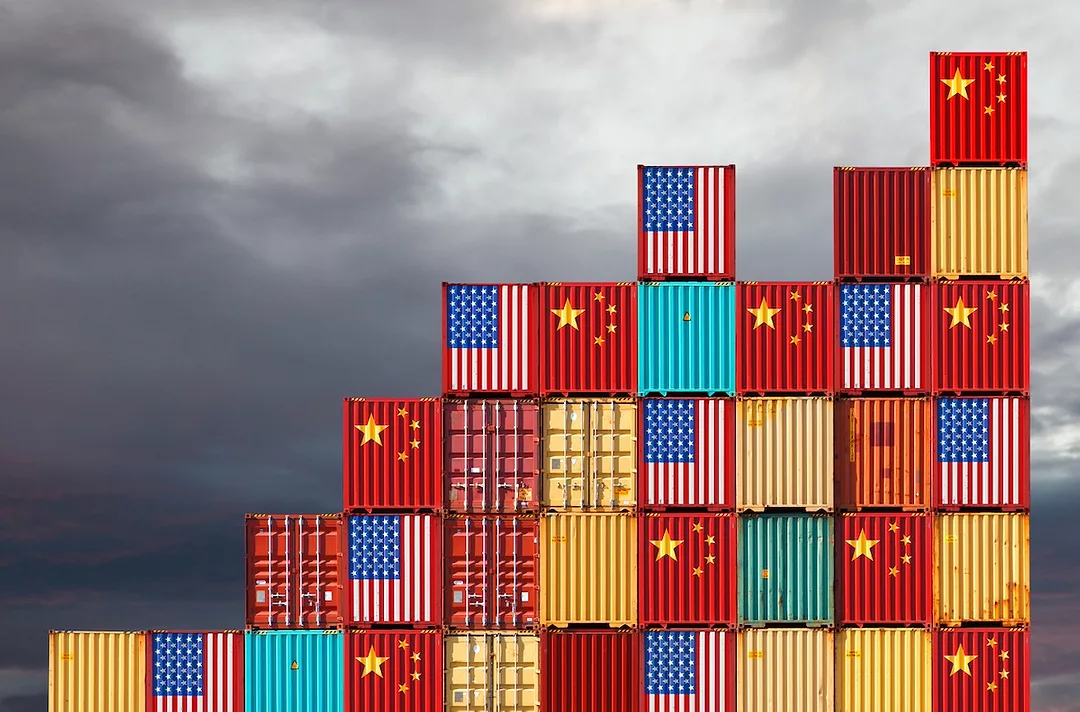
The concept behind Foreign-Trade Zones (FTZs) is not hard to grasp — they act as secured places for receiving cargo into the U.S. without incurring tariffs, yet. Then, there are multiple ways to reduce those tariffs.
“It’s a bit like duty-free shopping. You’re not technically within the commerce space of the U.S.; you haven’t cleared customs yet,” explains Cody Davis, senior manager at EY Global Trade.
Using an FTZ allows importers to insulate themselves against trade policy volatility. In any FTZ, materials can be kept indefinitely, but the tariff rate can also be locked in at the time goods enter the FTZ, or materials can be assessed at the time they’re withdrawn, whichever is lower. FTZs also offer benefits in operational efficiencies. In either case, no duties are paid until the material is withdrawn from the zone and entered into U.S. commerce.
And yet, many companies are failing to make the most of FTZs because they’re intimidated by the legal and organizational hurdles. That needs to change, says Liz Connell, senior director, product management at Thomson Reuters. “Organizations like NAFTZ (the National Association of Foreign-Trade Zones) have begun to make it easier to understand FTZs, and it’s not so scary as it used to be 20 years ago,” says Connell. “Now there’s more information available, and more companies are using them.”
The most powerful driver is financial, plain and simple. “Companies need the money, so it’s the finance people who are pushing this, not just procurement,” says Connell. “They’re asking: Tell me why we can’t save a million dollars? There’s more pressure to do it now.”
Protecting Domestic Manufacturers From an Increasingly Hostile Trade Environment
FTZs were made possible by the Foreign-Trade Zones Act enacted by U.S. Congress in 1932, and the intention sounds familiar 92 years later. “The idea was to put domestic manufacturers on an even footing with offshore manufacturers,” Davis says. “The thought was to help overcome the tariff burden that pushes operations overseas.”
FTZs are a “sister” to bonded warehouses, Davis says, but the latter are of more limited use because goods contained in them can’t end up in the domestic market; they have to make an onward transit overseas. By contrast, materials in FTZs can end up in the domestic market, and the advantage is that there are multiple ways that goods entering an FTZ with one level of tariff can leave it with a much lower one.
If you take raw materials or parts and manufacture them into finished goods within the FTZ, you can achieve a beneficial tariff shift, because finished products often attract a lower rate. For example, the duty rate on an imported muffler for an automobile is 4.5% if imported directly into the U.S., but, if that muffler is brought into an FTZ and incorporated into an assembled automobile, the duty rate on the finished automobile, including the muffler, is 2.5%. This is known as “inverted tariff.”
Another advantage is that an FTZ can be used in the same way as a bonded warehouse, where no duty becomes payable if those goods are exported to another country — with the added benefit that there is no time limit on deciding to do so, as there is with bonded warehouses. The absence of time limits also means it’s possible to keep safety stock and pay no duty on it until the optimum time to deploy it (duty deferral). Also, any scrap or unusable materials can be reported in such a way as to mitigate the duties on those materials. When it comes to high-tariff raw materials such as steel, that can deliver significant savings.
Other benefits include streamlined customs operations, and a generally more efficient supply chain, as many FTZ operators enjoy direct delivery privileges and simpler filings to secure release from the port of unlading. Further, having bonded operations in the U.S. opens up options to serve other markets such as Latin America and Canada from U.S. distribution centers. FTZs become extremely valuable nodes on the supply chain landscape.
Naturally, there’s a financial and organizational cost associated with setting up an FTZ. As with all new ventures, it’s essential to deploy appropriate technology (and it should make life easier). “Software really is necessary,” says Davis, not just for keeping a record of the trail followed by an incoming product, but also for reporting to customs, including the inventory control and record-keeping systems (ICRS) which is mandated. In theory, you could achieve an ICRS via spreadsheets or even a shared drive because customs doesn’t specify what form it must take, Davis explains. “But realistically, it needs to be a pretty sophisticated piece of accounting software.” One additional advantage of using appropriate software is that it allows for self-filing, reducing or eliminating the reliance on a customs broker (and related fees), Davis adds.
“Operating in an FTZ does involve adhering to pretty strict procedures and requirements,” says Matt Capobianco, solutions consultant at Thomson Reuters, adding that there are set-up and maintenance costs, too. But, often, the real barrier to adoption is mental. “There’s a general lack of awareness and understanding, and companies are not fully aware of the range of benefits,” Capobianco says. “Companies are resistant to change, and afraid to challenge the status quo.”
That’s a shame because, in the increasingly hostile world of international trade, the benefits are increasingly significant.
“It’s attractive for operators to have these arrows in their quiver,” says Davis.
The need for powerful weapons against rising costs is becoming more urgent as international trade becomes increasingly fraught, high-stakes and complex. A smoldering trade war with China, rapidly emerging regulations and other compliance requirements that touch on forced labor, carbon footprint and much besides, mean there are huge potential fines, penalties and other unexpected impacts involved if you fail to be proactive with trade compliance.
Connell says the stakes have been raised because countries are using tariffs to pursue social and environmental goals. And the wheels are turning much faster than they used to. “Trade’s never been like this. It used to take 20 years to create a free trade agreement, and now it’s a tweet and it’s already three days behind you,” she says. That means the trade landscape in which your company navigates choices about what to source from where, and where to make it, has become positively volcanic. The dangers of getting fined or attracting unanticipated tariffs are real. “If your compliance person isn’t using this knowledge to help drive those decisions, you’re taking a risk. FTZs is just one of the levers you can pull,” Connell says.
Indeed, “compliance” doesn’t entirely cover the range of issues a trade compliance operation needs to stay on top of these days. The bad news is, that job is now more difficult than ever; the good news is, the amount of money involved means trade compliance professionals are often getting the ear of the C-suite.
“Where we used to be a cost center, we’re shifting to a strategic partner,” says Connell. “We’re sitting at the table when strategic decisions are being made.”
Connell mentions a client who was a compliance executive at a big box store. “She wasn’t invited to the Monday morning strategic meetings. Now, she’s the first to be present. It’s a complete pivot, as it should be, frankly,” she says. “Otherwise, companies are going to hurt their bottom line, or introduce risk to their supply chains and business.”
Making a Start
Capobianco and Connell say they’re seeing clients explore and utilize FTZs who were previously uninterested, especially small and medium-sized businesses that previously didn’t face a significant duty bill, or those in verticals that previously attracted no tariffs, such as bicycle manufacturers.
And, indeed, despite the changing trade environment, FTZs are not for everyone. “I always recommend a cost-benefit analysis to determine if the potential savings from deferring, reducing or eliminating duties warrant the costs of setting up an FTZ,” says Capobianco. “Plus you need to familiarize yourself with the specific requirements. Compliance is key and should always be top of mind. There’s a very strict set of rules and regulations, so you need to make sure you have a robust compliance operation in place. Also, you should use a robust FTZ management system to make sure you’re complying with all the regulations.”
It’s also important to dispel myths about FTZs, such as that they have to be close to ports or airports. “FTZ sites can be found in any part of the country. They can be close to your warehouse or manufacturing plants,” says Capobianco. “You can achieve zone designation without having to build a new site and can even designate third parties’ existing sites too.”
Another point companies fail to identify when assessing the potential benefits of FTZs is the additional local tax breaks on offer, both at state and city levels. “For some, that’s the largest savings driver,” says Davis. “It could be tens of millions of dollars annually.”
Overall, Davis says, it’s worth looking at closely. “People say: I’ve got enough on my plate as it is. That’s balanced against let’s do a feasibility study to see how much you’re leaving on the table by not going through this effort, and often it’s millions,” he says. “Or they did a back-of-the-envelope calculation and determined it’s worth a few hundred thousand dollars, but the program will cost more, so the juice is not worth the squeeze. But they haven’t considered all the benefits — it’s not just customs savings. A thorough feasibility study takes just a few weeks to put together, so why wouldn't you do it? You miss 100% of the shots you don't take!”
Resource Link: FTZ software | ONESOURCE Global Trade for Foreign Trade Zones | Thomson Reuters
Popular Stories




100 Great Supply Chain Partners 2026: The Secret to Supply Chain Success
VIEW THE LATEST ISSUECase Studies


Visit Our Sponsors |
|
|
|
|
|
|
|
|
|
|
|
|
|
|
|
|
|
|
|
|
|
|
|
|
|
|
|
|
|
|
|
|
|
|
|
|
|
|
|
|
|
|
|
|
|
|
|
|
|
|
|