
Polyester Drives Surge in Apparel Sector Emissions
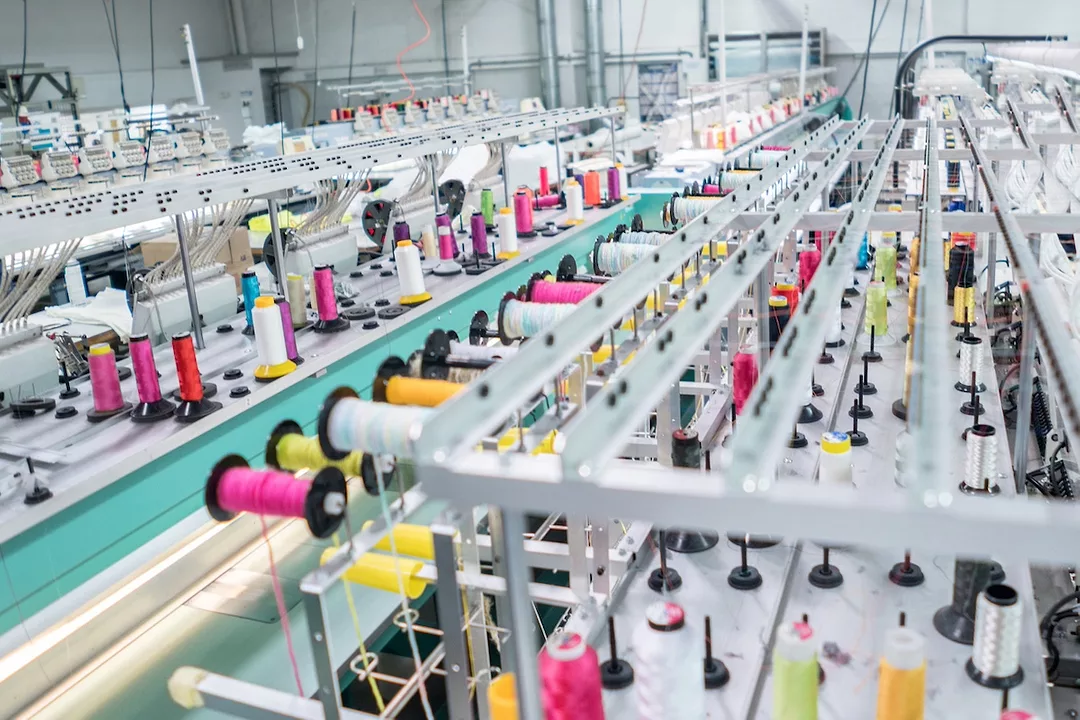
Global greenhouse gas emissions created by the apparel sector grew by 7.5% in 2023, driven by a rise in production brought on by a growing reliance on carbon-intensive polyester, and an increase in demand created by the fast fashion industry.
"While it’s encouraging to see progress across the value chain, with meaningful case studies from both brands and suppliers, this data is a stark reminder of how far we still must go as an industry," said Lewis Perkins, the president of the environmental nonprofit Apparel Impact Institute (Aii).
According to a report the Aii released on July 23, the apparel sector accounted for 2% of total global emissions in 2023, putting the industry well off pace of its goal to halve its carbon footprint by 2030. The Aii found that polyester made up 57% of total global fiber production, the most of any material by far. For comparison, cotton was the second most commonly used fiber at 20%, followed by man-made cellulosic fibers — which are derived from plants and chemically processed into materials for clothing — at 6%, and nylon at 5%.
Read More: How Fast Can Apparel Makers Counter the Environmental Damage From Fast Fashion?
Polyester is made from petroleum-derived feedstocks, meaning that its production requires the extracting and refining of fossil fuels. Although it's cheaper to produce than other fibers, manufacturing it is a carbon-intensive process, where feedstocks are converted into polyethylene terephthalate, and then into textile fibers through the use of high heat, and energy-heavy chemical reactions. That energy for that process is generated from coal and other fossil fuels in China and Southeast Asia, and creates far more emissions than a fiber like cotton, which derives from natural plants rather than petroleum.
Polyester also isn't biodegradable, and recycling rates have remained flat over the last five years, ranging between 12% and 14%. Even so, the Aii noted that certain brands have made efforts to use more recycled polyester in recent years. In 2024, Adidas reported that 99.3% of all polyester in its apparel was recycled, while H&M hit 94% that same year, and Lulemon jumped from 36% in 2020 to 61% in 2023.
A handful of companies have made progress in shifting to renewable energy as well. In November 2024, H&M became the first apparel company to sign an agreement to directly purchase renewable energy to manufacture its apparel in Vietnam. H&M also reduced its scope 3 emissions by 23% between 2019 and 2024, while Uniqlo parent company Fast Retailing reduced its purchased goods and services (PG&S) emissions by 18.6% over that same period, and Puma cut its own PG&S emissions by 17% from 2017-2024.
Popular Stories





100 Great Supply Chain Partners 2026: The Secret to Supply Chain Success
VIEW THE LATEST ISSUECase Studies


Visit Our Sponsors |
|
|
|
|
|
|
|
|
|
|
|
|
|
|
|
|
|
|
|
|
|
|
|
|
|
|
|
|
|
|
|
|
|
|
|
|
|
|
|
|
|
|
|
|
|
|
|
|
|
|
|