
New H-1B Visa Fees Could Undercut U.S. Tech Edge
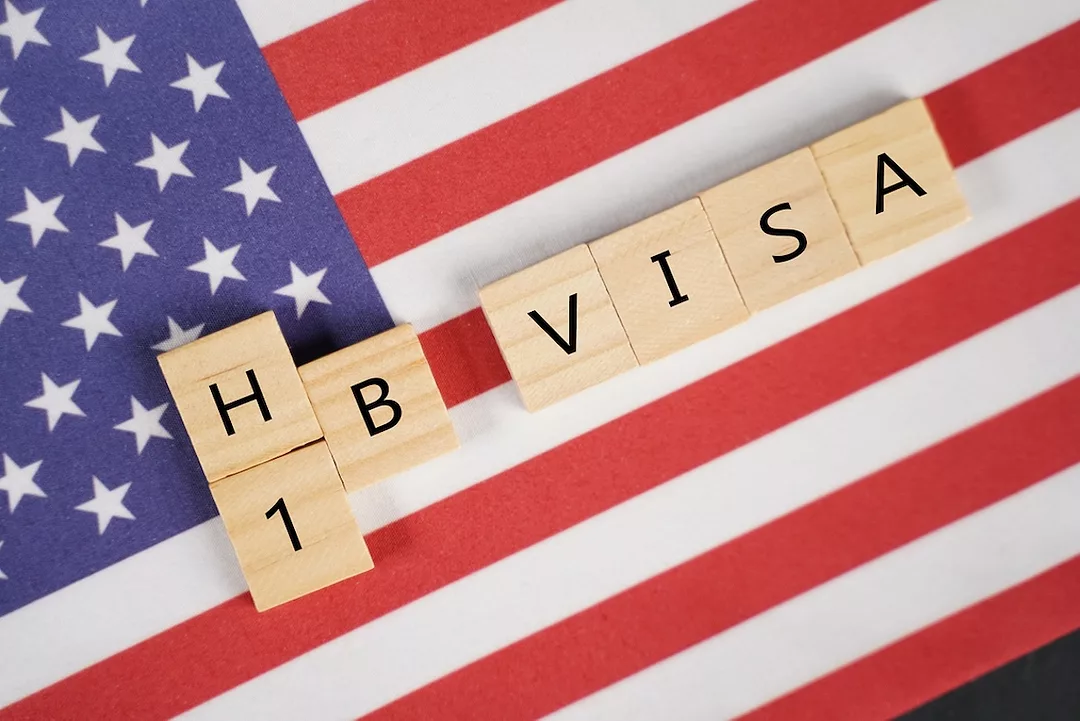
Researchers warn that adding a $100,000 fee for H-1B visa applicants could compromise national security, harm the U.S. tech sector, and discourage skilled workers from working for American companies.
The fee, the subject of an executive order from President Trump, is scheduled to take effect on September 28, and would be 60 times the current cost of obtaining the visa, which is relied upon heavily by major U.S. tech companies to recruit foreign talent. According to the Guardian, Amazon had more than 10,000 H-1B visas approved in the first half of 2025 alone, while Microsoft and Meta each had more than 5,000 approved over that same period. India has been the biggest benefactor of H-1B visas in recent years, accounting for more than 70% of approvals in 2024.
A 2021 report from the National Security Commission on Artificial Intelligence spoke of a growing need for the U.S. to hire highly-skilled immigrants in order to keep pace with the rest of the world in the science and technology sectors. The NSCAI was commissioned between 2018 and 2021 to provide recommendations to the U.S. government on the best path forward to advance artificial intelligence and machine learning, and highlighted immigration reform as a key part of that roadmap.
“The United States risks losing the global competition for scarce AI expertise if it does not cultivate more potential talent at home, and recruit and retain more existing talent from abroad,” the NSCAI's report reads. "Human capital advantages are particularly significant in the field of AI, where demand for talent far exceeds supply. Highly skilled immigrants accelerate American innovation, improve entrepreneurship and create jobs."
According to data published by the Cato Institute in 2023, nearly 70% of workers on H-1B visas that were hired in 2021 had advanced degrees, while 90% of those jobs were in STEM fields. A separate 2020 analysis from the National Bureau of Economic Research (NBER) found that just 10% of science and engineering degrees globally went to students in the U.S. in 2020, compared to 25% in India, 22% in China and 12% in the European Union. Given that discrepancy, the National Academy of Sciences called on the U.S. in 2024 to soften its immigration policies to compete with China and other countries in retaining top talent in science and engineering fields.
“The United States is losing talent because of the annual limits on H-1B and employment-based immigrant visas," NAS committee chair Mark Barteau said in a report commissioned by the Department of Defense. The NAS further noted that more than 55% of the country's startups worth more than $1 billion have had at least one immigrant founder, while immigrants have been awarded roughly 40% of Nobel Prizes won by Americans in chemistry, medicine and physics since 2000.
And although the Trump administration has asserted that international students in STEM programs at U.S. universities are crowding out American-born students, the National Foundation for Economic Policy (NFEP) think tank found the opposite to be true in a 2021 analysis. In fact, "each additional 10 bachelor's degrees across all majors awarded to international students leads to an additional 15 bachelor's degrees in STEM majors awarded to U.S. students," said NFEP researcher Madeline Zavodny.
“Colleges and universities that attract more international students likely are devoting more resources to STEM areas, such as increasing the number of courses, hiring more faculty, and providing new lab spaces and buildings," Zavodny explained. "To the extent such changes are occurring, they appear to be attractive to U.S. students as well."
Trump's executive order could also face legal challenges at some point down the road, warned Cato Institute economic scholar David Bier in a September 20 blog post, noting how a ban on new H-1B workers instituted by Trump in his first term was struck down in October 2020, when a U.S. district court in California ruled that the president didn't have the authority to rewrite immigration laws to micromanage the U.S. labor market. In 2020, Trump's Department of Labor attempted to raise the mandatory minimum wage for H-1B workers as well, before the requirement was similarly blocked by a California district court judge.
Popular Stories





100 Great Supply Chain Partners 2026: The Secret to Supply Chain Success
VIEW THE LATEST ISSUECase Studies


Visit Our Sponsors |
|
|
|
|
|
|
|
|
|
|
|
|
|
|
|
|
|
|
|
|
|
|
|
|
|
|
|
|
|
|
|
|
|
|
|
|
|
|
|
|
|
|
|
|
|
|
|
|
|
|
|