
Aston Martin Hit by U.S. Tariffs, Weak Sales in Renewed Setback
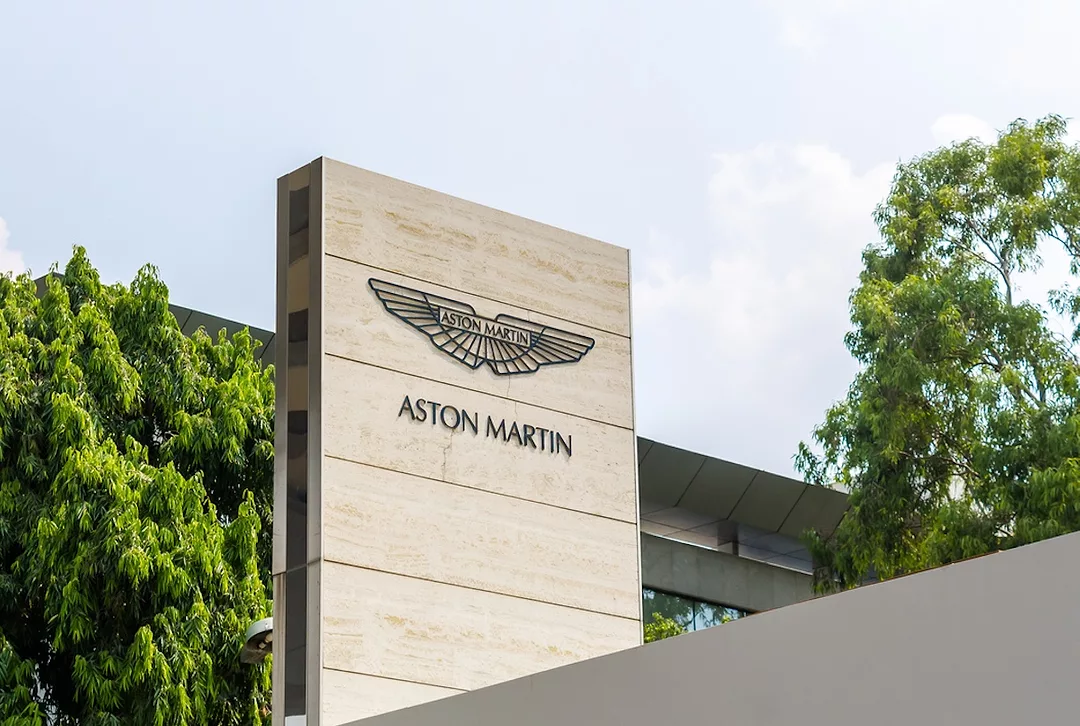
Photo: iStock / Mrinal Pal
Aston Martin Lagonda Global Holdings Plc plunged after cutting its outlook for the second time this year, a fresh blow for the storied British carmaker as tariffs and faltering demand extend years of turnaround stumbles.
Shares fell as much as 11% at the open in London and were lower 6.6% at 9:07 a.m. on October 7, bringing losses over the past year to about one third. The latest warning underscores how the maker of James Bond’s car of choice continues to battle execution struggles, volatile markets and strained finances despite repeated rescue efforts.
After already tempering its outlook in July on U.S. tariffs, Aston Martin now expects sales to fall by a mid- to high-single-digit percentage this year, weighed down by weakness in North America and Asia. Total third-quarter deliveries dropped 13% to 1,641 vehicles, according to a statement.
The luxury manufacturer also no longer expects to generate positive cash flow during the second half, while slowing the rollout of the Valhalla, its first plug-in hybrid supercar. The company said it needs to finalize engineering for the vehicle as well as secure regulatory approvals, highlighting ongoing issues hobbling smooth vehicle rollout.
“For many years Aston Martin has struggled to balance on the execution knife edge it faces as a small, cash-burning luxury automaker,” Bernstein analysts led by Harry Martin said in a note. While Aston Martin appeared to be making progress toward positive free cash flow and improving its execution on new model launches, “failing on these may be the final straw for many investors.”
Aston Martin expects to deliver about 150 Valhalla models during the fourth quarter, compared with Bernstein’s view of as many as 250 vehicles. The U.S. government shutdown could result in more delays as the company still needs to obtain some approvals, it said.
What Bloomberg Intelligence Says:
Aston Martin warned again on 2025 earnings, with 2H positive free cash no longer a target — as expected per our May 2025 Focus idea — reviving the specter of a further capital raise. This may question CEO Adrian Hallmark’s credibility early in his tenure as the allusive goal of sustainable positive cash now has no time frame. This isn’t the first time that delivery targets — now for a mid- to high-single-digit decline in 2025 vs. flat — have been cut to provide a lower base for the following year. At the same time, the 2025 Ebit loss is now seen higher than £110 million vs. previous expectations for a profit. U.S. tariffs are part of the issue, costing 110 bps of margin, as per our analysis.
The warning dealt another blow to Britain’s car industry, where Jaguar Land Rover is still recovering from widespread production outages triggered by a cyberattack in early September.
In light of the setbacks, Aston Martin’s management said it has launched a broad spending review, a move that could delay or reshape upcoming models that’s adding further uncertainty to Aston Martin’s electric-vehicle shift. The company hasn’t yet confirmed a fully battery-powered model, while competitor Porsche AG last month pivoted back to combustion-engine and hybrid models due to weaker-than-expected demand.
Despite the impending spending reductions, adjusted earnings before interest and tax are now expected to fall below the lower end of market forecasts for 2025. Meanwhile, Aston Martin was more upbeat for the end of the year when new models are set to reach customers. Aside from the Valhalla, the company is rolling out updates across its core lineup, including the Vantage Roadster, Vanquish Volante and DBX S.
The latest warning also underscores a broader slowdown in the luxury auto market, with rivals including Mercedes-Benz Group AG and Porsche facing softer demand in key markets such as China and the U.S. as higher borrowing costs and trade tensions weigh on affluent buyers.
Aston Martin management pointed to renewed trade uncertainty under a new US tariff quota system, which cuts duties on as many as 100,000 U.K.-made cars to 10% from 25%, but leaves any additional exports facing the higher rate. The change makes it harder for British carmakers to plan production and forecast sales, the company said.
Canadian billionaire Lawrence Stroll stepped in to rescue Aston Martin in 2020, but reviving the heavily indebted marque has proven elusive despite more than £600 million ($806 million) in new funding from his consortium. A fresh turnaround drive under CEO Adrian Hallmark — focused on cost cuts and efficiency gains — has been dealt a setback by the latest U.S. trade measures in one of the company’s biggest markets.
Popular Stories





100 Great Supply Chain Partners 2026: The Secret to Supply Chain Success
VIEW THE LATEST ISSUECase Studies


Visit Our Sponsors |
|
|
|
|
|
|
|
|
|
|
|
|
|
|
|
|
|
|
|
|
|
|
|
|
|
|
|
|
|
|
|
|
|
|
|
|
|
|
|
|
|
|
|
|
|
|
|
|
|
|
|