.webp?height=100&t=1782792122&width=150 "005_veteran_winemaker_gallo_embarks_on_an_ai_journey_v2-(540p).jpg")
U.S. Ends LNG Ship Penalty, Sets Tariffs in Escalating Feud With China
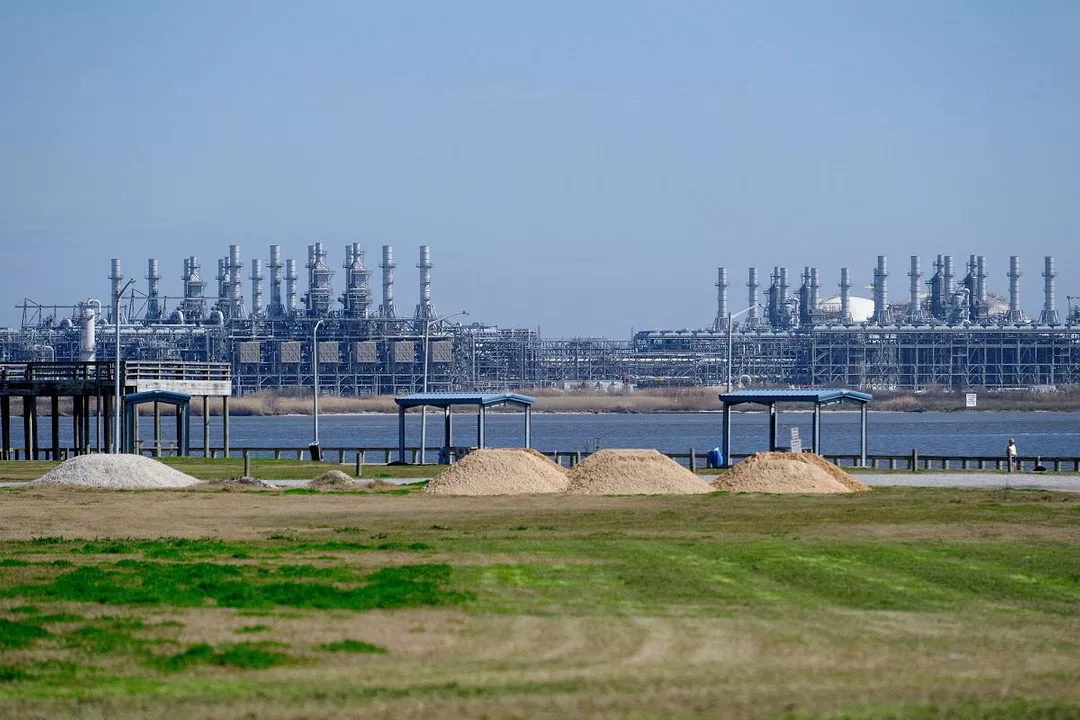
Liquefied natural gas (LNG) export terminal in Cameron, Louisiana. Photographer: Callaghan O'Hare/Bloomberg
The Trump administration scrapped penalties for U.S. liquefied natural gas companies that were set to take effect next week under a sweeping policy aimed at curbing China’s maritime dominance.
“This modification will avoid potential short-term disruptions to the LNG sector while promoting investments in U.S. shipbuilding capacity and production of LNG vessels,” the Office of the U.S. Trade Representative said in a notice on October 10.
The exemption, which is effective immediately, withdraws a provision that would have allowed the U.S. to suspend LNG export licenses for companies that failed to meet requirements for shipping fuel on U.S.-built LNG tankers starting in the second half of the decade. American LNG companies warned that existing shipbuilding capacity in the U.S. is not equipped to churn out specialized LNG tankers, which are mainly built in South Korea and Japan.
The policy aimed at Beijing’s dominance of the maritime sector was finalized in April. It includes fees on ships calling at U.S. ports that are either made in China or that are Chinese-operated, set to take effect on October 14. The plan looks to revive the U.S. shipbuilding industry as a way to combat China’s strength in the shipping and shipbuilding sectors.
The USTR also said October 10 it would impose tariffs of 100% on ship-to-shore cranes and intermodal chassis and parts, a move that targets Chinese-made port equipment. Those duties will be effective as of November 9.
Included in the notice on October 10 is a proposal to levy additional tariffs of up to 150% on certain Chinese-origin cargo handling equipment, like the gantry cranes, straddle carriers and container-stacking tractors widely used at American seaport terminals. The USTR said it would accept comments on that and other related proposals until November 10.
The notice came as Trump on October 10 announced that he would impose an additional 100% tariff on Chinese exports as well as controls on “any and all critical software” beginning November 1, and threatened to cancel an upcoming meeting with Chinese President Xi Jinping, dramatically raising the stakes for talks between the world’s two largest economies on trade.
Popular Stories


.webp?height=100&t=1782739023&width=150 "003_the_future_of_ai_in_transportation,_warehousing_and_logistics_v1-(540p).png")


SupplyChainBrain 2026 ESG Guide: ESG — The Supply Chain’s Biggest Secret
VIEW THE LATEST ISSUECase Studies


Visit Our Sponsors |
|
|
|
|
|
|
|
|
|
|
|
|
|
|
|
|
|
|
|
|
|
|
|
|
|
|
|
|
|
|
|
|
|
|
|
|
|
|