
Ford Backs off All-EV Large Vehicles
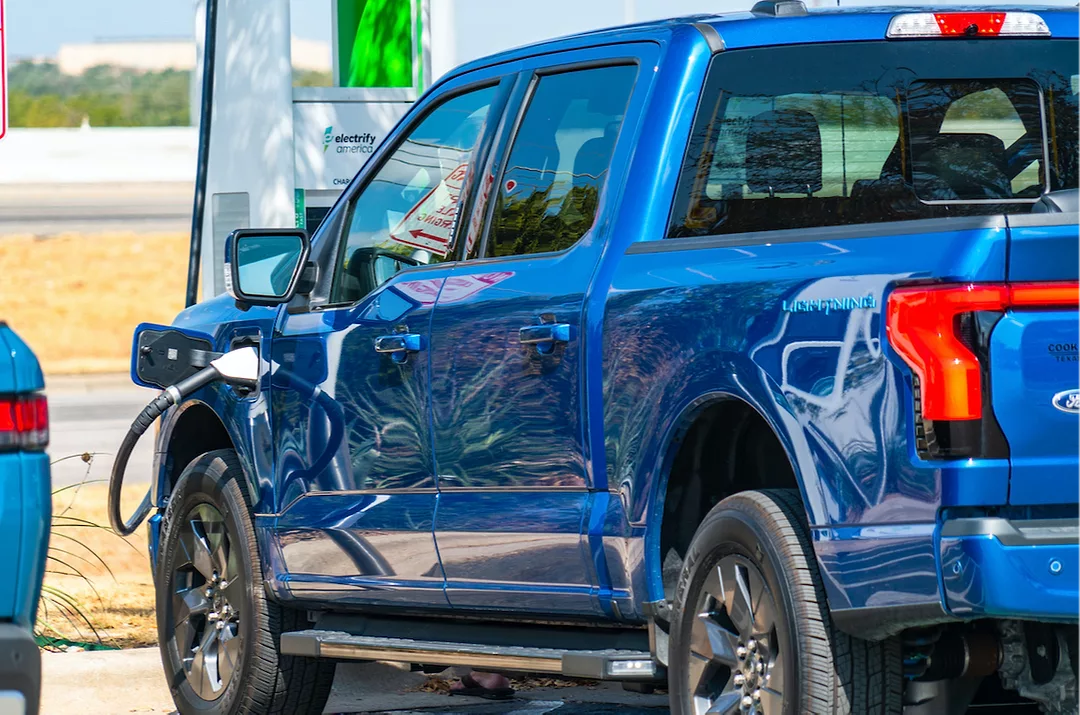
Ford Motor Co. said it is backing away from plans to manufacture large electric vehicles because the business case for them had “eroded” demand, in part due to recent easing of fuel economy regulations under U.S. President Donald Trump. The company predicted a $19.5 billion hit to profits as a result of the strategic shift.
BBC News reports the automaker said on December 15 it will instead invest in producing profitable hybrid and gas-powered vehicles and smaller, more affordable EV models.
"This is a customer-driven shift to create a stronger, more resilient and more profitable Ford," Jim Farley, Ford's chief executive, said in a statement. "The operating reality has changed, and we are redeploying capital into higher-return growth opportunities."
As part of Ford's changes to its EV plans, the company said it will no longer produce a purely electric version of its popular F-150 pickup truck. The F-150 Lightning will instead be redesigned as a hybrid vehicle, with a gas-powered generator.
The BBC reported that Ford also said it will cancel its new electric van to focus on manufacturing gas and hybrid models.
The decision follows a similar announcement from General Motors in October, when the automaker said it would take a $1.6 billion hit as it rolls back its EV ambitions, also because of weakening demand.
EV adoption in the U.S. has lagged behind the industry in places such as China, the U.K. and Europe. Analysts point to comparatively weak government support for the sector.
Read More: Ford: Western Automakers Face Existential Threat from China
A Biden-era government subsidy previously helped knock as much as $7,500 off the price of certain battery electric, plug-in hybrid or fuel cell vehicles. But that tax credit ended in September. And in December, Trump announced plans to loosen fuel economy rules, reversing another Biden administration standards that were expected to prevent more than 700 million metric tons of carbon dioxide emissions by 2050.
Meanwhile, the European Union is expected to announce on December 16 a move to water down its plan to effectively ban new combustion engine cars from 2035, under pressure from Germany, whose carmakers face stiff competition from China.
Popular Stories





SupplyChainBrain 2026 ESG Guide: ESG — The Supply Chain’s Biggest Secret
VIEW THE LATEST ISSUECase Studies


Visit Our Sponsors |
|
|
| |
|
|
|
|
|
|
|
|
|
|
|
|
|
|
|
|
|
|
|
|
|
|
|
|
|
|
|
|