
ROBOTICS
How Smart Robotics Will Drive a New Era of Warehousing
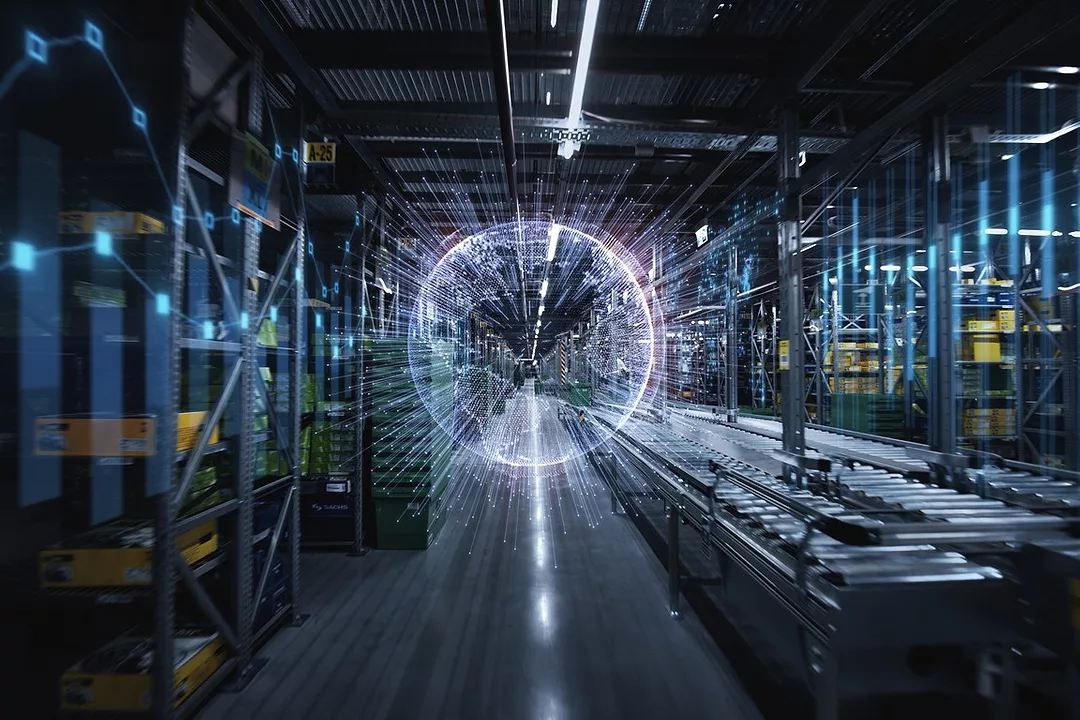
Photo: iStock/janiecbros
 Analyst Insight: A new era of warehousing is emerging, one defined by independence and flexibility, where robots are no longer just tools for automation. Robotics have become the foundation of self-learning, self-optimizing warehouse systems that can anticipate, respond and improve in real time.
The adaptive warehouse represents the next major phase in industrial logistics. In earlier stages, warehouses moved from manual, “blind” environments, to observable systems enhanced by scanners and digital twins. Today, robotics provide the physical capability to enable these data-driven systems to act on insights autonomously.
Unlike previous automation, adaptive systems learn and adjust. They do not simply follow programmed routines. Instead, they work with various models to understand operational data, spot anomalies, and trigger responses in inventory, workforce, and maintenance processes. For example, mobile robots with sensors can constantly map the warehouse floor, providing live updates to digital models that predict congestion. They can also identify misplaced goods before those items disrupt operations.
This connection between artificial intelligence and robots makes the adaptive warehouse dynamic, not static. Robots can serve as the “hands and eyes” of smart systems, making informed decisions instantly and closing the gap between insight and action. In some facilities, robotic fleets are able to coordinate on their own. They balance workloads or change their routes to handle spikes in demand without waiting for human guidance.
A key feature of adaptive robotics is their ability to evolve in different settings. These systems can learn from one site and distribute that knowledge to others, helping to standardize best practices across entire networks. When conditions change, like layout, product mix or labor availability, robots can rearrange workflows and update their digital maps in real time. This creates an evolving infrastructure that continuously improves itself without operational impact.
Collaboration among different robotic platforms also shapes this new phase. Autonomous mobile robots (AMRs) and robotic arms now work within shared data layers, and can coordinate complex, multi-step tasks. For example, an AMR might transport goods to a robotic picking station, where a vision-guided arm completes an order. Meanwhile, real-time inventory operations data, volume and location is continuously updated and shared with a central control system.
The outcome is a warehouse that adjusts to uncertainty, such as a surge in e-commerce orders, a labor shortage, or a supply chain disruption. Research from the World Economic Forum shows that AI-driven robotics improved cycle times by 20% to 30%. This highlights how intelligent robotics operations can build resilience while driving measurable performance gains. These AI-driven robots, however, do not eliminate the human role; they transform it, enhance it and supercharge it. Workers become supervisors, strategists, and problem-solvers instead of manual operators. This teamwork helps maintain trust in increasingly autonomous systems while enhancing safety, precision and sustainability in operations that must move faster and think smarter than ever before.
Resource Link: https://www.dexory.com
Outlook: As intelligent robotics systems keep improving, warehouses become more adaptive, resilient environments that embrace change instead of reacting to it. The combination of physical automation and AI will shape the next decade of logistics, where robots continuously learn, coordinate and improve the broader supply chain.
Popular Stories





100 Great Supply Chain Partners 2026: The Secret to Supply Chain Success
VIEW THE LATEST ISSUECase Studies


Visit Our Sponsors |
|
|
|
|
|
|
|
|
|
|
|
|
|
|
|
|
|
|
|
|
|
|
|
|
|
|
|
|
|
|
|
|
|
|
|
|
|
|
|
|
|
|
|
|
|
|
|
|
|
|
|