
AUTOMOTIVE
Building Anti-Fragile Automotive Supply Chains for 2026

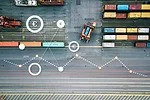
Photo: iStock/andreswd
 Analyst Insight: The past year has shown how easily stability can give way. Automotive supply chains buckled under pressures they hadn’t planned for. Cyberattacks, trade disputes and technology shifts each exposed weak spots in the auto supply chains. In 2026, manufacturers will need operational models that can bend without breaking, and supply chains that adapt and find ways to improve after each disruption.
Three disruptions in 2025 drove this lesson home. A major automaker suffered a cyberattack that forced factory slowdowns and delayed supplier payments, revealing how dependent production continuity has become on digital infrastructure. Meanwhile, escalating tariffs on aluminum and continuing dependence on China for rare earth elements disrupted sourcing, and caused production outages across the U.S. auto sector. Each of these events tested the agility of production networks and showed how little margin for error exists when supplier relationships, material sourcing, and production schedules are tightly linked.
These incidents underscore a broader point: Fragility doesn’t come from any one event, but from the network of interdependencies that manufacturers often notice only when something breaks.
Automakers are navigating overlapping transitions, from internal combustion to electric and hybrid vehicles, and from globally distributed manufacturing to regional hubs. As these transitions are happening, inflation concerns and a slowing economy are having implications on demand. Such shifts warrant a supply chain that can adapt
Integrated demand and production planning enables manufacturers to anticipate shifts in electric vehicle adoption rates, component availability and regional demand. Advanced modeling can account for macro factors like energy prices, interest rates and employment trends that shape consumer buying patterns. On the supply side, evolving bills of material and supplier networks require steady recalibration.
Digital twins of the supply chain let teams test production and sourcing strategies before disruption hits, building playbooks they can turn to quickly when conditions change. When done well, planning moves from reactive firefighting to prepared, informed decision-making.
Manufacturers can segment parts and suppliers based on how predictable (or volatile) their usage patterns are. Fast-moving, stable parts suit automated replenishment and tighter cycle times, while slower or less predictable components may need to be centrally stored and deployed per need..
Pooling inbound parts at central warehouses can delay deployment until factory needs are clearer, reducing inventory without raising risk. Service-level expectations must also be calibrated carefully; the gap between a 97% and 99% service level can represent millions in extra stock. AI-based optimization tools can weigh these trade-offs in real time, keeping cost and responsiveness in balance.
Scenario planning helps organizations turn uncertainty into an edge. Companies that regularly test “what if” situations and build systems to act quickly often recover faster, and sometimes even gain ground when competitors stumble. Viewing disruption as a chance to learn, rather than simply endure, lets leaders see opportunity in volatility.
Reaching that level of adaptability requires a shift in mindset as much as process. Anti-fragility means having the confidence and tools to respond decisively when challenges arise. Leaders can foster this by giving teams clear data, effective technology, and the autonomy to make timely, fact-based calls. Embracing an AI-first approach is a practical step toward faster, evidence-based decision-making.
Resource Link: https://www.relexsolutions.com/
Outlook: Manufacturers that plan with flexibility and act on real-time insight will weather the next disruption more smoothly, and those that adapt fastest will emerge stronger and more prepared for what comes next.
Popular Stories



100 Great Supply Chain Partners 2026: The Secret to Supply Chain Success
VIEW THE LATEST ISSUECase Studies


Visit Our Sponsors |
|
|
|
|
|
|
|
|
|
|
|
|
|
|
|
|
|
|
|
|
|
|
|
|
|
|
|
|
|
|
|
|
|
|
|
|
|
|
|
|
|
|
|
|
|
|
|
|
|
|
|