RSS
RSS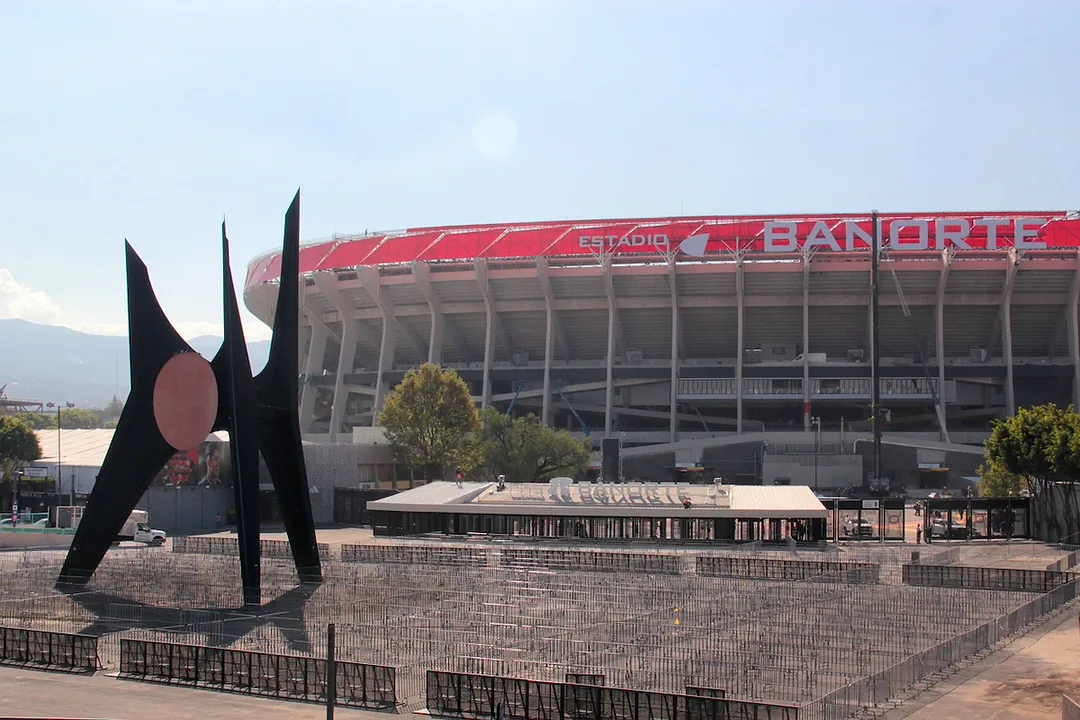
Mexico's wave of World Cup investment has received some bad press. Critics estimate the country has poured roughly $12 billion into infrastructure for a tournament that will generate about $3 billion in direct economic impact. Add several delayed, rushed, or sub-par project deliveries and it makes sense that the whole ordeal gets painted as a story about overspending and under-delivering.
None of that is false, but it’s more than a little nearsighted. The $3 billion of direct economic income is measured in tourism dollars surrounding the tournament. But airport terminals, urban transit networks and roads don't get packed up when the teams fly home. These are permanent assets, and they happen to be the same assets that determine whether a region can sustain industrial production.
Execution has been messy, and it would be a leap to say that every last investment was maximized. For the manufacturers who plan and operate on decade-long schedules, however, the direction of Mexico’s World Cup push is far more important than its year-one returns. So what does the world’s biggest sporting event really bring to Mexico’s three host cities?
What's Being Built
The scale of investment across Mexico City, Monterrey and Guadalajara goes well beyond upgraded stadiums.
Mexico City concentrated more than $1.3 billion in improvements across mobility, water systems and public transport in the runup to the World Cup. The city's nearly century-old Benito Juárez International Airport also received a $576 million renovation to expand capacity and modernize operations, with a third terminal now in active planning. Monterrey’s international airport received its own $400 million inflow, bringing total investment in the facility to $800 million. Guadalajara, Mexico's second-largest metro area and a growing hub for electronics and aerospace manufacturing, strengthened urban road connectivity and public transit access across the broader metro zone.
Nor is physical infrastructure the only focus. Mexico's customs authority, ANAM, introduced a temporary-import regime that streamlines clearance at 20 designated customs offices through December, 2026. The regime was designed for event-related goods, but it's functioning as a live stress-test of ANAM's digital clearance process at the border and port nodes manufacturers already use. It’s not guaranteed to outlast the tournament, but it’s one step toward a more streamlined customs framework in any event.
These upgrades were driven by World Cup timelines, but they address decades of deferred maintenance and compounding bottlenecks which have hampered foreign investment and industrial growth within these cities. When the crowds dissipate, these upgraded channels will be the airports that move engineering teams and the roads that carry components between supplier parks and assembly plants.
Monterrey as the Case Study
Monterrey's overlap between World Cup investment and manufacturing relevance makes it the most notable of the three host cities. It's already Mexico's industrial capital, home to a three-generation manufacturing culture with deep clusters in automotive, aerospace and heavy industry. The state of Nuevo León has announced 382 investment projects totaling more than $75 billion over the past five years — generating more than 385,000 jobs — and continues to attract nearshoring operations at a pace that outstrips most of the country.
But any manufacturer who has evaluated a Monterrey site over the last five years will know that there are bottlenecks: congested roads, an airport straining under commercial and industrial travel demand, and urban transit that hasn't kept pace with population growth. The World Cup didn't create these problems, but it did create the political urgency to address them on a fixed timeline.
Consider what this acceleration means in practice. A manufacturer scouting Monterrey in 2023 would have found an airport near capacity and cross-city commutes that ate into shift schedules. A manufacturer scouting Monterrey in 2027 will find an $800 million airport with a new terminal, expanded runways, improved ground links and widened highways connecting the industrial corridors. That is a materially different landscape, developed over the course of four years where normal capital planning would easily have taken 12.
What This Means for Site Selection
Not every World Cup host city becomes a manufacturing hub overnight. Guadalajara and Mexico City have their own industrial strengths, but neither matches Monterrey's concentration of production activity and nearshoring demand. What all three share is that the infrastructure gap — consistently cited as the leading friction point for companies nearshoring to Mexico — is narrowing faster there than anywhere else in the country. And the World Cup is largely to thank.
The point for manufacturers is that major international events like this one leave behind an infrastructural legacy seldom weighed against the upfront costs. Many of the improvements that have been made in these past two years will continue supporting talent mobility, business travel and logistics long after the final match is played. When deciding where to invest long-term, it often pays to look where the investments are already going.
Jorge Gonzalez Henrichsen is co-chief executive officer of The Nearshore Company.