
EDITOR'S LETTER
Girding for the Future: It’s a Job for Humans
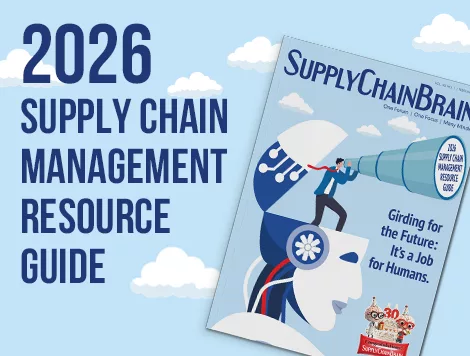
 In this vast and rich domain that falls under the category of global supply chain management, we speak of many things. But these days, just about every discussion ends up at the same topic: artificial intelligence.
The technology that’s either going to save humanity or kill it has been percolating for some 70 years, but only recently, with the emergence of generative and agentic AI, has it begun making real strides in the supply chain. (And, for that matter, in virtually every aspect of modern-day life.) No part of what it takes to design, make, ship and sell product remains untouched by the technology. Or so we’re told by the experts.
That level of omnipresence is reflected in the many analyst insights that we offer you here, our annual Supply Chain Management Resource Guide for 2026. Our experts cover the usual expansive range of topics, holding forth on e-commerce, professional development, planning, trade regulation and law, sourcing and procurement, logistics, and key industry verticals, to name but a few. But underlying it all is the big question: What is the impact of AI, now and in the future, on all of this? And, in the end, where do human beings fit into the picture?
I wish I could say that I had the answer. With all the access that I enjoy to some of the greatest minds on this topic, shouldn’t I be able to come to some intelligent conclusion? The problem is, the experts themselves can’t agree on what the AI endgame will look like. So my “final” verdict tends to be based on the last smart take that I’ve read on the subject.
There is, however, one theme that runs through much of the current AI commentary, especially as featured in these pages: For all its value in crunching huge amounts and data, and reaching insights beyond the capability of mere people to conceive, there’s something about the human brain that can’t be replicated in ones and zeroes. Machines may express “feelings” but they don’t actually feel; they may offer “creative” solutions but can’t match the glories of human creativity. (OK, so there’s some debate about that.) Through a combination of AI software and physical automation such as robotics, technology will come to play an increasingly vital role in steering the supply chain ship. But there will still need to be a human at the helm.
All that aside, I can’t neglect to share with you the news that SupplyChainBrain is turning 30! The print publication that began life in 1996 as Global Sites & Logistics, then quickly evolved in response to the emergence of supply chain management as a critical discipline, is today a vital resource of articles, videos, podcasts and webinars dedicated to the global business executive. We’re deeply grateful for the support and foresight of president and executive publisher Jerry Keller, and publisher Brad Berger, for setting us off on this great journey. And to you, reader, for your attention and expert contributions to a conversation that remains, in the end, resolutely human.
Here's to 30 more.
Popular Stories




100 Great Supply Chain Partners 2026: The Secret to Supply Chain Success
VIEW THE LATEST ISSUECase Studies


Visit Our Sponsors |
|
|
|
|
|
|
|
|
|
|
|
|
|
|
|
|
|
|
|
|
|
|
|
|
|
|
|
|
|
|
|
|
|
|
|
|
|
|
|
|
|
|
|
|
|
|
|
|
|
|
|