
Airport Security Wait Times Soar as DHS Funding Fight Stalls
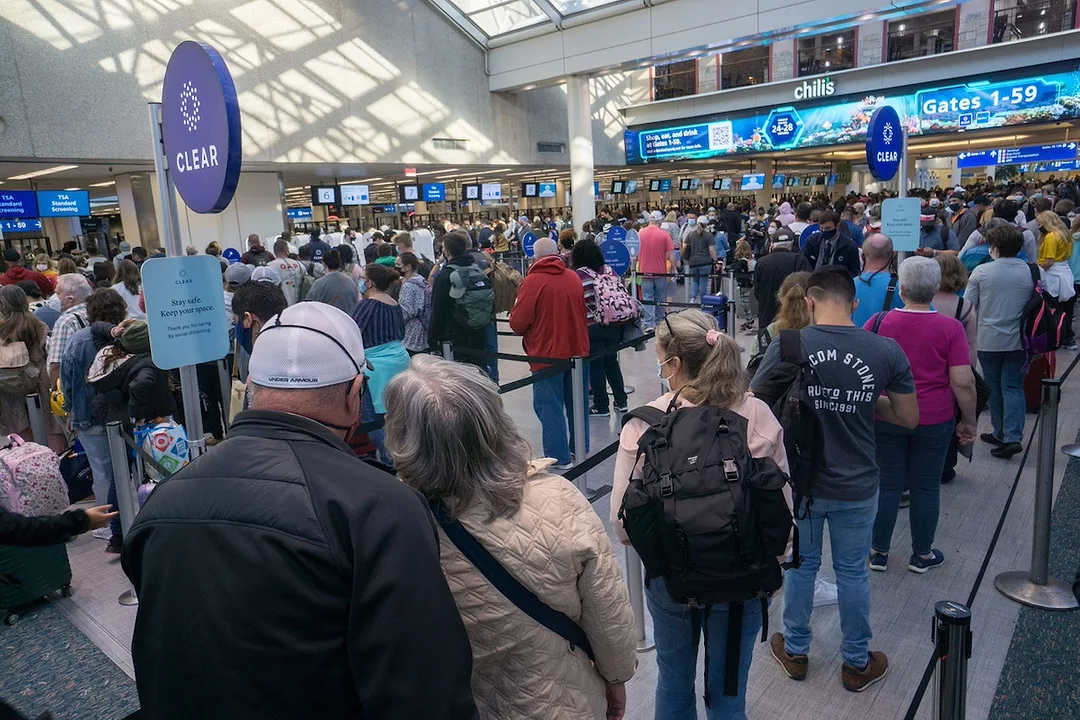
Photo: iStock / XiFotos
As the partial government shutdown has dragged on, wait times at security checkpoints for many airports across the United States have skyrocketed.
Reports of hours-long waits in security lines have been all over headlines and social media in recent days, culminating in President Donald Trump deploying Immigrations and Customs Enforcement at airports to assist TSA agents at a handful of hubs. At San Diego International Airport, employees reported that regular security lines were taking 90 minutes as of March 23. In Atlanta, the airport is advising travelers to arrive four hours early for flights, as security lines have regularly wrapped around baggage claim area. Houston is reporting similarly long wait times, and because of staffing shortages, it's been forced to close seven security checkpoints.
As the Transportation Security Administration's funding lapse continues, it's been more than a month since agents have seen a paycheck, and the situation's only likely to get worse in the days ahead, according to Transportation Secretary Sean Duffy.
“I think you’re going to see more TSA agents, as we come to Thursday, Friday, Saturday of next week, they’re going to quit or they’re not going to show up,” Duffy told ABC's Jonathan Karl on March 22. As of that day, Atlanta was reporting a 41.5% TSA officer call-out rate, with Houston at 39%, Baltimore at 38%, and John F. Kennedy in New York City at 37%.
So, what's behind the burgeoning crisis? Following the death of two civilians at the hands of ICE agents in January, Democrats in Congress have refused to approve any funding package for the Department of Homeland Security that includes money for ICE. However, the party has also repeatedly offered to temporarily fund DHS sans ICE while negotiations over the agency's immigration enforcement actions play out. Most recently, Republican Senate Majority Leader John Thune even petitioned President Trump to accept the compromise, although Trump reportedly spurned the offer, stating on his Truth Social platform that he wouldn't accept any deal until Congress passes his sweeping voting law, which Democrats have vehemently opposed.
Still, a handful of airports have been spared the chaos. CNN reports that for the 20 U.S. airports that use private companies for security screenings, checkpoint lines have been largely unaffected by the shutdown. And at Seattle-Tacoma International Airport, the Port of Seattle has been able to keep TSA absences to a minimum through various support services for agents, and by deploying its own staff to share the load, allowing TSA agents to focus primarily on screening travelers.
"We have also set up a food pantry at the airport where we are distributing food and resources to TSA agents to help them with their livelihood while they work without pay," Seattle Port Commissioner Sam Cho said in a March 22 Reddit post. "This has gone a long way in reducing their daily expenses."
As for ICE agents deployed at U.S. airports, it remains unclear how much of an impact they'll actually have. The New York Times estimates that between 100 and 150 ICE officers were sent to airports as of March 23, including Newark, Atlanta, Chicago and Houston. Some agents have been seen patrolling terminal areas, while others have been assigned to security checkpoints, although their exact roles have been nebulous. Wait times at checkpoints also appear to have been unaffected by the arrival of ICE, with some TSA officials telling the Times that they believe agents are mostly there for crowd control.
Popular Stories





100 Great Supply Chain Partners 2026: The Secret to Supply Chain Success
VIEW THE LATEST ISSUECase Studies


Visit Our Sponsors |
|
|
|
|
|
|
|
|
|
|
|
|
|
|
|
|
|
|
|
|
|
|
|
|
|
|
|
|
|
|
|
|
|
|
|
|
|
|
|
|
|
|
|
|
|
|
|
|
|
|
|