.webp?height=100&t=1783959879&width=150 "014_how_ai_is_transforming_the_transportation_back_office_v1-(540p).jpg")
South Korea’s Early Exports Show Resilience Despite Iran Turmoil
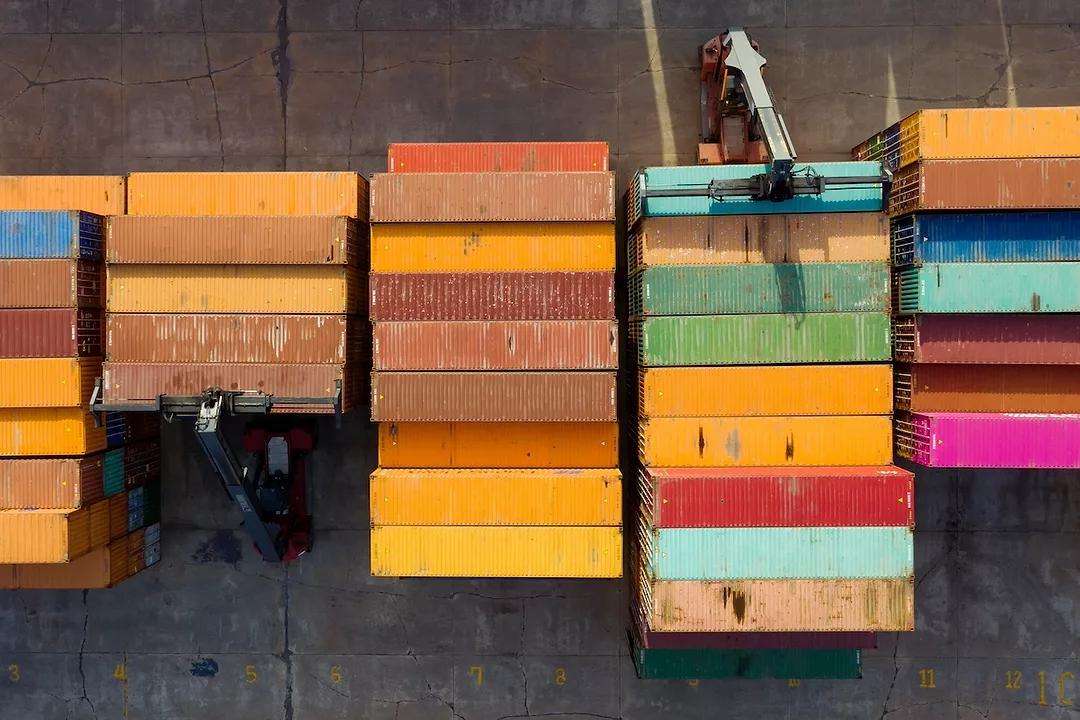
South Korea’s export growth maintained momentum in early March, signaling resilient demand even as surging energy prices and renewed trade uncertainty cloud the outlook for global demand.
Exports adjusted for working-day differences climbed 40.4% from a year earlier in the first 20 days of March, customs office data released on March 23 showed. That compares with a revised 28.7% increase for the full month of February.
On an unadjusted basis, shipments rose 50.4%, while imports gained 19.7%, resulting in a trade surplus of $12.1 billion.
Semiconductors continued to drive South Korea’s overall shipments, supported by sustained investment in artificial intelligence and data centers. Other sectors, including autos, oil products and steel, also posted gains. Chip exports surged nearly 164%, while autos rose 11% and oil products 49%.
At the same time, risks to the outlook are growing. A surge in global crude oil prices linked to the Iran conflict is raising raw materials costs, while worsening shipping conditions and broader supply disruptions are adding pressure on trade flows. The impact is particularly acute for South Korea, which depends heavily on imports of energy and commodities.
Before the Iran war began in February, the Bank of Korea said exports were likely to maintain an upward trajectory, supported by robust semiconductor demand, while policymakers monitored risks from currency volatility, housing prices and geopolitical tensions.
Now, the impact from higher oil prices will incentivize the central bank to “act more hawkish,” Citigroup Inc. economist Jin-Wook Kim wrote in a note. He said the BOK will deliver 25 basis-point hikes in July and October, bringing the rate toward 3%.
The report comes after BOK board member Lee Soohyung said the bank’s outlook should change from its projections in February, as it faces upside risks to inflation, while growth is subject to downward pressures. The BOK is set to get a new leader after Governor Rhee Chang Yong’s term ends next month.
Earlier in March, South Korea’s parliament approved a special bill required to implement a pledge to invest $350 billion in the U.S. The new legislation allowed the establishment of a new state-run vehicle to oversee investment projects tied to last year’s trade agreement with Washington.
Trade uncertainty remains elevated after the Supreme Court struck down tariffs imposed under President Donald Trump’s emergency powers, prompting him to pursue alternative measures to maintain a universal tariff rate of 15% and probe into Section 301 of the Trade Act to impose tariffs on countries it deems to be engaging in unfair trade practices.
Regarding the probe into countries with large trade surpluses with the U.S., Finance Minister Koo Yun Cheol said he expected current tariff arrangements with the U.S. to remain largely unchanged. He added that the government would continue talks with U.S. officials over potential Section 301 measures while making its case to avoid unfavorable revisions.
By destination, exports to China climbed 69%, while shipments to the U.S. also increased 57.8%. Exports to the European Union and Taiwan rose 6.6% and 80% respectively.
Popular Stories

.webp?height=100&t=1784001702&width=150 "013_what's_really_needed_for_'lights-out'_capability_v1-(540p).png")


SupplyChainBrain 2026 ESG Guide: ESG — The Supply Chain’s Biggest Secret
VIEW THE LATEST ISSUECase Studies


Visit Our Sponsors |