ENVIRONMENTAL
Operationalizing Sustainability Through AI-Driven Decisions

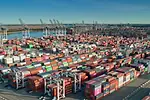
Photo: iStock/sanjeri
 Analyst Insight: Operationalizing sustainability within daily decisions is not only meeting rising regulatory and social expectations, it’s saving millions in inventory and working capital, reducing waste, lowering operational costs and strengthening financial performance. The companies that succeed in the next decade will operationalize sustainability performance.
Sustainability is becoming an operational discipline. According to IDC FutureScape: Worldwide Sustainability/ESG 2026 Predictions, by 2027, 80% of sustainability services engagements will have operationalization of sustainability strategy as their primary focus, necessitating a new wave of IT and OT services.
Resilience, profitability and measurable environmental, social and governance performance are increasingly converging into a single operational mandate. At the same time, companies are navigating a shifting legislative and social landscape that is intensifying expectations around supply chain transparency, sourcing and sustainable business practices.
Yet many organizations still manage sustainability through systems designed primarily for reporting rather than operational action. Dashboards and alerts reveal what happened after the fact, leaving people to interpret data, coordinate responses and act across fragmented systems.
The next phase of ESG won’t be defined by reporting frameworks alone, but by how effectively companies embed sustainability into the operational decisions shaping their supply chains every day — where productivity and sustainability are no longer competing priorities. When sustainability is integrated into operational decision-making, productivity and sustainability reinforce one another. Actions that reduce waste, excess inventory, and unnecessary transport not only lower emissions but also improve efficiency, working capital and service performance.
Waste appears in many forms across supply chains: surplus inventory driven by outdated forecasts, aging components sitting in warehouses, inefficient transportation routes or unnecessary packaging. Globally, about 8% of stock ends up wasted, while packaging accounts for roughly 40% of plastic waste. Food loss alone contributes between 8% and 10% of global greenhouse gas emissions. In many cases, the environmental impact becomes visible only after the damage is done: expired inventory, unnecessary production runs or avoidable transportation emissions.
Achieving sustainability goals requires more than incremental improvements in efficiency. It demands a holistic approach that integrates operational, financial and environmental priorities into everyday decisions. Increasingly, this is enabled by decision intelligence — an enterprise system that breaks through functional silos to execute decisions in real time across the supply chain.
As a critical enterprise software capability, decision intelligence senses changes, evaluates options, and acts quickly across complex supply chain networks. It connects data across planning, procurement, inventory and logistics, creating a coordinated decision layer above existing enterprise systems. Instead of relying on fragmented insights and reactive responses, teams can now translate signals into timely actions across the supply chain.
More importantly, sustainability goals can be operationalized within daily supply chain decisions. Objectives such as waste reduction, emissions targets, and responsible sourcing can be evaluated alongside cost and service requirements each time a decision is made.
Imagine a supply chain that can:
-
Predict excess inventory risk before it materializes;
-
Recommend and execute mitigation actions automatically;
-
Balance cost, service, and sustainability KPIs simultaneously, and
-
Continuously learn from outcomes and improve performance over time.
Every sustainability objective ultimately translates into operational decisions:
-
Should inventory be rebalanced to prevent product waste?
-
Should sourcing strategies shift to reduce Scope 3 emissions?
-
Should production schedules be adjusted to improve energy efficiency?
Leading companies are adopting decision intelligence to move from tracking sustainability metrics to operationalizing their goals.
The opportunity to operationalize sustainability becomes clearer when examining the operational decisions that shape logistics and sourcing every day.
Logistics and fulfillment decisions play a critical role in both emissions and operating costs. Decision intelligence monitors orders, inventory and distribution networks in real time to identify the most effective way to fulfill demand. The system evaluates fulfillment options, recommends and executes actions such as inventory rebalancing or shipment adjustments, and continuously learns from outcomes.
Organizations are already seeing measurable results across industries. A global food and beverage leader is using decision intelligence to monitor sales orders and inventory across its distribution network and production sites, executing fulfillment decisions in real time. The system evaluates whether orders should ship directly from manufacturing or be fulfilled from alternative distribution centers based on availability, cost efficiency and fulfillment logic. By improving fulfillment and inventory rebalancing, the company has saved more than $500,000 year to date, reduced freight costs through optimal shipment modes, and avoided unnecessary emissions.
Decision intelligence can deliver similar benefits upstream in the supply chain by improving procurement and inventory decisions. One global provider of products and services to the life sciences and advanced technologies industries is using the technology to optimize these decisions at scale to reduce waste. The system prioritizes purchase orders, recommending cancellations, reductions, or accelerations based on real-time demand signals. By preventing excess inventory from entering distribution centers, waste is reduced before it’s ever created.
The company has already identified millions of dollars in inventory and procurement-related waste that can be rebalanced or avoided, improving working capital while ensuring inventory is positioned where real customer demand exists.
Popular Stories




100 Great Supply Chain Partners 2026: The Secret to Supply Chain Success
VIEW THE LATEST ISSUECase Studies


Visit Our Sponsors |
|
|
|
|
|
|
|
|
|
|
|
|
|
|
|
|
|
|
|
|
|
|
|
|
|
|
|
|
|
|
|
|
|
|
|
|
|
|
|
|
|
|
|
|
|
|
|
|
|
|
|