
Heat Wave Lowers Rhine Levels, Straining Fuel Supply Chains
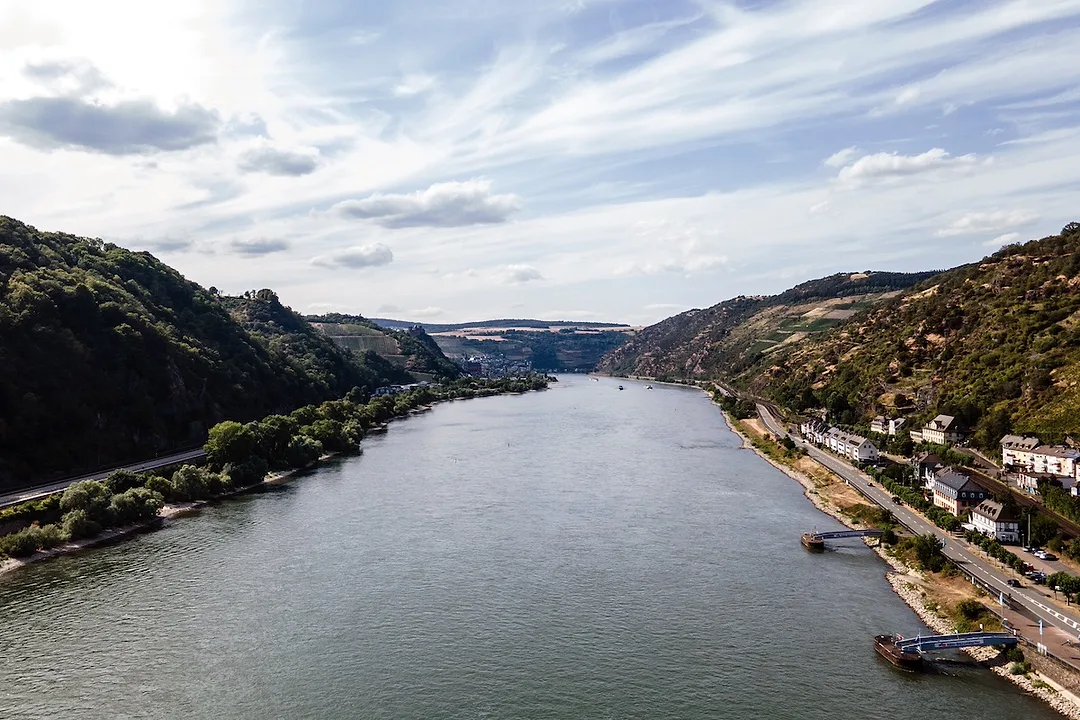
Photo: Bloomberg
Falling Rhine water levels are choking fuel shipments to parts of western Europe as a heat wave grips the region, forcing barges to sail with less than half their normal loads.
Earlier on June 22, barges carrying diesel through Kaub in Germany — a critical waypoint on the river — were limited to about 1,070 tons of cargo, according to Spotbarge data. That represents only about 45% of their full carrying capacity.
Read More: How Water Risk is Threatening the World's Supply Chains
The river is forecast to get even shallower by June 26. The measured water level will probably drop to 83cm (33 inches) in the morning, compared with June 22's 107cm, according to the German Federal Waterways and Shipping Administration.
The Rhine is one of Europe’s most important trade arteries, with petroleum products accounting for more than a fifth of cargo transported on it in 2024. As water levels continue to decline, barge carrying capacity is likely to be cut further, increasing strain on regional fuel supply chains that are already facing disruptions linked to the Middle East conflict.
Shipping costs are also climbing. Freight rates for moving petroleum product between the Amsterdam-Rotterdam-Antwerp hub and Basel have risen sharply since the conflict began, reaching nearly €50 a ton (US $57), according to Spotbarge.
Popular Stories




100 Great Supply Chain Partners 2026: The Secret to Supply Chain Success
VIEW THE LATEST ISSUECase Studies


Visit Our Sponsors |
|
|
|
|
|
|
|
|
|
|
|
|
|
|
|
|
|
|
|
|
|
|
|
|
|
|
|
|
|
|
|
|
|
|
|
|
|
|
|
|
|
|
|
|
|
|
|
|
|
|
|