.webp?height=100&t=1782792122&width=150 "005_veteran_winemaker_gallo_embarks_on_an_ai_journey_v2-(540p).jpg")
SCB FEATURE
Why 2026 is Testing Global Supply Chains Like Never Before
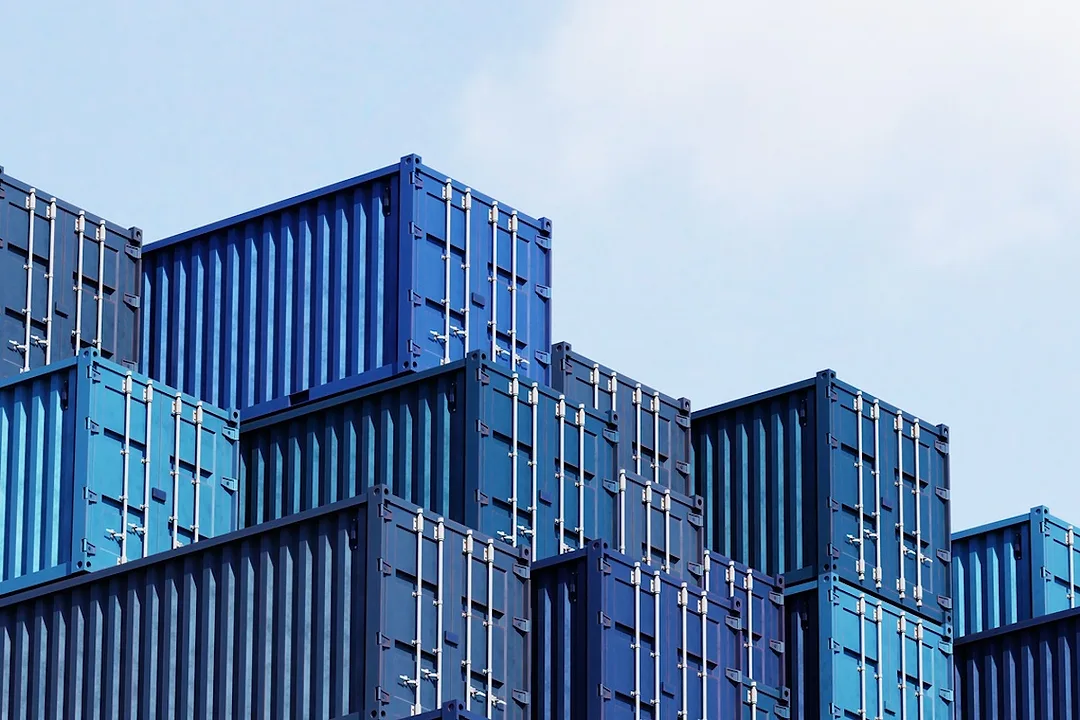
Photo: iStock / Shutter2U
Halfway through what's already been a busy year for global supply chains, things like war risk, trade talks and lingering disruptions have forced the industry to rethink how goods move around the world.
When it comes to figuring out the place we've arrived at today, most veterans of the supply chain industry will point to the COVID-19 pandemic as the moment everything changed.
"You can add up everything before 2020, you can multiply that by five, and you still wouldn't get anywhere near the mayhem we've faced the last five years," said Kuehne + Nagel VP Bill Rooney while speaking at the Agriculture Transportation Coalition's 2026 conference in Tacoma, Washington, on May 19.
Today, that volatility has become the baseline. Nowhere has that been more evident than in the Strait of Hormuz, where the ongoing conflict with Iran has thrown global energy and shipping markets into turmoil for months.
Solving the Strait
Is the Strait of Hormuz opened? Is it closed? Or maybe it's partially open? The answers to those questions seem to change almost hourly. According to data from maritime intelligence firm Kpler, confirmed Strait of Hormuz crossings rose from 34 on June 23 to 70 the following day, with commercial traffic accounting for 53 of those transits. By June 28, daily transits dropped back down to 22, highlighting just how unpredictable the whole affair has become.
As for where that leaves the larger conflict, Rooney sees that as one of the more simple questions to answer.
"We are nowhere," he asserted. "We started this whole thing with two objectives: No nukes for Iran, and a free and open Hormuz, and we have neither."
This uncertainty has shipping companies, cargo owners and energy markets planning around a situation that can change moment to moment, with no promise of any resolution they can trust to hold. And for many supply chain leaders, that has become the defining challenge of modern logistics in 2026: preparing for disruptions that can emerge overnight, linger for months, and disappear just as quickly, only to be replaced by the next crisis.
Lessons Learned from the Red Sea
While it's been pushed to the side in headlines by the Strait of Hormuz, the Red Sea remains a major issue. Iran-backed Houthi rebels based out of Yemen launched missiles toward Israel in early June, and as part of that campaign, announced a renewed ban on Israeli-affiliated ships moving through the region. But even beyond that, the situation is illustrative of how a single disruption can drag on for years, and in many cases ebb and flow rather than resolving in a straight line.
The lesson for supply chains extends well beyond the Red Sea itself. Once companies redesign their logistics networks around a major disruption, they're often reluctant to reverse course until they're confident the underlying risk has truly disappeared. In the case of the Red Sea (and the Strait of Hormuz), that represents a standard that has yet to be met.
Over the last three years, the situation in the Red Sea has been a prime example of that. Even when violence has briefly subsided enough for a few carriers to test Suez routings, periodic flare-ups have quickly sent them back around the Cape of Good Hope. That stop-and-start pattern has become one of the defining features of container shipping, with that same situation playing out in the Strait of Hormuz.
Looming USMCA Talks
Middle East shipping disruptions aren't the only issues front-of-mind for North American shippers, with talks over the U.S.-Mexico-Canada Trade agreement set for July 1. As part of those negotiations, the three countries will decide whether to continue the agreement as is, renegotiate its terms, or end it altogether. Whatever decision they come to, the fallout will be wide-reaching, especially if U.S. President Donald Trump makes good on his frequent threats to tear up the deal.
Read More: USMCA Review Poses Stress Test for North American Supply Chains
"Trump's refusal to extend the agreement is not the agreement's death knell, but it is also far from harmless," Cato Institute policy analyst Alfredo Carrillo Obregon said in a June 16 blog post.
Even if the agreement ultimately remains in place, he argued, the uncertainty surrounding its future is already discouraging long-term investment, and making it more difficult for companies to plan out their North American supply chains with confidence. Major U.S. industries such as auto manufacturing also rely heavily on supply chains that have developed across the three nations over recent decades. Uninterrupted, free trade in North America has formed the foundation of that setup.
In the meantime, Canada and Mexico have already formed a united front, with Mexican President Claudia Sheinbaum detailing the strengthened relationship between the two countries in response to the more contentious rhetoric coming from the U.S.
"We all know of the decision by the government of the United States, of President Trump, of a different vision of international commerce where they have become more protectionist," Sheinbaum told CBC News on June 22. "Talks are happening within this framework."
Halfway Through, and Halfway Forward
At the midpoint of 2026, there have already been plenty of lessons learned by shippers, carriers and businesses across the globe. Taken together, the events of the past six months suggest that supply chain resilience is measured by how quickly companies can adapt to uncertainty while continuing to keep goods moving.
"This year, our ability to adapt has really been tested," said Irina Brown, export specialist with logistics management company Dunavant, while speaking at AgTC. "When you are in logistics, sitting at the hub of many moving parts, and one of the components breaks down, the pressure is to make it work and fix it. A lot of the time, we have to find solutions even when we don’t control the variables."
For the closing half of the year, the biggest challenge may simply be keeping pace with a world that refuses to stand still.
Popular Stories




SupplyChainBrain 2026 ESG Guide: ESG — The Supply Chain’s Biggest Secret
VIEW THE LATEST ISSUECase Studies


Visit Our Sponsors |
|
|
|
|
|
|
|
|
|
|
|
|
|
|
|
|
|
|
|
|
|
|
|
|
|
|
|
|
|
|
|
|
|
|
|
|
|
|