Kenya Court Backs Import Levy to Fund China-Backed Rail Project
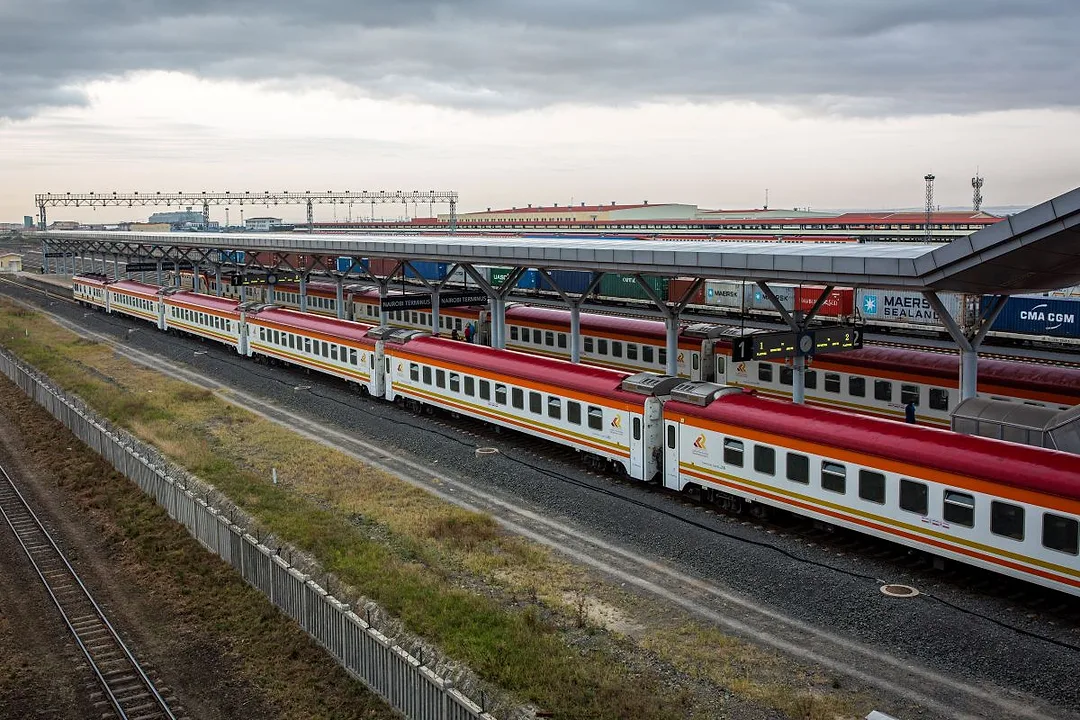
The Mombasa-Nairobi Standard Gauge Railway in Nairobi. Photographer: Patrick Meinhardt/Bloomberg
A Kenyan court ruled that an import levy used to finance the construction and operation of a China-backed high-speed railway was constitutional.
The so-called railway development levy, charged at a rate of 2% of the value of imports into Kenya, was properly enacted, High Court Judge Gregory Mutai ruled in the capital, Nairobi, on July 17.
The judgment clears the way for President William Ruto to use the levy to fund a $5.4 billion project that will extend an unfinished railway to Kenya’s border with Uganda. The project is expected to spur economic growth, create jobs and cut transport costs.
Kenya has been banking on the levy to restart work on its “railway to nowhere” — a moniker for the China-built and funded project that runs from the port of Mombasa and stalled in a scrubland west of Nairobi after funding dried up.
The ruling marks a change of fortune for the Ruto administration, which has struggled to raise revenue needed to repay Kenya’s debt after the government faced deadly street protests two years ago over plans to introduce $2.7 billion of tax measures.
The East African nation last year converted the remaining balance of an initial $5 billion railway loan into yuan to ease the debt burden and create fiscal space to complete the stalled extension.
The court also ruled that the use of the so-called railway development levy to fund a separate 37.5 billion-shilling ($290 million) commuter rail project on the outskirts of Nairobi is unconstitutional.
Kenyan lawmakers in March approved amendments allowing the authorities to use as much as 90% of the railway import tax to fund the construction and maintenance of railway infrastructure across the country. The court found that prior to those amendments, spending on the Nairobi project was unlawful.
Kenya Railways Corp. told court that the commuter line is about 40% complete and that 4 billion shillings from the levy has been spent on the project so far. The judge gave the authorities 90 days to conduct “a fresh, transparent, open, competitive tender for the continuation of the project works.”
Kenya’s government plans to spend $39 billion on new infrastructure including roads, airports, power lines, dams and irrigation. The projects will be funded through securitized levies and a National Infrastructure Fund financed by proceeds from the sale of stakes in state-owned companies.
The Treasury expects the railway levy to raise 48.5 billion shillings in the fiscal year through June 2027, according to official budget data.
Popular Stories



100 Great Supply Chain Partners 2026: The Secret to Supply Chain Success
VIEW THE LATEST ISSUECase Studies


Visit Our Sponsors |
|
|
|
|
|
|
|
|
|
|
|
|
|
|
|
|
|
|
|
|
|
|
|
|
|
|
|
|
|
|
|
|
|
|
|
|
|
|
|
|
|
|
|
|
|
|
|
|
|
|
|